
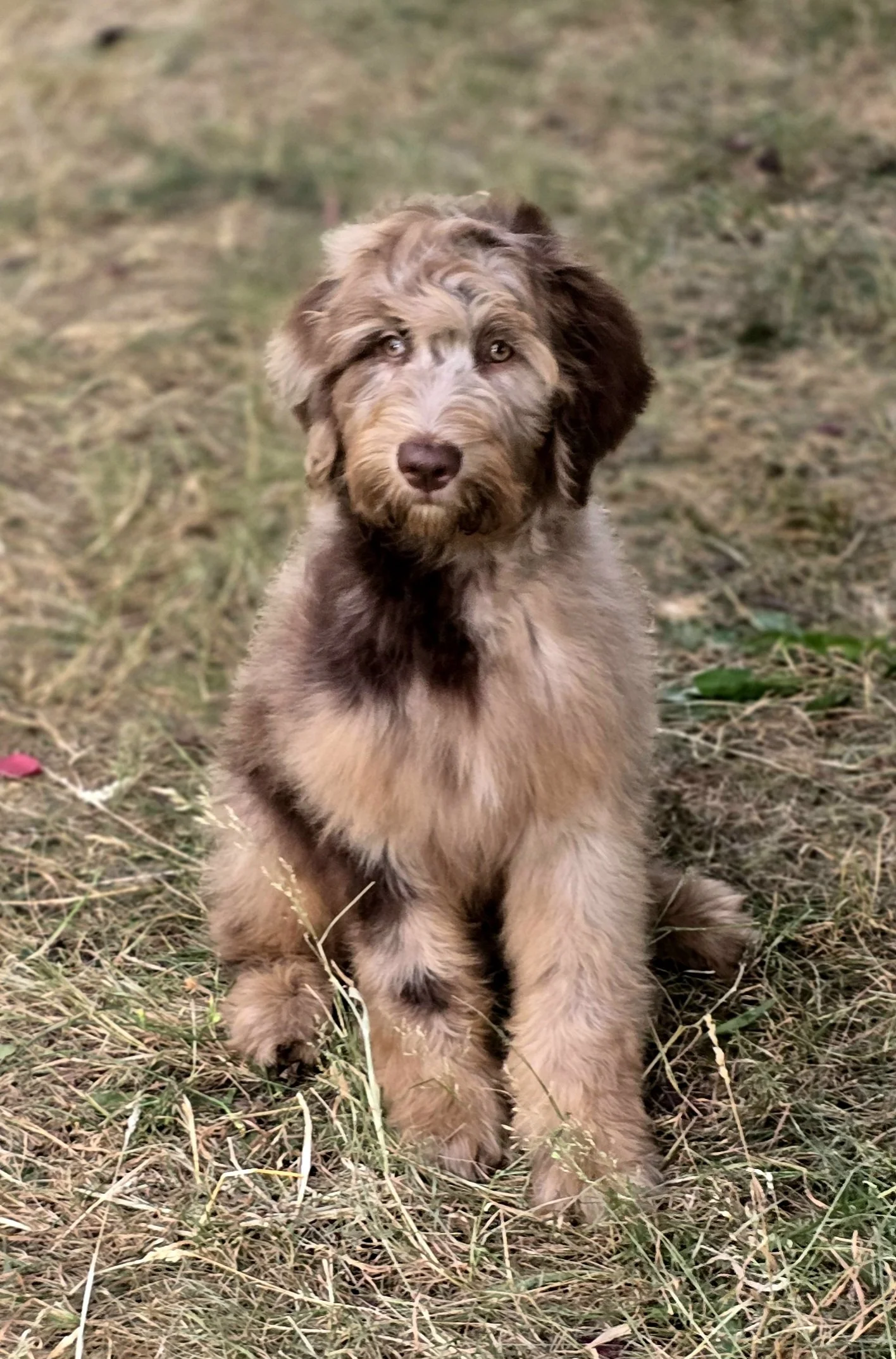
Brown (Chocolate) Dogs: Understanding Brown Pigment Genetics
Brown in Poodles & Chocolate in Goldendoodles
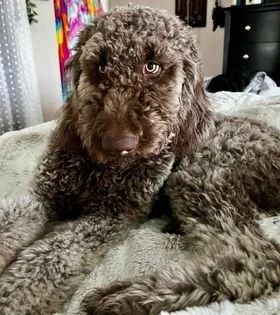
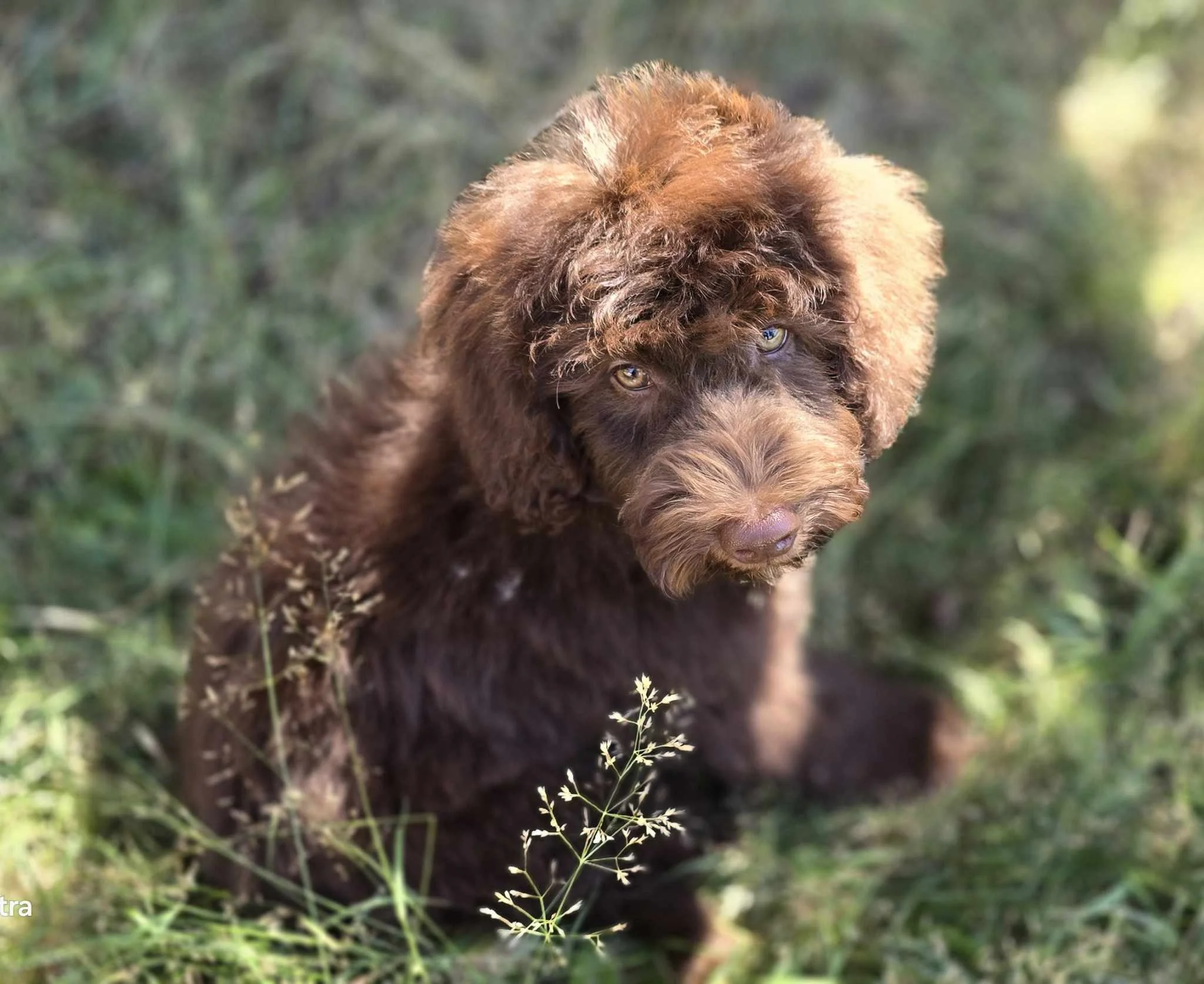
Brown, often referred to as chocolate in the Goldendoodle world, is one of the richest and most recognizable colors found in both Poodles and Goldendoodles.
Whether described as brown or chocolate, both terms refer to the same underlying pigment genetics.
In Poodles, the color is traditionally called brown. In Goldendoodles and many other breeds, chocolate is the more commonly used term.
At Oregon's Legendary Goldendoodles & Poodles, brown pigment plays an important role in our program. Many of the colors and patterns we find most fascinating — including brown merle, brown phantom, café au lait, and silver beige — begin with brown pigment genetics.
What Creates a Brown Dog?
Most dogs carry either black pigment or brown pigment.
Brown dogs inherit genetics that modify black pigment into brown. This affects more than just coat color.
Brown pigment is typically visible in:
Coat color
Nose color
Eye rims
Lip pigment
Paw pads
Rather than displaying black pigment, these dogs often show varying shades of brown throughout the body.
Because pigment affects multiple areas, brown dogs frequently have a softer overall appearance than black-pigmented dogs.
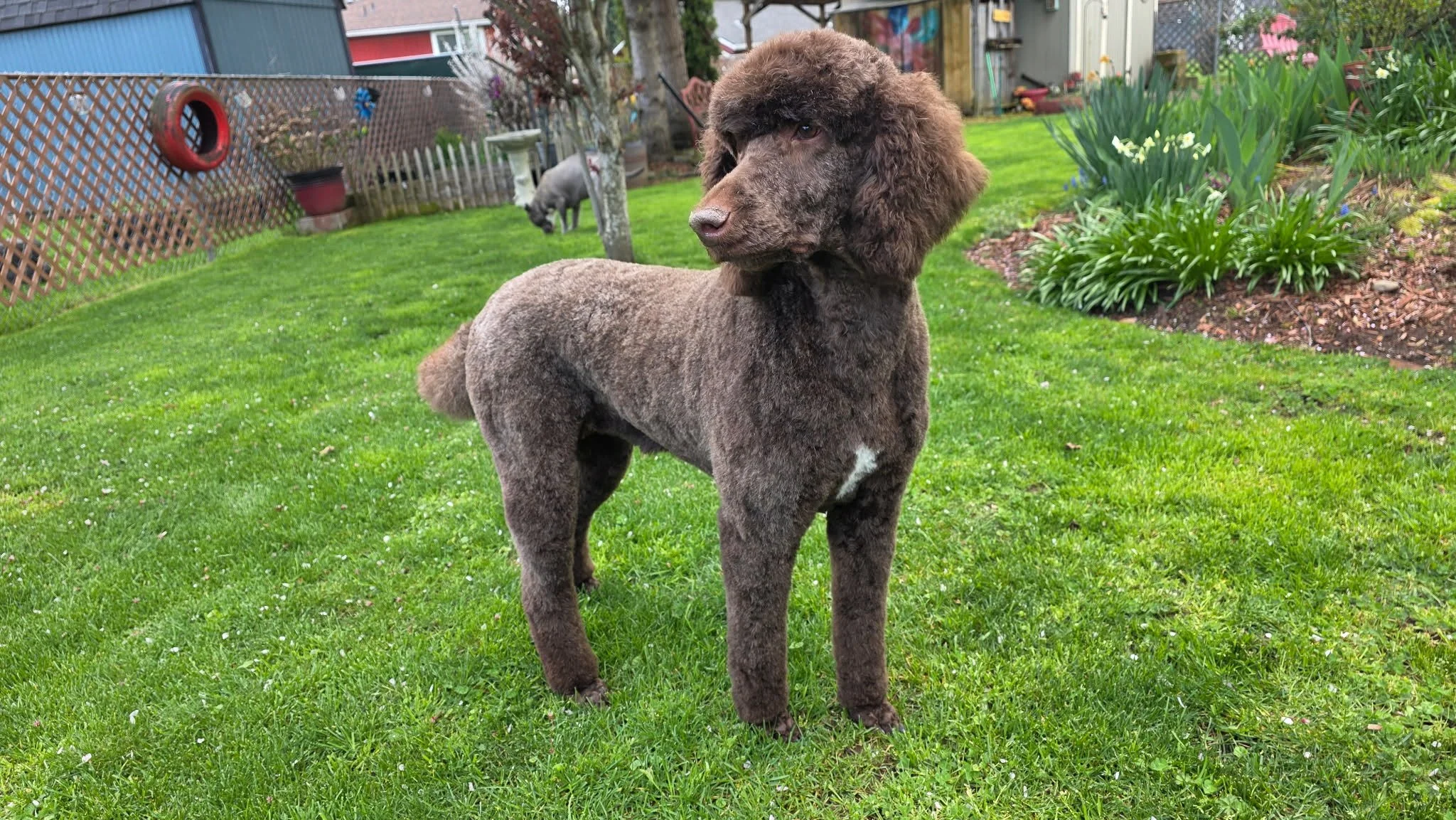
Chocolate Goldendoodles
In Goldendoodles, the term chocolate is more commonly used.
Chocolate Goldendoodles can display a wide range of shades and coat types while maintaining the same underlying brown pigment genetics.
Like all colors, chocolate does not influence temperament, trainability, confidence, or personality.
A chocolate coat may catch someone's eye.
Temperament is what determines daily life with that dog for the next decade or more.
Brown Phantom
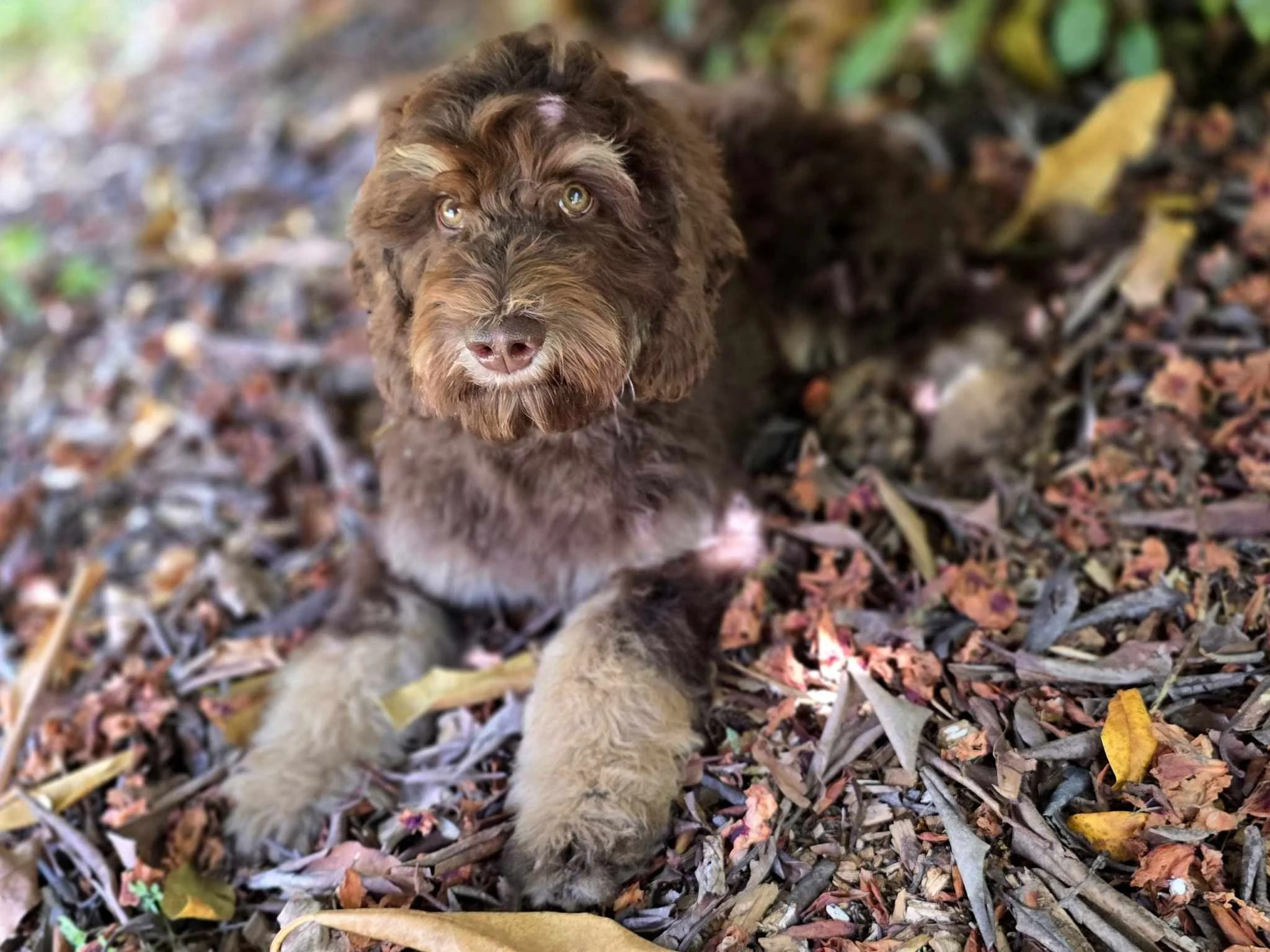
Brown phantom dogs combine brown pigment with the phantom pattern.
This creates tan, cream, or lighter brown markings above the eyes, on the chest, legs, cheeks, and under the tail while maintaining the rich brown base coat.
The result is often a dramatic and highly recognizable appearance.
Brown phantom remains one of the most visually striking color combinations found in both Poodles and Goldendoodles.
Learn more about Phantom Dogs: Understanding Phantom Markings
Café au Lait & Silver Beige
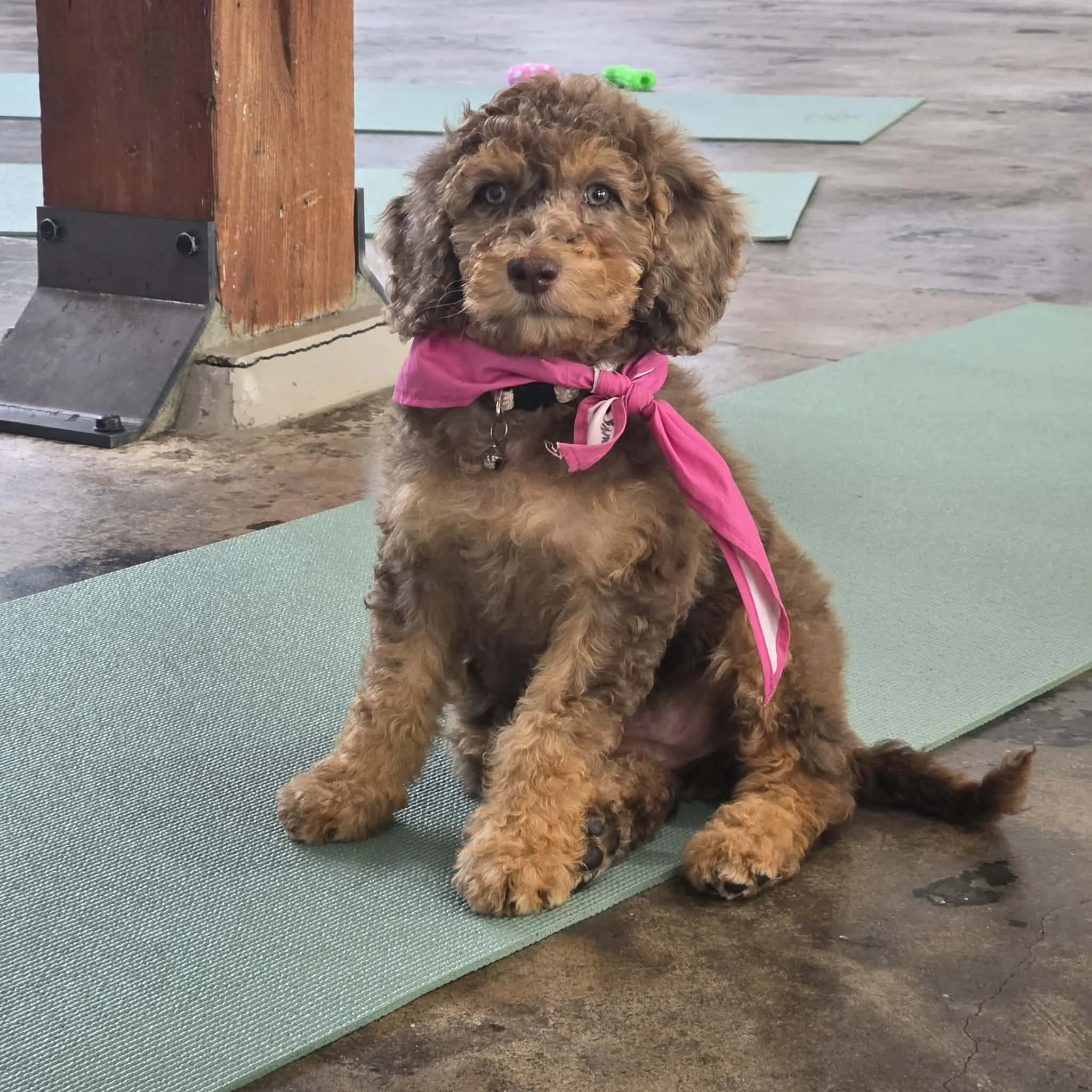
Café au Lait and Silver Beige are color progressions that develop from brown pigment genetics.
Many puppies destined to become Café au Lait or Silver Beige are born much darker than they will ultimately appear as adults. Over time, the coat gradually lightens, sometimes transforming dramatically over the course of several years.
While the two colors are related, they are not identical.
Café au Lait typically develops into a warm coffee-with-cream shade.
Silver Beige generally develops into a lighter, cooler taupe or beige appearance.
One of the most interesting aspects of these colors is that they remain difficult to predict.
Unlike many coat color traits that can be identified through modern DNA testing, breeders currently do not have a genetic test that reliably predicts whether a brown puppy will ultimately develop into Café au Lait, Silver Beige, or remain a darker brown throughout life.
Instead, breeders must rely on pedigree research, knowledge of the bloodlines, and observations of what related dogs have produced in previous generations.
Even then, surprises happen.
Over the years, we have seen litters produce color progression we did not expect, while other litters from lines known for producing lighter adult coats remained darker than anticipated.
This uncertainty is one reason Café au Lait and Silver Beige remain among the most difficult colors to intentionally produce and accurately predict.
For breeders who enjoy color genetics, they are also among the most fascinating.
Brown Poodles
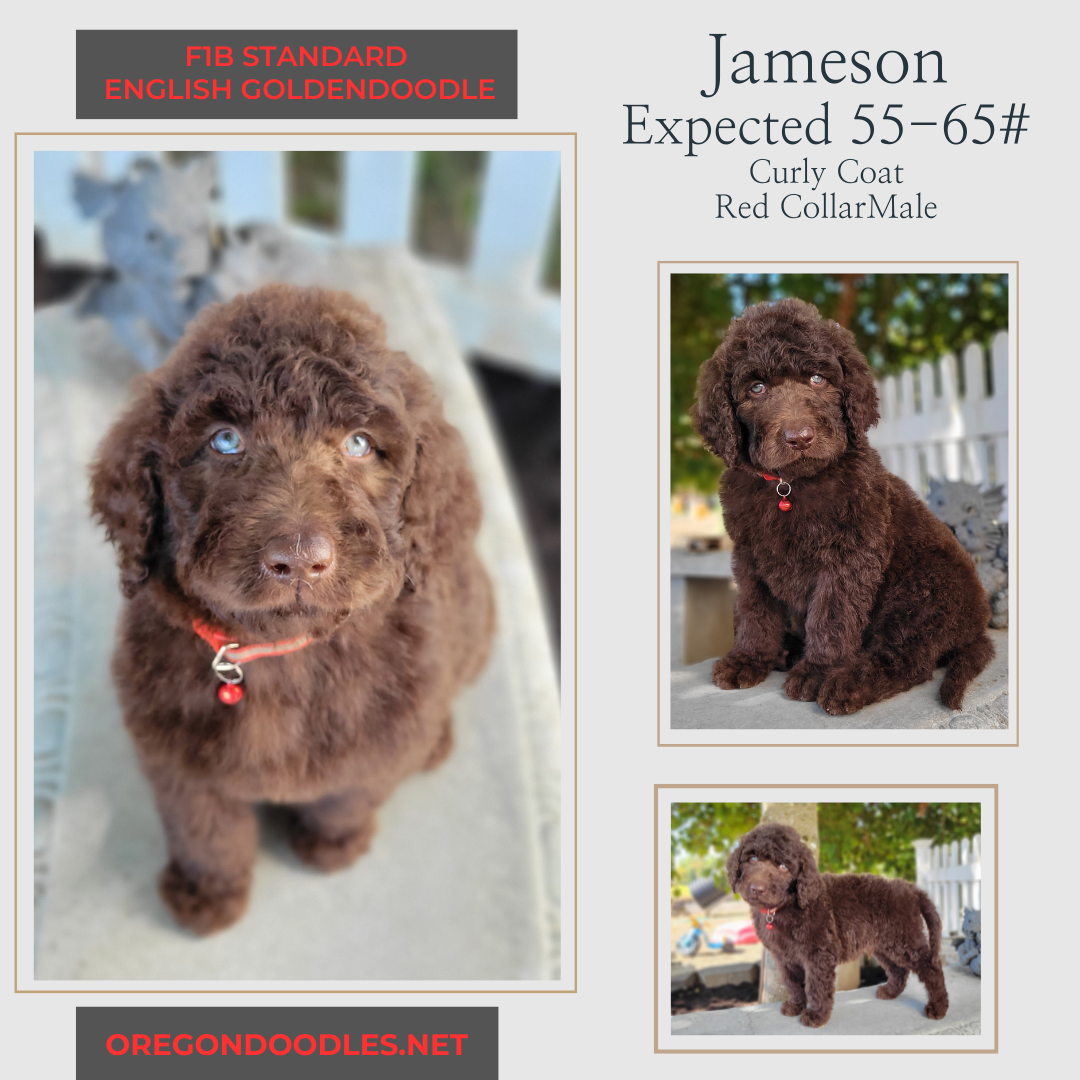
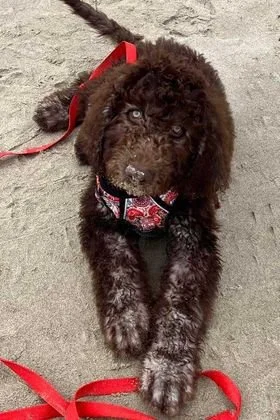
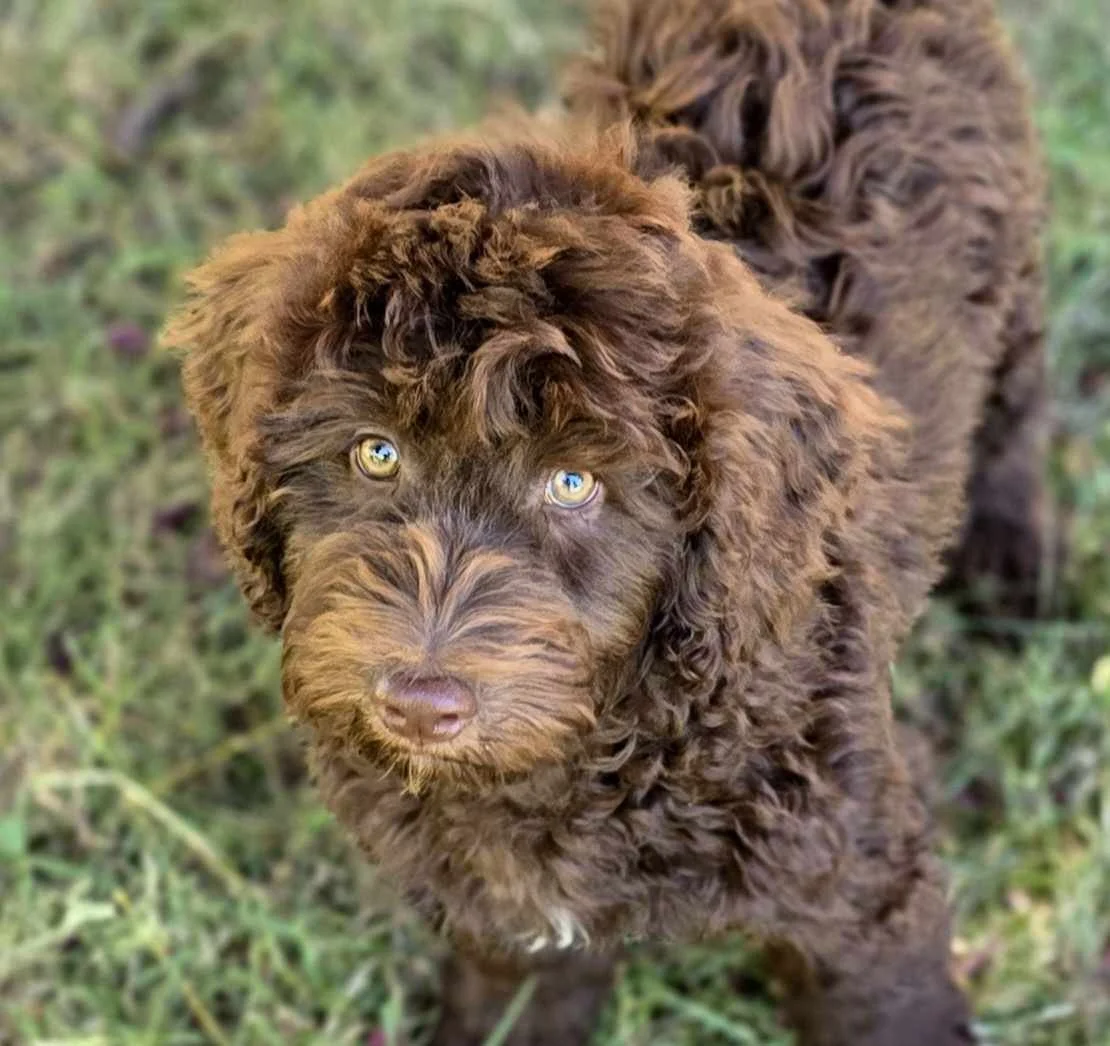
Brown has long been a recognized color within the Poodle breed.
Brown Poodles may range from deep dark chocolate to lighter brown shades depending on genetics, age, and color progression.
One characteristic many owners appreciate is the warmth of the color. Brown coats often appear especially rich in natural sunlight and can create beautiful contrast with expressive eyes and facial features.
Because brown is a foundational color, it also serves as the starting point for several other color variations found within the breed.
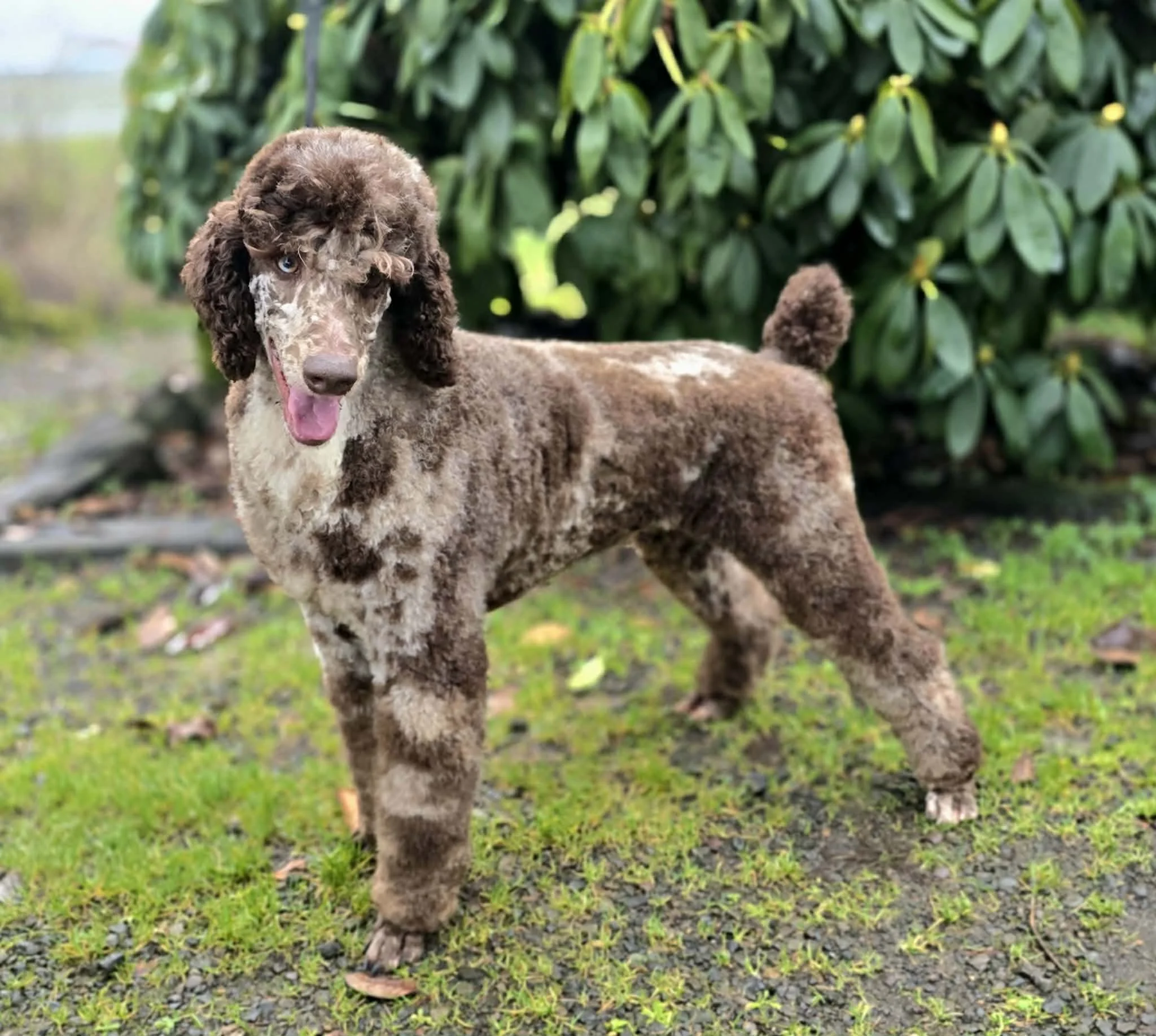
Brown Merle
One of the most striking combinations found in modern dog breeding is brown merle.
Brown merle dogs combine brown pigment genetics with the merle pattern, producing the marbled appearance many people associate with merle while maintaining warm brown pigment throughout the coat.
Our own brown merle Poodle, Fancy, is a wonderful example.
Fancy joined our program because of her:
Confidence
Structure
Trainability
Engagement
Outgoing personality
Her color is beautiful, but she was selected because of the complete package she brings to the program.
Brown merle remains one of the color combinations we find particularly fascinating, but our focus remains on producing quality dogs first and beautiful colors second.
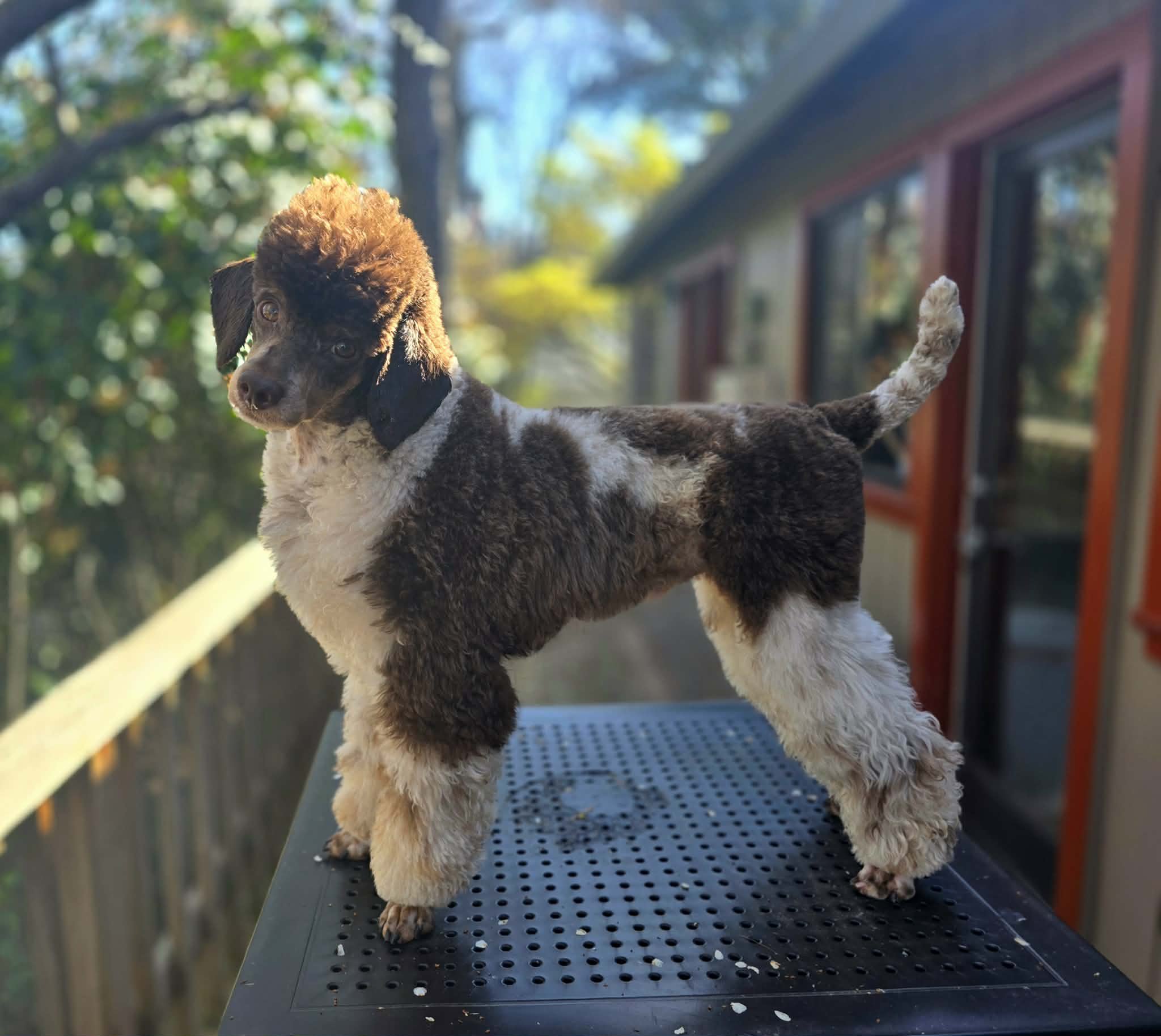
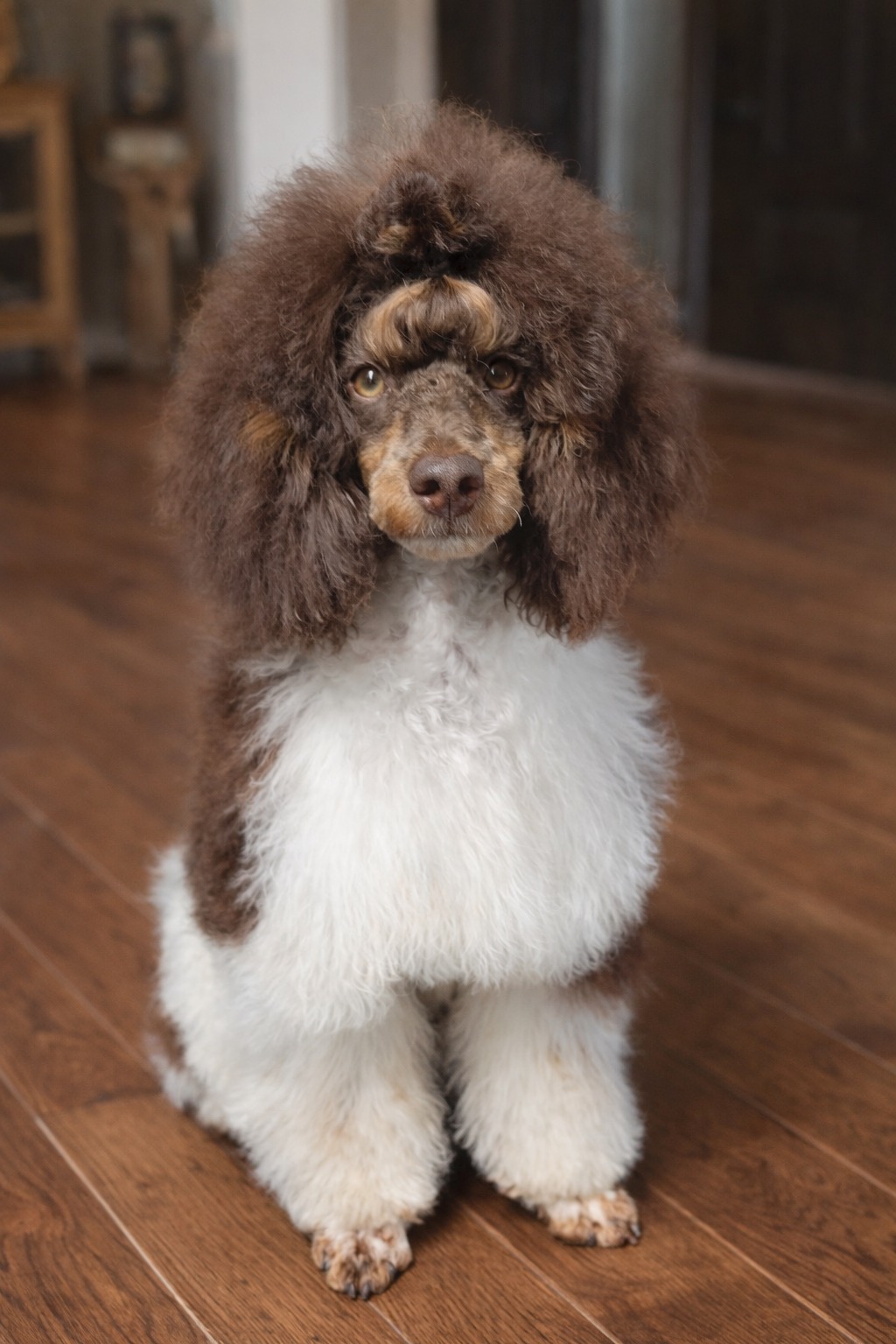
Brown / Chocolate Parti
Brown parti, often called chocolate parti in Goldendoodles, combines brown pigment with parti markings.
These dogs have white coat areas with brown or chocolate patches. The amount and placement of white can vary widely, which means no two brown parti dogs look exactly alike.
Brown parti may appear in both Poodles and Goldendoodles. In Poodles, the color is typically described as brown parti. In Goldendoodles, families are more likely to recognize the term chocolate parti.
While parti is not a primary focus of our breeding program, it can appear depending on the genetics behind the pairing. As with every color or pattern, we evaluate the whole dog first: temperament, structure, health, trainability, and overall quality matter far more than markings alone.
Learn more about Parti Dogs: Understanding Parti Markings (Coming Soon)
Brown Merle Phantom
Brown Merle Phantom combines three separate genetic traits:
Brown pigment genetics
The merle pattern
Phantom markings
The result is one of the most visually striking color combinations found in both Poodles and Goldendoodles.
A brown merle phantom dog may display:
Marbled merle patterning
Brown pigment
Phantom points above the eyes
Phantom markings on the chest and legs
Cream, tan, or apricot trim
Because multiple genetic traits are working together, no two brown merle phantom dogs look exactly alike.
Among both breeders and puppy buyers, merle phantom combinations have become one of the most sought-after patterns in modern doodle and poodle breeding.
While the appearance is undeniably eye-catching, our philosophy remains unchanged.
Temperament, health, structure, and overall quality always come before color.
Internal Links:
➡️ Merle Poodles: Genetics, Health & Responsible Breeding
➡️ Phantom Dogs: Understanding Phantom Markings
Brown Parti Phantom (Tri-Color)
Brown Parti Phantom, often referred to as a tri-color pattern, combines three separate traits:
Brown pigment genetics
Parti markings
Phantom markings
The result can include:
Brown patches
White markings
Cream or tan phantom points
Because multiple genetic traits are working together, tri-color dogs often display tremendous variety in both color distribution and overall appearance.
Our own Pippin is an example of this combination.
Pippin was not selected because he is tri-color. In fact, he perfectly represents one of the core philosophies of our breeding program.
He was selected because of his:
Temperament
Structure
Trainability
Workability
Overall quality
His color is beautiful, but it was never the reason he earned a place in our program.
This distinction is important.
Color may be what first catches someone's attention, but temperament, health, structure, and overall quality are what ultimately matter most in a breeding program.
Tri-color patterns remain extremely popular among both families and breeders because of their unique and highly recognizable appearance. However, like every color and pattern discussed on this page, they are simply one part of the overall dog.
➡️ Phantom Dogs: Understanding Phantom Markings
➡️ Color & Coat Genetics in Poodles & Goldendoodles
➡️ Our Program
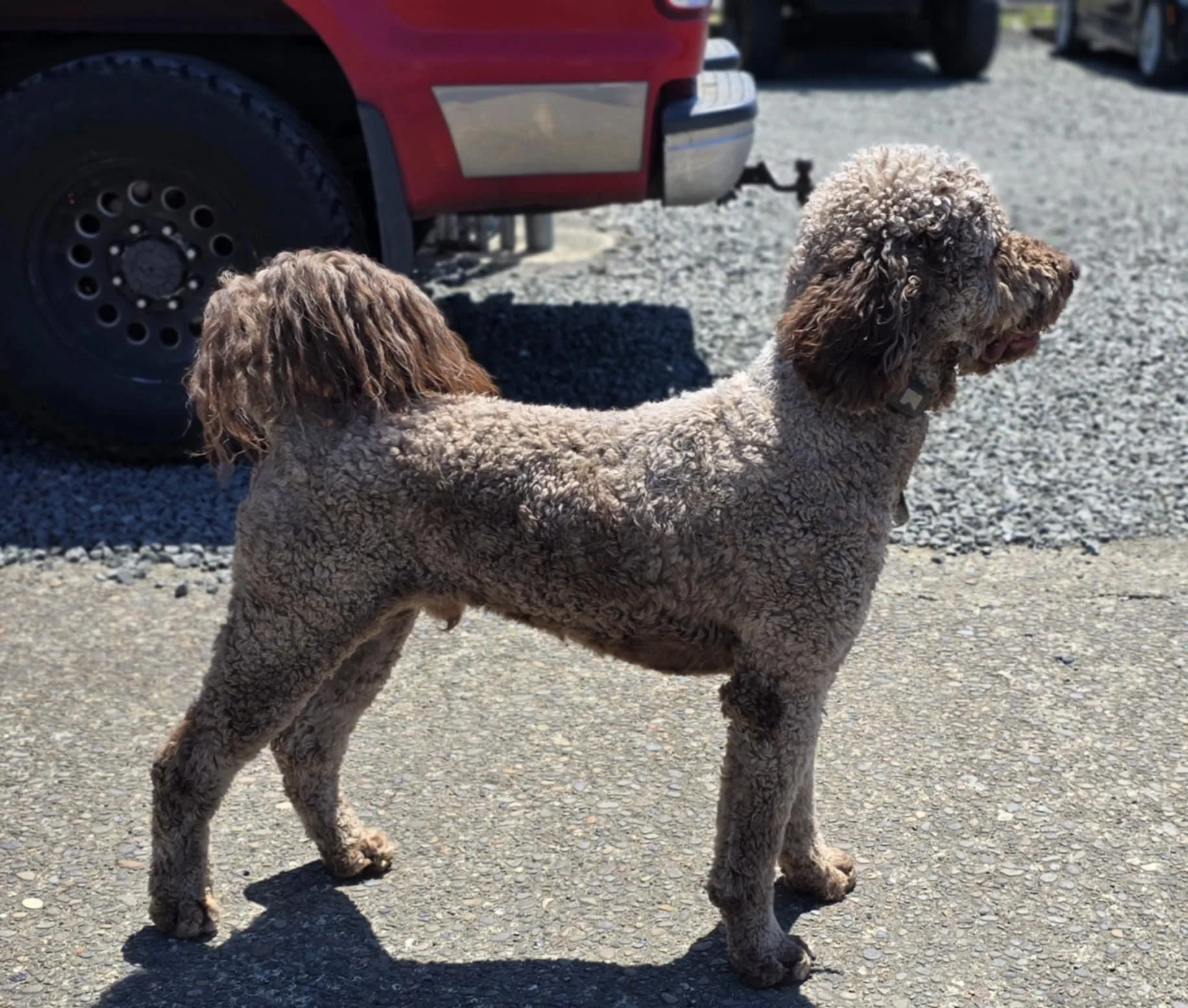
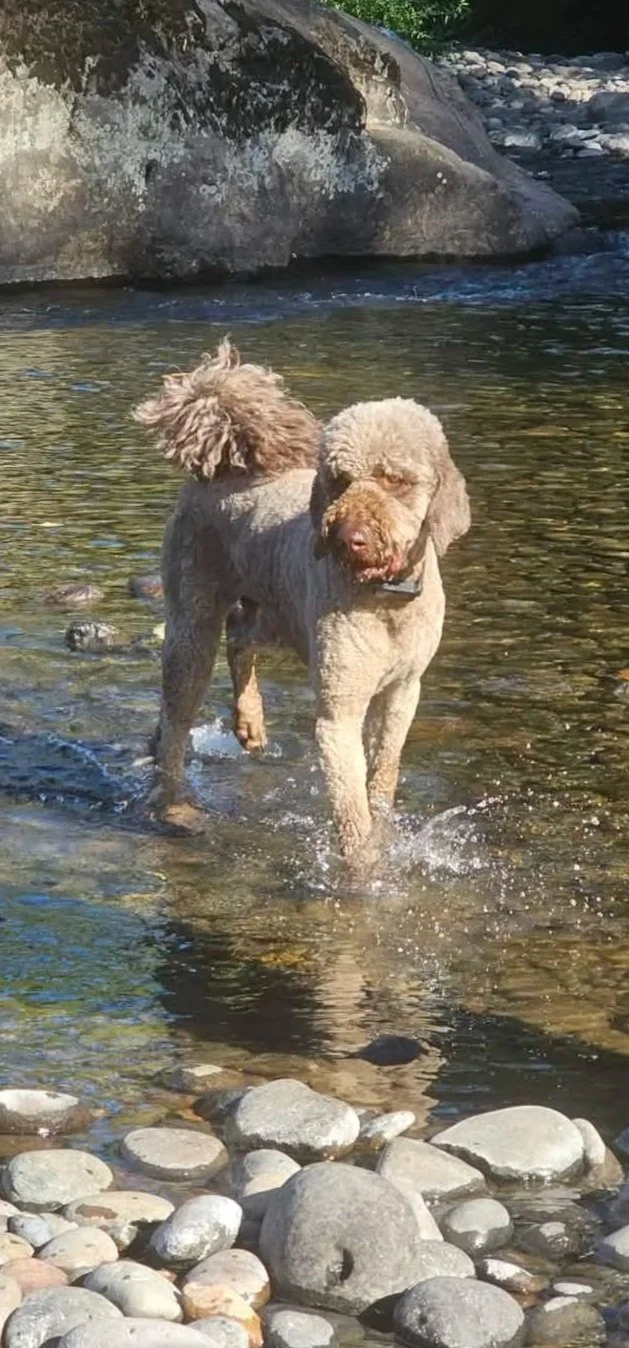
Color Progression Example of Café au Lait: Bohdi from our 2024 Stella & Whiskey litter
Bohdi demonstrates how dramatically some brown-based dogs can change as they mature.
As a puppy, Bohdi displayed a rich dark chocolate coat. Over time, his coat gradually lightened through a process commonly referred to as clearing, resulting in a significantly lighter adult appearance by two years of age.
This type of color progression is one reason experienced breeders are often cautious about predicting an adult dog's final color from puppy photos alone. While genetics can help us make educated predictions, some colors continue developing for months—or even years—after a puppy goes home.
Brown Pigment Isn't Always Visible
Many people assume brown pigment is only found in dogs that appear obviously brown or chocolate.
In reality, brown pigment can sometimes be hidden beneath lighter coat colors.
For example, a dog may appear cream, apricot, or red while still carrying brown pigment genetics.
In these cases, the brown pigment may be visible in areas such as:
Nose color
Eye rims
Lip pigment
Paw pads
rather than the coat itself.
This is one reason coat color genetics can become surprisingly complex. The color we see on the outside is not always the full story genetically.
Some dogs that appear similar in coat color may carry very different underlying pigment genetics.
➡️ Learn More: Red, Apricot & Cream Dogs: Understanding the Color Spectrum (coming soon)
Do Brown Dogs Have Different Temperaments?
No.
Coat color does not determine whether a dog will be:
Friendly
Trainable
Calm
Social
Intelligent
Suitable for service work
Temperament is influenced by genetics, breeding decisions, early development, socialization, and individual personality.
At Oregon's Legendary Goldendoodles & Poodles, we prioritize temperament, health, structure, and workability long before considering coat color.
Many of the traits that make a dog enjoyable to live with—including confidence, social stability, recovery from stress, and trainability—have nothing to do with coat color.
Color, Coat Type & Shedding
Many families researching chocolate Goldendoodles or brown Poodles assume color and coat type are connected.
In reality, coat color and coat type are inherited separately.
A brown or chocolate dog may have:
A curly coat
A wavy coat
A straighter coat
Varying shedding tendencies depending on genetics
The rich brown color of a dog does not determine whether the coat will be curly, whether it will shed, or whether it may be suitable for families concerned about allergies.
When selecting a puppy, it is important to evaluate color, coat type, and temperament as separate traits.
Internal Links:
➡️ Curly vs Wavy Goldendoodles
➡️ Understanding Shedding in Goldendoodles
➡️ Understanding F1, F1B & Multigenerational Goldendoodles
Why We Like Brown Genetics
Brown pigment genetics are responsible for some of the most beautiful color combinations found in dogs today.
Brown can serve as the foundation for:
Brown Merle
Brown Phantom
Brown Parti
Café au Lait
Silver Beige
Our own program demonstrates this diversity particularly well.
From rich dark brown dogs to brown merles like Fancy and dogs that gradually lighten over time, brown genetics can create tremendous variety while still maintaining the same underlying pigment foundation.
We appreciate the diversity and beauty these genetics can produce.
At the same time, our philosophy remains unchanged.
Color is one of the many ways quality can be expressed.
It is never the entire picture.
Quality remains the trait we value most.
When evaluating breeding dogs, we prioritize:
Temperament
Structure
Health
Trainability
Workability
Overall quality
before color ever enters the conversation.
➡️ Our Program
➡️ Color & Coat Genetics in Poodles & Goldendoodles
Common Myths About Brown & Chocolate Dogs
Brown pigment genetics are responsible for some of the most beautiful colors found in both Poodles and Goldendoodles. Unfortunately, they are also surrounded by plenty of misconceptions.
Here are some of the most common myths we encounter.
Myth: Brown and Chocolate Are Different Colors
This is one of the most common points of confusion.
In the Poodle world, the color is traditionally called brown.
In the Goldendoodle world, the same color is often called chocolate.
The underlying genetics are identical.
The difference is simply terminology.
Myth: All Brown Puppies Stay Brown
Not necessarily.
Some brown puppies mature into rich dark brown adults.
Others gradually lighten over time.
Some may eventually develop into Café au Lait or Silver Beige, while others remain darker throughout life.
Because color progression varies between bloodlines and individuals, adult color is not always predictable from puppy photos alone.
Myth: Brown Dogs Always Have Light Eyes
Brown pigment often results in lighter eye color than black pigment, but there is still significant variation.
Some brown dogs have striking amber eyes.
Others have darker brown eyes.
Eye color is influenced by multiple genetic factors and cannot be predicted solely by coat color.
Myth: Brown Dogs Have Different Temperaments
Coat color does not determine personality.
Brown dogs are not automatically calmer, friendlier, smarter, more trainable, or better family companions than dogs of any other color.
Temperament is influenced by:
Genetics
Breeding decisions
Parent temperament
Early puppy development
Socialization
Individual personality
Color and temperament are separate traits.
Myth: Brown Dogs Always Produce Brown Puppies
A brown dog can only pass along the genes it carries.
Depending on the genetics of both parents, brown dogs may produce:
Brown puppies
Black puppies
Red puppies
Cream puppies
Apricot puppies
Various patterns and combinations
The color of the parents is only part of the story. The hidden genetics behind those dogs often matter just as much.
Myth: Café au Lait and Silver Beige Can Be Reliably DNA Tested
Modern genetic testing has dramatically improved our understanding of coat color inheritance.
However, breeders currently do not have a genetic test that reliably predicts whether a brown puppy will mature into Café au Lait, Silver Beige, or remain a darker brown throughout life.
Instead, breeders rely on:
Bloodline knowledge
Pedigree research
Previous offspring
Observed color progression within families
Even then, surprises happen.
Myth: Rare Colors Are Always Better
A beautiful color can certainly catch someone's attention.
It does not automatically make a dog healthier, more trainable, more structurally sound, or better suited for family life.
The rarest trait in breeding is not a color.
The rarest trait is quality.
At Oregon's Legendary Goldendoodles & Poodles, we value temperament, health, structure, trainability, and overall quality before color ever enters the conversation.
Color is one of the many beautiful ways quality can be expressed.
It is never the entire picture.
Frequently Asked Questions About Brown & Chocolate Dogs
-
Yes.
Brown is the traditional term used in the Poodle world, while chocolate is more commonly used in the Goldendoodle world. Both terms describe the same underlying pigment genetics.
-
Brown is less common than some colors but is well established in both Poodles and Goldendoodles.
The availability of brown puppies depends largely on the genetics within a particular breeding program.
-
Some do.
Others gradually lighten as they mature depending on the genetics they inherit.
In some cases, a dark brown puppy may eventually develop into Café au Lait or Silver Beige.
-
Both develop from brown pigment genetics.
Café au Lait typically develops into a warmer coffee-with-cream shade, while Silver Beige generally develops into a lighter, cooler beige or taupe appearance.
-
Not currently.
Breeders rely on pedigree research, family history, and observations of previous offspring because there is currently no genetic test that reliably predicts which brown puppies will develop these colors.
-
Typically yes.
Brown pigment often affects:
Nose color
Eye rims
Lip pigment
Paw pads
This is one of the easiest ways to identify brown pigment genetics, even when the coat itself may appear cream, apricot, or red.
-
Yes.
Brown pigment is not always visible in the coat itself.
Some cream, apricot, and red dogs carry brown pigment genetics that are only visible through nose color, eye rims, lip pigment, or through the colors they produce in future generations.
-
Brown merle is less common than many traditional colors and combines brown pigment genetics with the merle pattern.
Because multiple genetic traits must come together, brown merles are often highly sought after by both breeders and families.
Learn more:
-
No.
Temperament is influenced by genetics, breeding decisions, early development, socialization, and individual personality—not coat color.
-
Item descriThe answer depends on the genetics carried by both parents.
A brown dog does not automatically produce only brown puppies.
Depending on the hidden genetics inherited from previous generations, brown dogs may produce:
Brown puppies
Black puppies
Cream puppies
Apricot puppies
Red puppies
Phantom puppies
Parti puppies
Merle puppies (when merle genetics are present)
This is one reason breeders often study pedigrees, genetic testing, and previous generations rather than relying solely on the visible color of the parents.ption