
Color & Coat Genetics in Poodles & Goldendoodles
Understanding Dog Coat Colors, Patterns & Genetics
One of the most fascinating aspects of dog breeding is the incredible variety of colors and patterns that can appear within a breed.
From rich reds and chocolates to striking merles, phantoms, partis, sables, silvers, brindles, and roans, coat color is often one of the first things people notice when looking at a puppy.
At Oregon's Legendary Goldendoodles & Poodles, we genuinely enjoy studying color genetics. Understanding how traits are inherited helps us predict possible outcomes, better understand our breeding dogs, and appreciate the beauty and diversity that exists within the breeds we love.
At the same time, we believe color should never be the primary focus when evaluating a dog.
Our program is built around temperament, health, structure, trainability, and overall quality first. Color is simply one of the many beautiful ways quality can be expressed.
Whether you're researching Merle Poodles, Parti Goldendoodles, Phantom markings, Silver Poodles, or simply trying to understand how color genetics work, this guide provides an introduction to some of the most common color patterns found in Poodles and Goldendoodles.
Our Philosophy: Quality Is the Rare Trait
Many colors and patterns can be considered uncommon.
Merle.
Phantom.
Parti.
Brindle.
Roan.
Silver.
Rare colors often attract attention, and there is nothing wrong with appreciating beautiful dogs.
However, color alone does not make a dog exceptional.
The rarest trait in breeding is not a color.
The rarest trait is quality.
A truly exceptional dog combines:
Excellent temperament
Sound structure
Appropriate health testing
Trainability
Confidence
Social stability
Workability
Beauty
Finding dogs that excel across all of these categories is far more challenging than producing a particular color pattern.
This philosophy guides every decision we make.
Learn more about our breeding goals on our:
Our Program
About Us & Our Goals
Health Testing
Temperament Testing
Common Colors in Poodles & Goldendoodles
Before discussing more complex patterns such as merle, phantom, parti, and sable, it helps to understand the foundation colors most people encounter.
Many of the more advanced patterns build upon these basic color genetics.
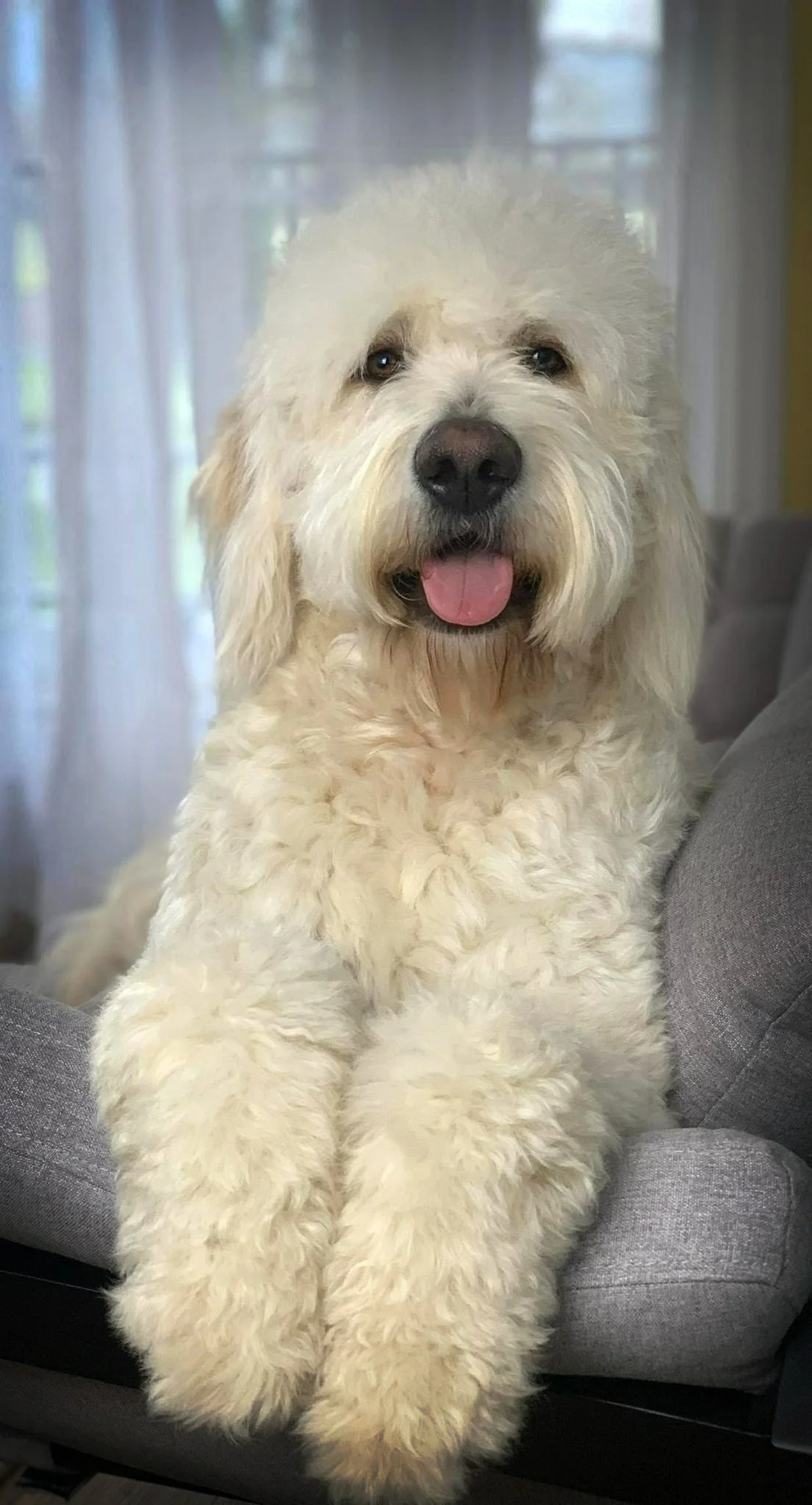
Cream
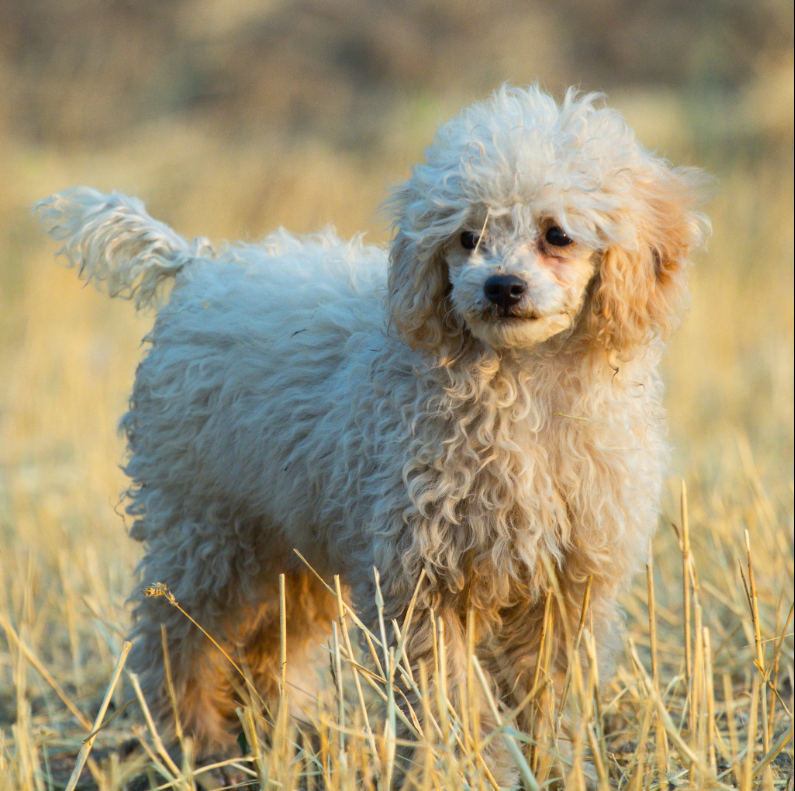
Cream is one of the most recognizable and popular colors found in both Poodles and Goldendoodles.
These dogs range from bright ivory to warm cream tones and often develop beautiful contrast through dark eye pigment, dark noses, and expressive facial features.
Cream remains especially popular among families seeking the classic teddy bear appearance commonly associated with Goldendoodles.
Apricot
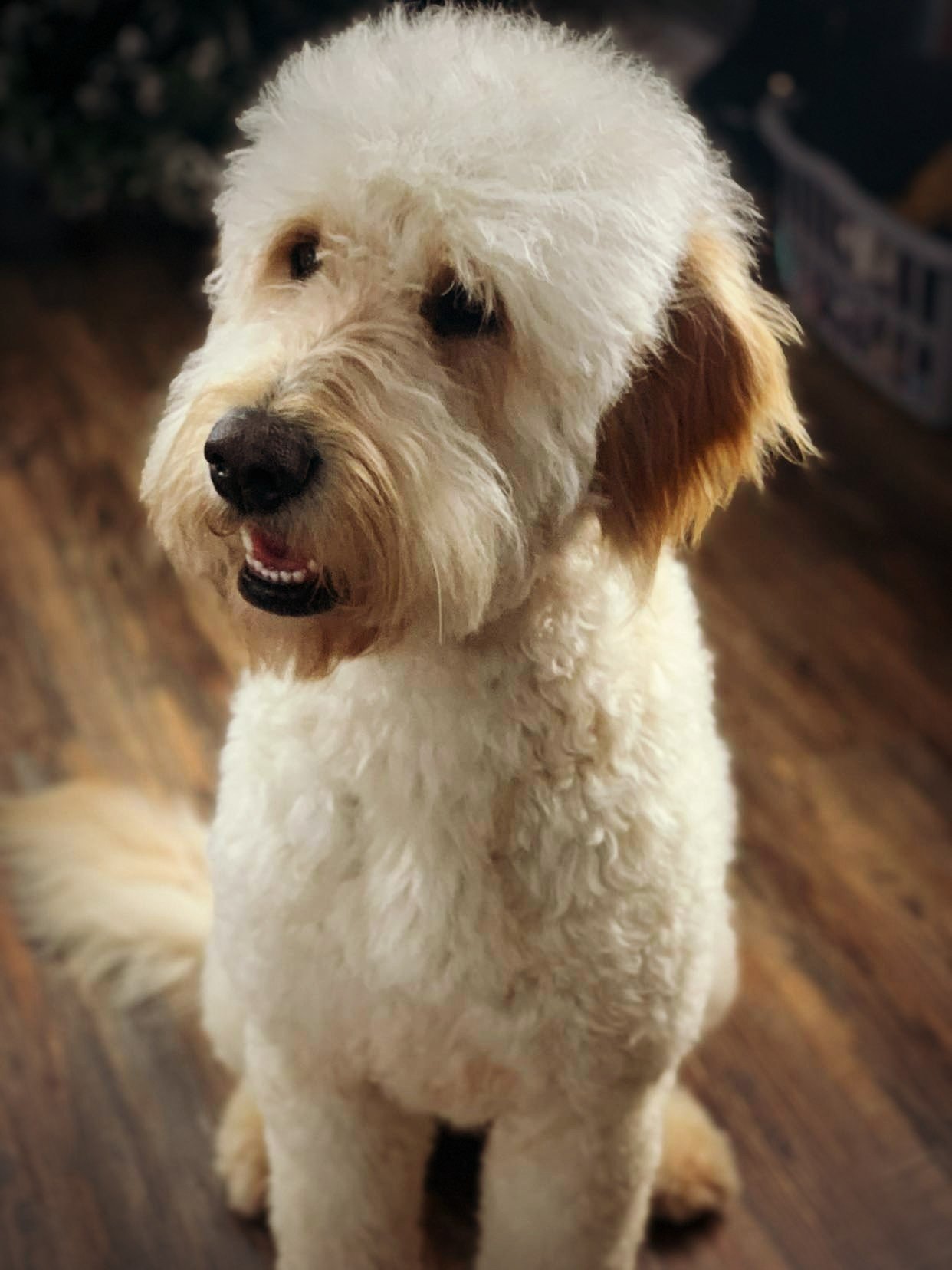
Apricot ranges from soft peach tones to rich golden shades.
Many dogs described as "golden" actually fall somewhere within the apricot spectrum.
Apricot is one of the most common colors found in Goldendoodles and remains extremely popular because of its warm, friendly appearance.
Some apricot dogs maintain their color well throughout life, while others gradually lighten with age.
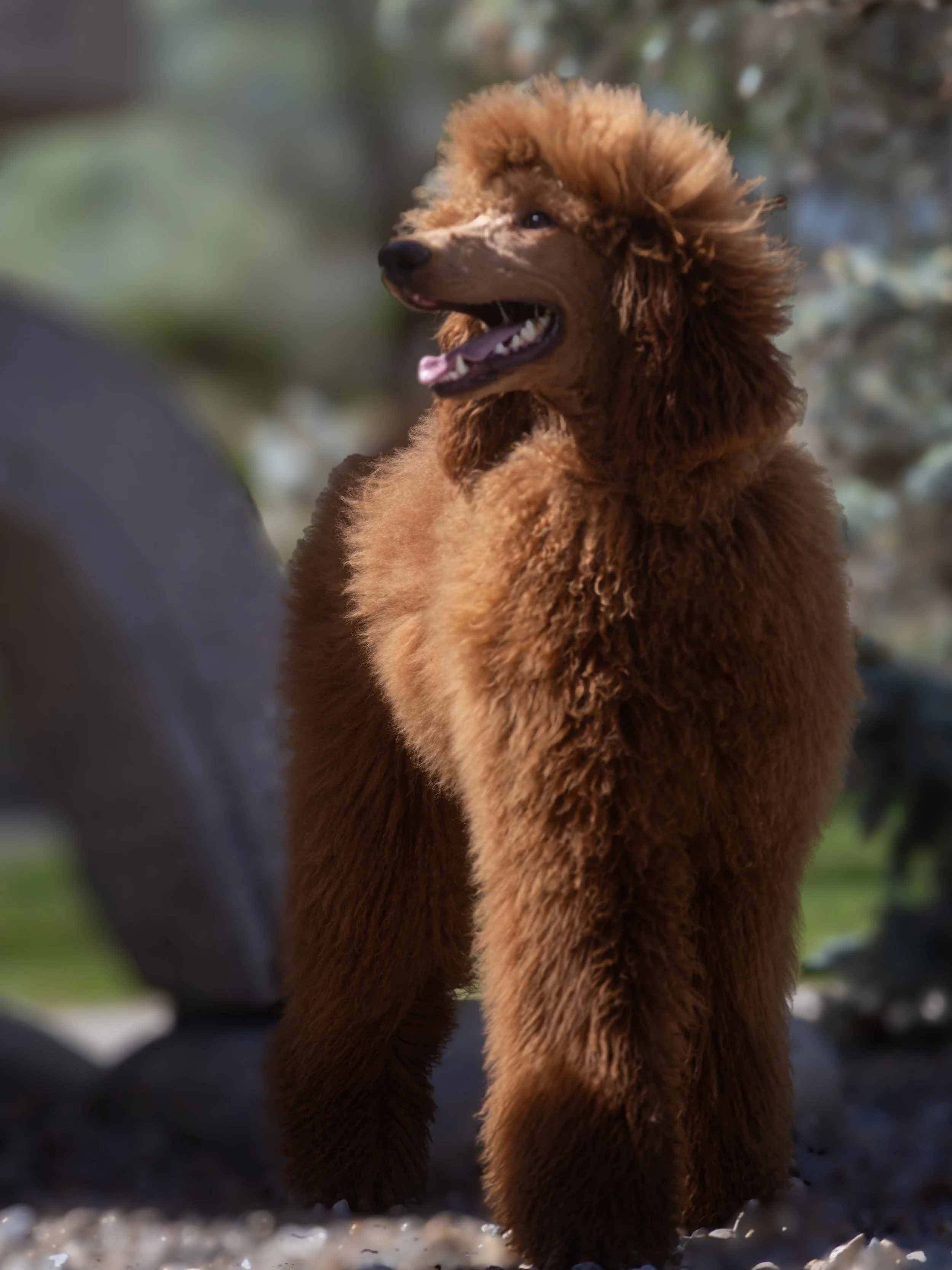
Red
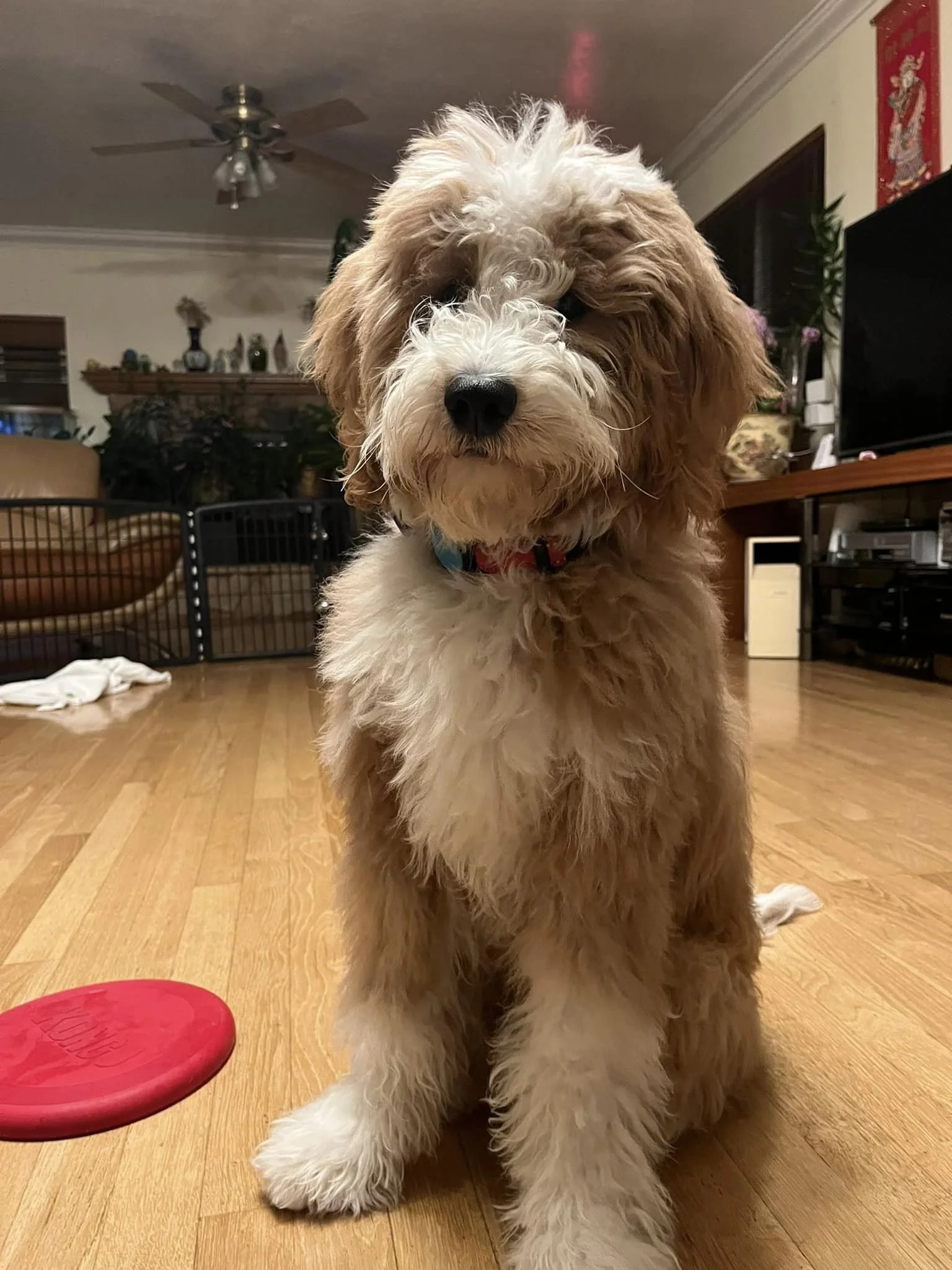
Red represents the deepest expression within the cream-to-red color spectrum.
Rich red coats are highly sought after in both Poodles and Goldendoodles and often produce the vibrant teddy bear appearance many families envision when searching for a puppy.
Some red dogs retain much of their color as adults, while others may gradually fade into lighter shades over time.
Because fading can occur, adult dogs often look quite different from the puppies they once were.
Chocolate / Brown
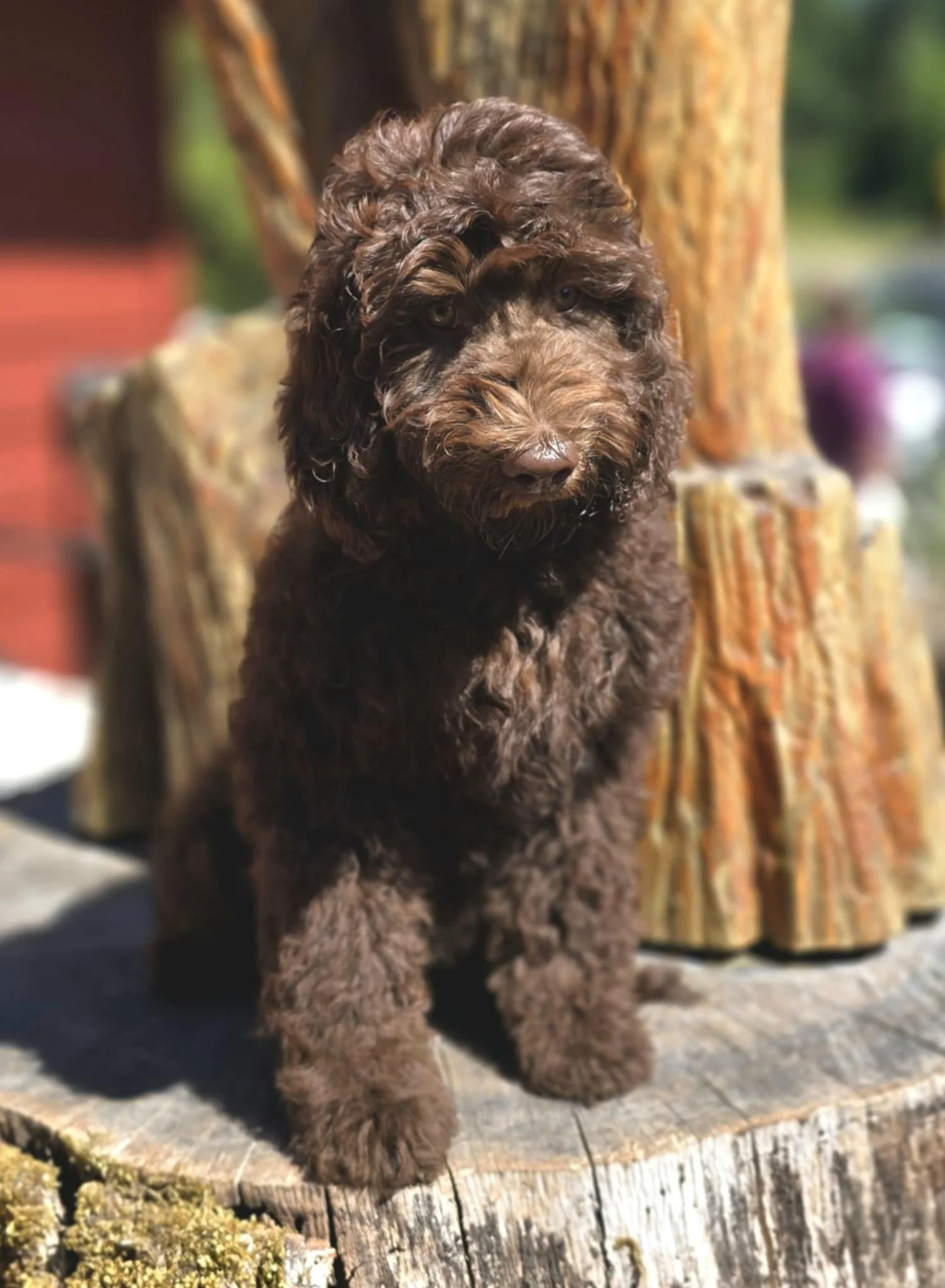
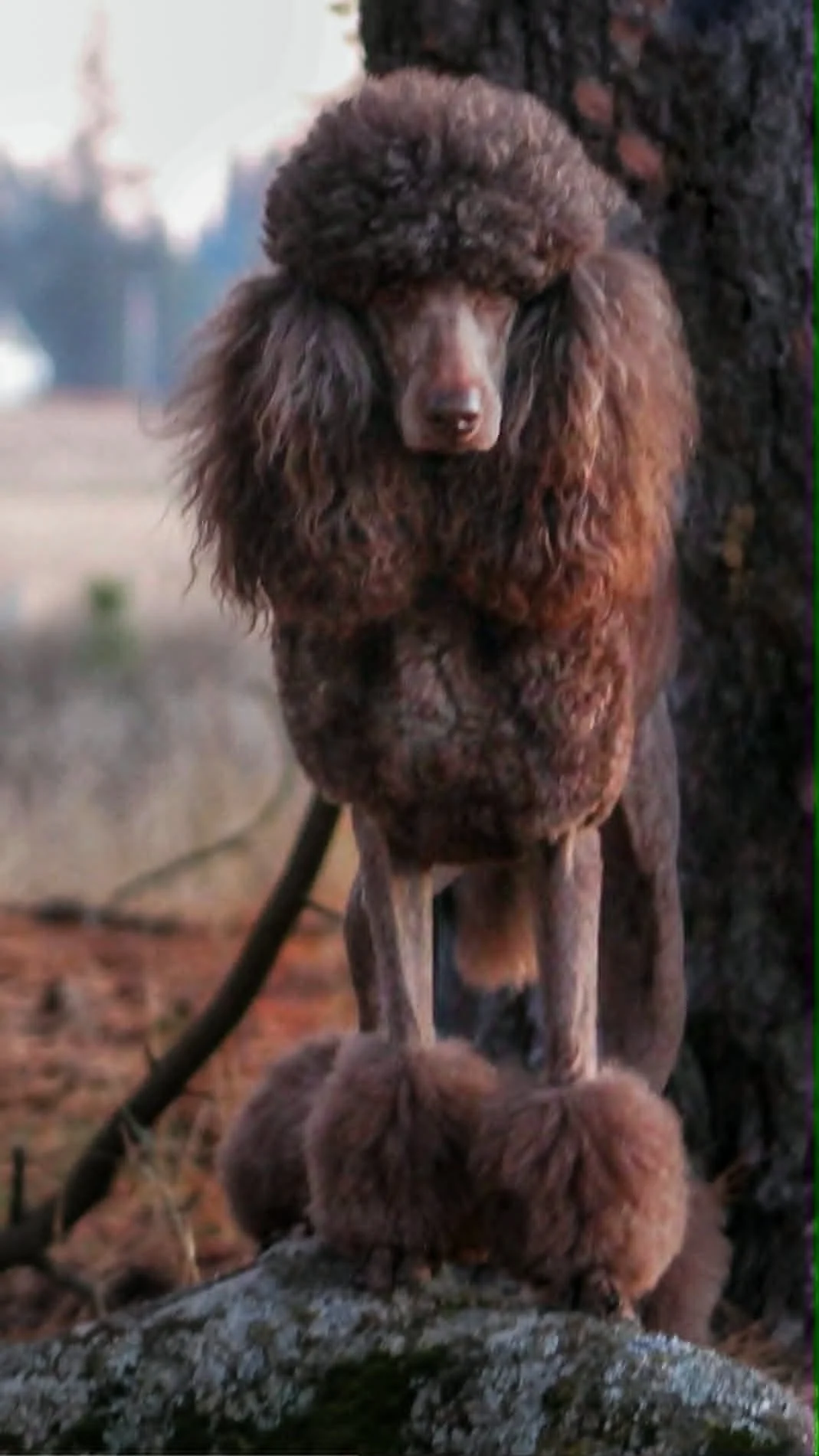
Chocolate, often referred to as brown in the Poodle world, is one of the richest and most recognizable colors found in both Poodles and Goldendoodles.
These dogs inherit genes that convert black pigment into brown pigment, resulting in a coat that can range from deep dark chocolate to lighter milk-chocolate shades. Brown dogs typically have matching brown noses, brown eye rims, and often lighter eye color than their black-pigmented counterparts.
In Poodles, the color is traditionally called brown, while many Goldendoodle owners and breeders use the term chocolate. Both names describe the same underlying color genetics.
Brown serves as the foundation for many other beautiful color combinations, including:
Brown Merle
Brown Phantom
Brown Parti
Brown Sable
Some brown dogs maintain a rich, dark coat throughout life, while others may gradually lighten as they mature.
Whether referred to as brown or chocolate, this color remains one of the most striking and versatile colors found in both breeds.
➡️ Brown (Chocolate) Dogs: Understanding Brown Pigment Genetics
Black
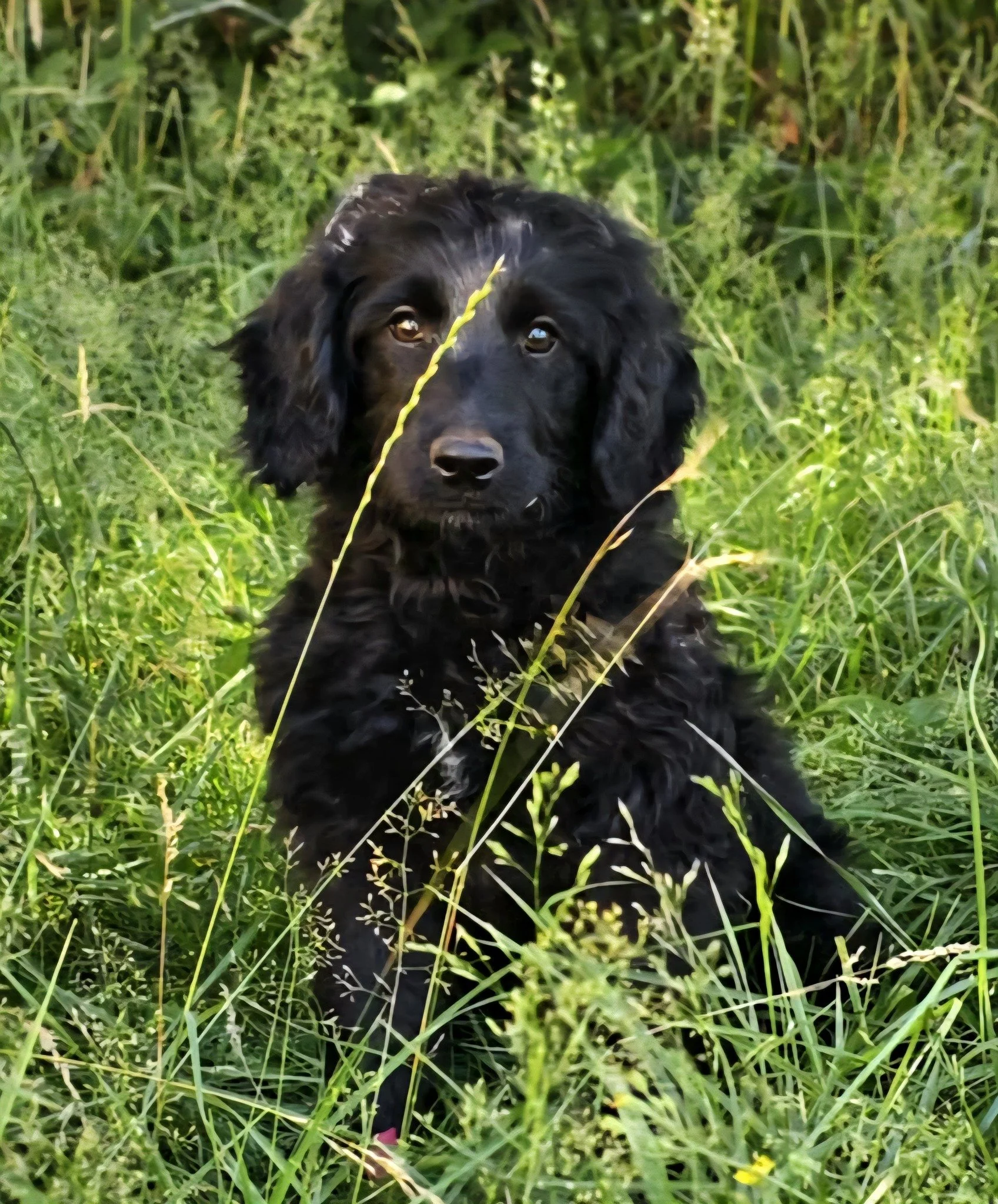
Black remains one of the most misunderstood and underappreciated colors in both Poodles and Goldendoodles.
While many families initially gravitate toward lighter colors such as cream, apricot, and red, black dogs often possess a striking elegance that becomes increasingly apparent as they mature.
A well-coated black dog showcases coat texture exceptionally well. The contrast created by a deep black coat can highlight structure, movement, expression, and overall presence in a way that lighter colors sometimes do not.
Black is also one of the foundational colors in canine genetics. Many other colors and patterns—including phantom, silver, blue, brindle, and various merle combinations—ultimately trace back to black pigment genetics.
Our program has produced many black Poodles and Goldendoodles over the years, and we have found that families who choose black dogs often become some of their biggest advocates. What may initially seem like a simple color frequently develops into a rich, glossy coat that turns heads wherever they go.
Like all colors, black does not determine temperament, trainability, intelligence, or personality. Some of the most confident, social, and highly trainable dogs in our program have been black.
Patterned & Specialty Colors
Before we jump into merle, phantom, and parti, give a short transition:
Many of the colors people recognize in Poodles and Goldendoodles are solid colors such as cream, apricot, red, chocolate, and black.
However, additional genes can create unique patterns, markings, and color combinations that add even more variety.
Some of these patterns have existed in dogs for generations, while others have become increasingly popular as genetic testing has improved our understanding of canine color inheritance.
The colors and patterns below are among the most commonly discussed specialty coat patterns found in Poodles, Goldendoodles, and related breeds.
Merle
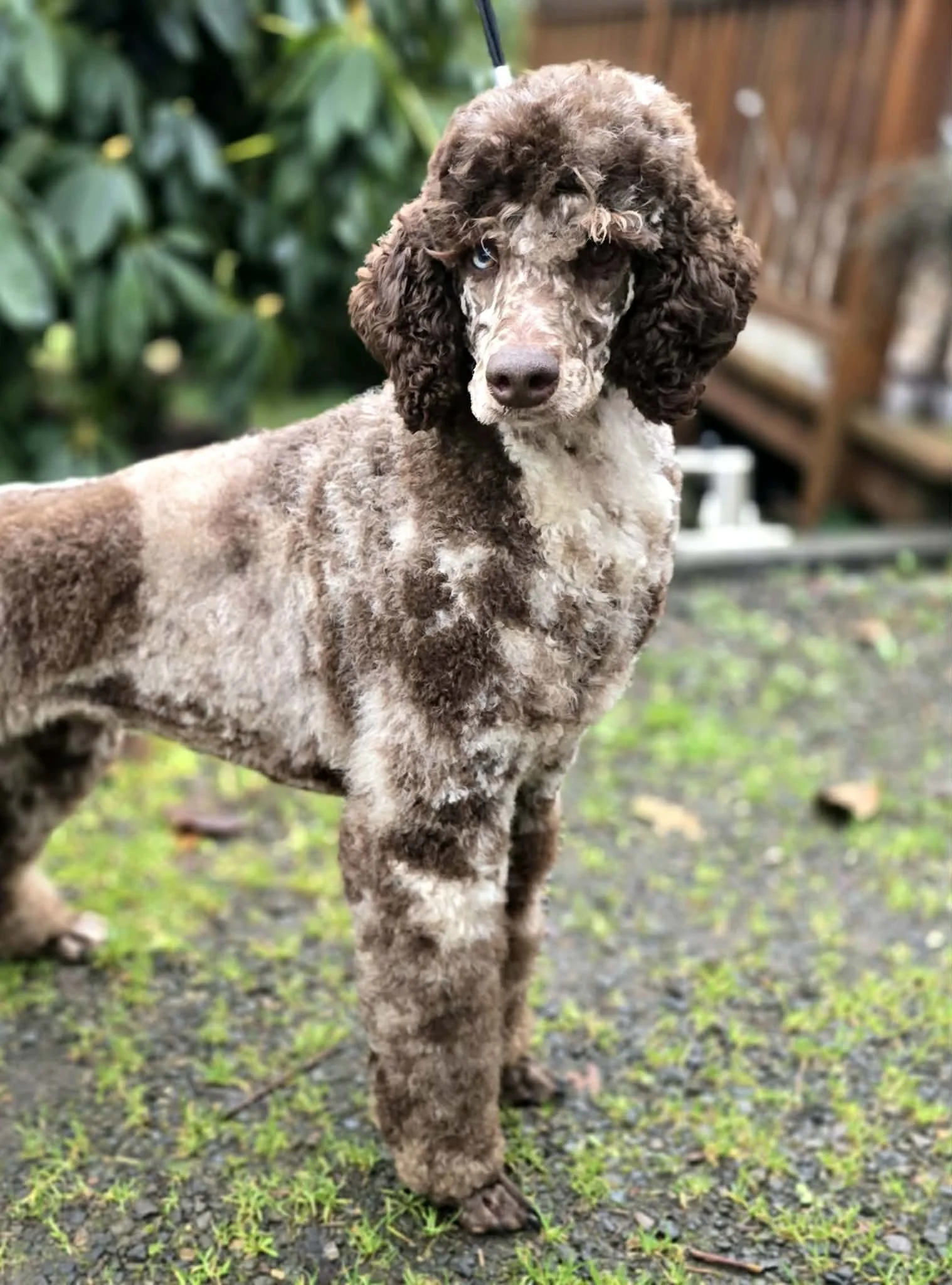
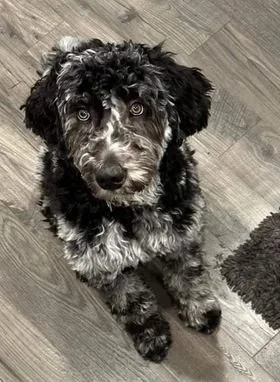
Merle creates a marbled or mottled appearance where areas of coat color are diluted into lighter patches throughout the coat.
Depending on the underlying color genetics, merle may appear as:
Brown Merle
Blue Merle
Merle Phantom
Merle Parti
Merle with white markings
Merle is one of the most recognizable and frequently discussed coat patterns in the dog world. It is also one of the most misunderstood.
At Oregon's Legendary Goldendoodles & Poodles, we have a particular interest in merle genetics and the role merle can play within a quality-focused breeding program. While color alone is never enough reason to select a breeding dog, we appreciate the beauty and genetic complexity merle brings when combined with excellent temperament, structure, health, and workability.
Our brown merle Poodle, Fancy, joined our program because of her confidence, trainability, structure, engagement, and outgoing personality. Her color is beautiful, but it was never the sole reason she was selected.
Today, we continue to develop our program around the same philosophy: evaluating dogs as complete individuals rather than focusing on color alone.
➡️ ➡️ Merle Dogs: Understanding Merle Colors, Patterns & Development (Coming Soon)
Sable
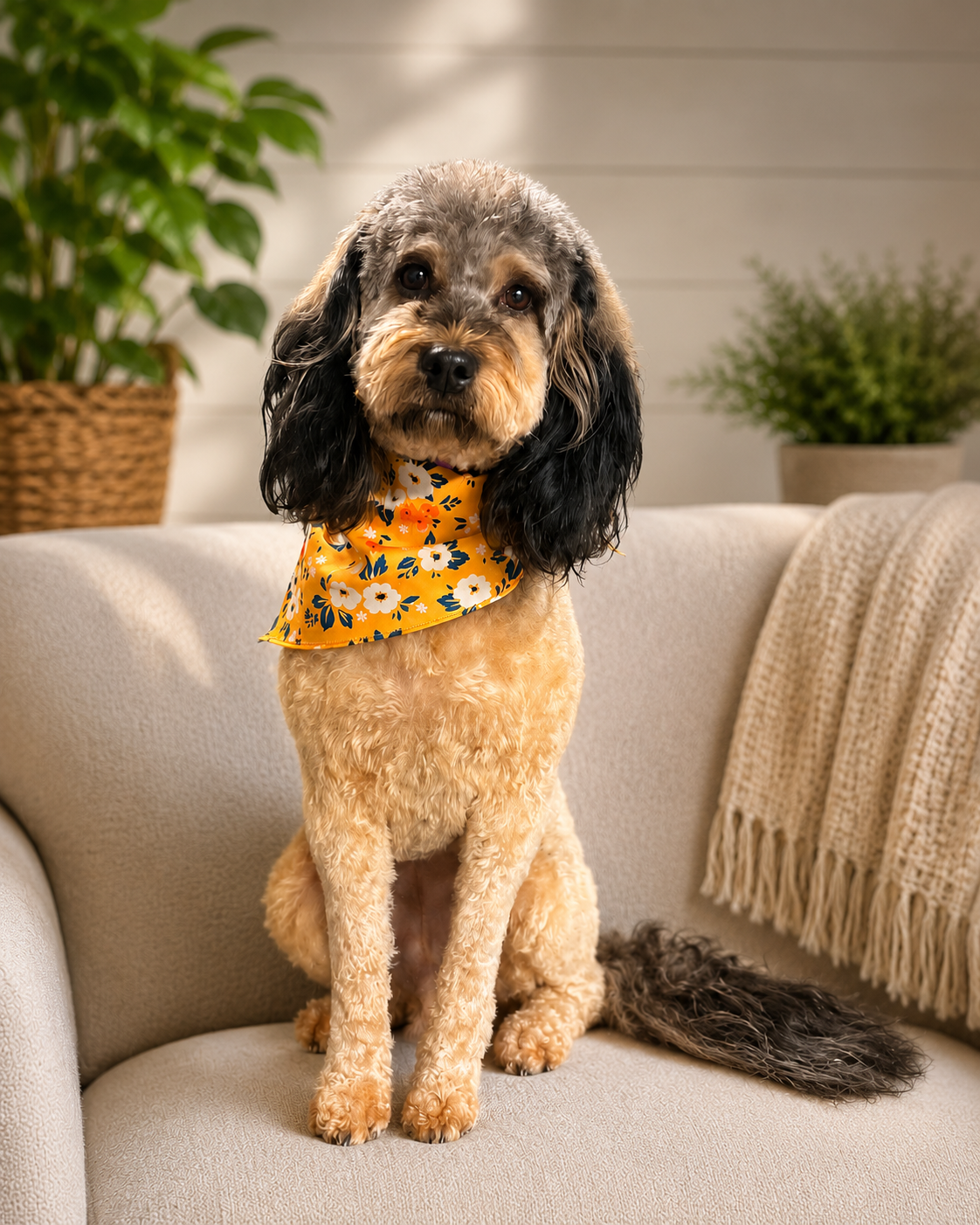
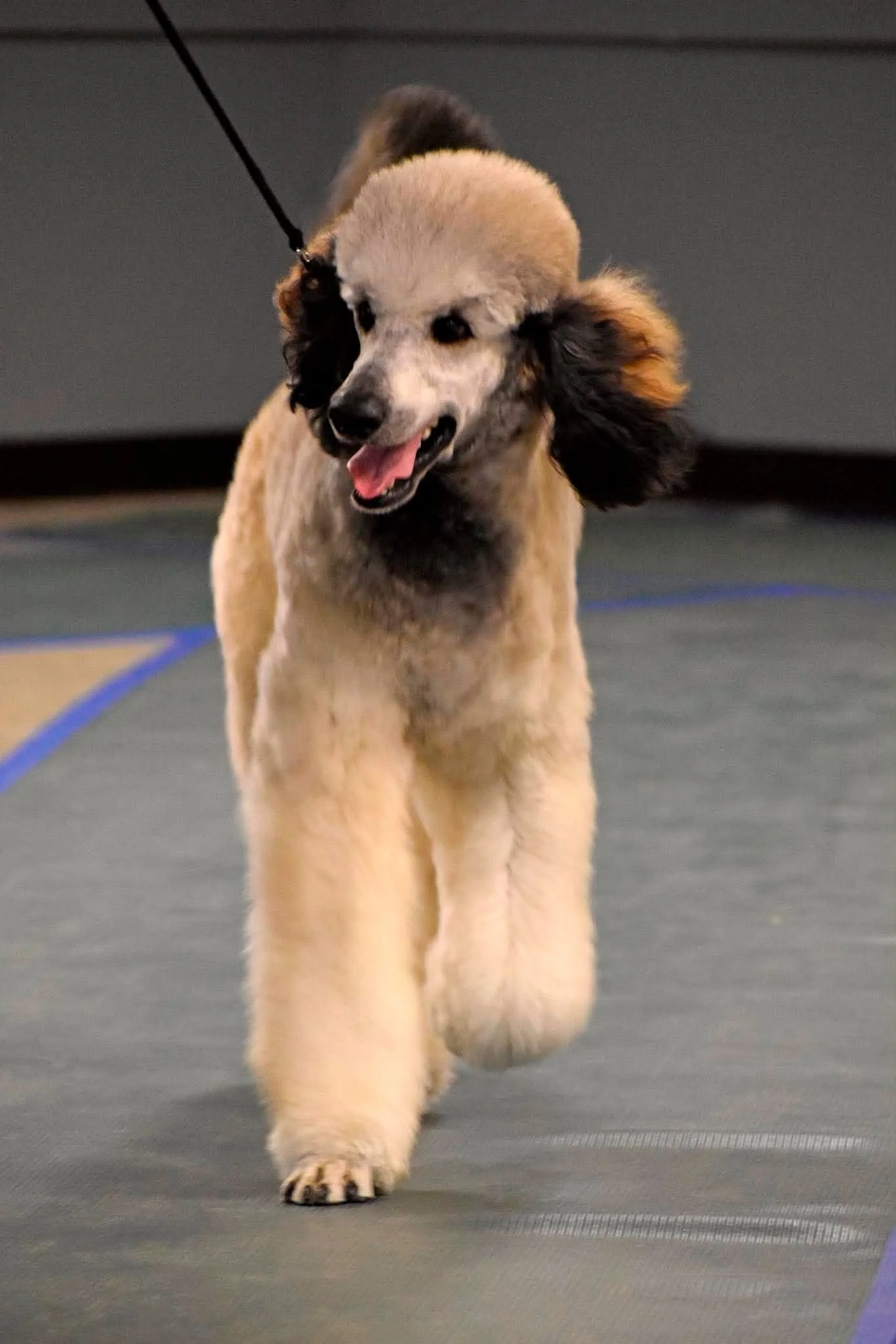
Sable is one of the most fascinating color patterns because the appearance often changes dramatically as the dog matures.
Sable puppies are born with dark-tipped hairs layered over a lighter base cuppy grows and sheds its puppy coat, many of those darker hairs gradually disappear, revealing a much lighter adult coat underneath.
This means a puppy that appears dark at eight weeks old may look completely different by adulthood.
The amount of color change varies from dog to dog. Some retain significant dark overlay throughout life, while others lighten dramatically.
Because of these changes, sable genetics are often responsible for some of the biggest surprises in color development.
➡️ Learn More: Sable Dogs – Understanding Sable Genetics (coming soon)
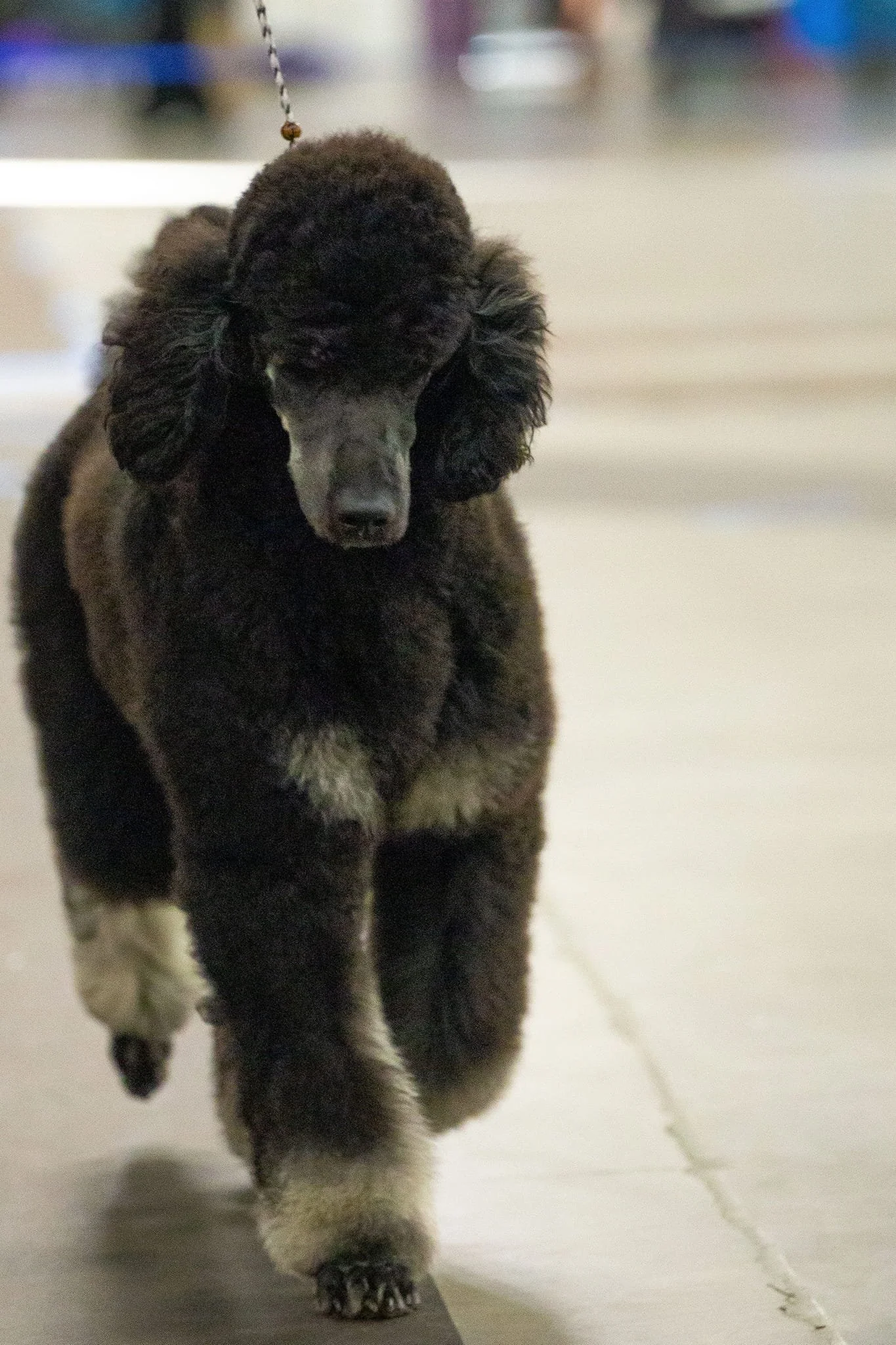
Phantom
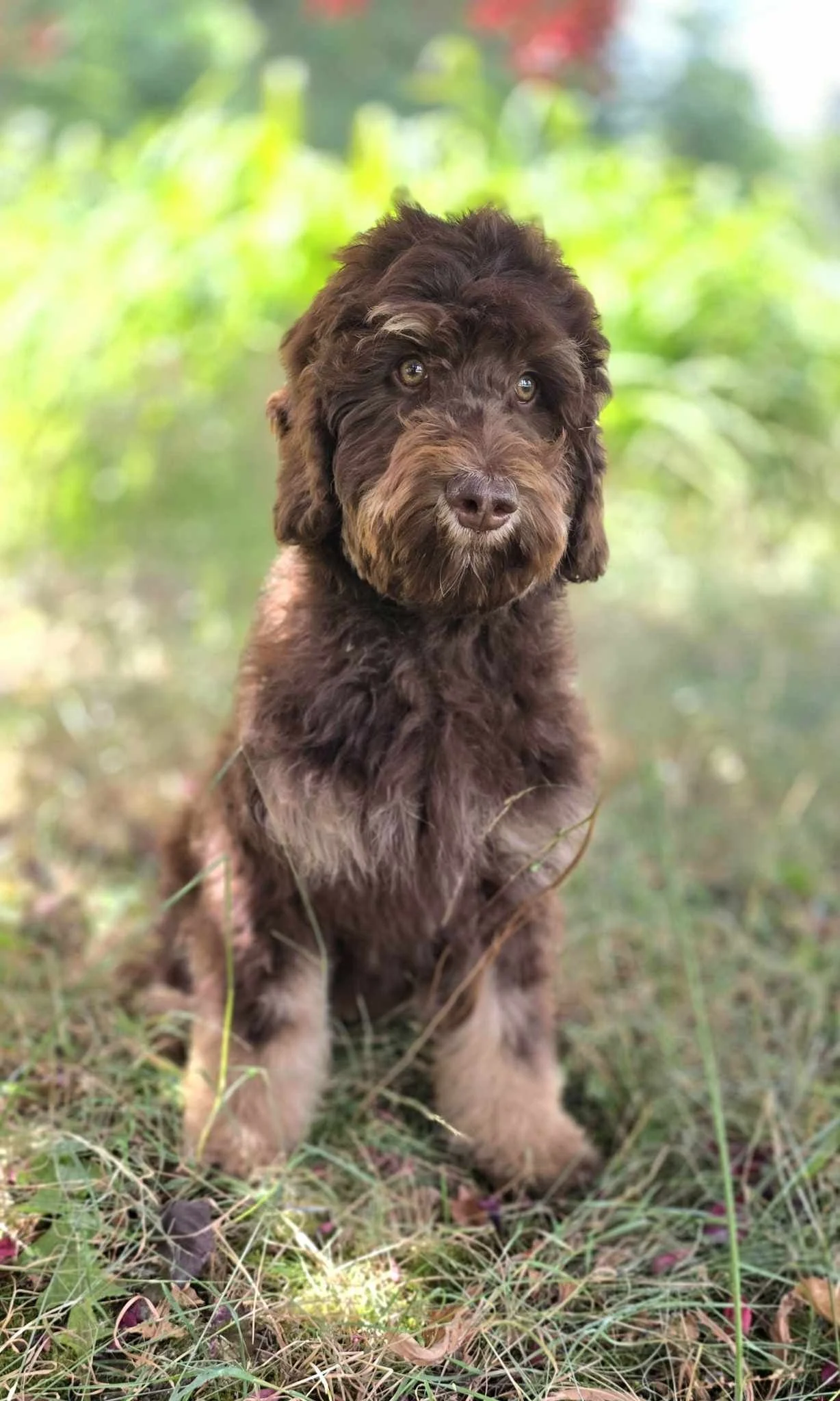
Phantom dogs display distinct tan, cream, silver, or apricot markings in predictable locations throughout the body.
These markings commonly appear:
Above the eyes
On the cheeks
On the chest
On the legs
Under the tail
Many people compare phantom markings to those seen in breeds such as Dobermans, Rottweilers, and Black and Tan Coonhounds.
Phantom is not a color itself but rather a pattern layered on top of another base color. As a result, phantom dogs can appear in many combinations, including:
Black Phantom
Chocolate Phantom
Silver Phantom
Merle Phantom
The result is one of the most striking and recognizable patterns found in both Poodles and Goldendoodles.
➡️ Learn More: Phantom Dogs – Understanding Phantom Markings
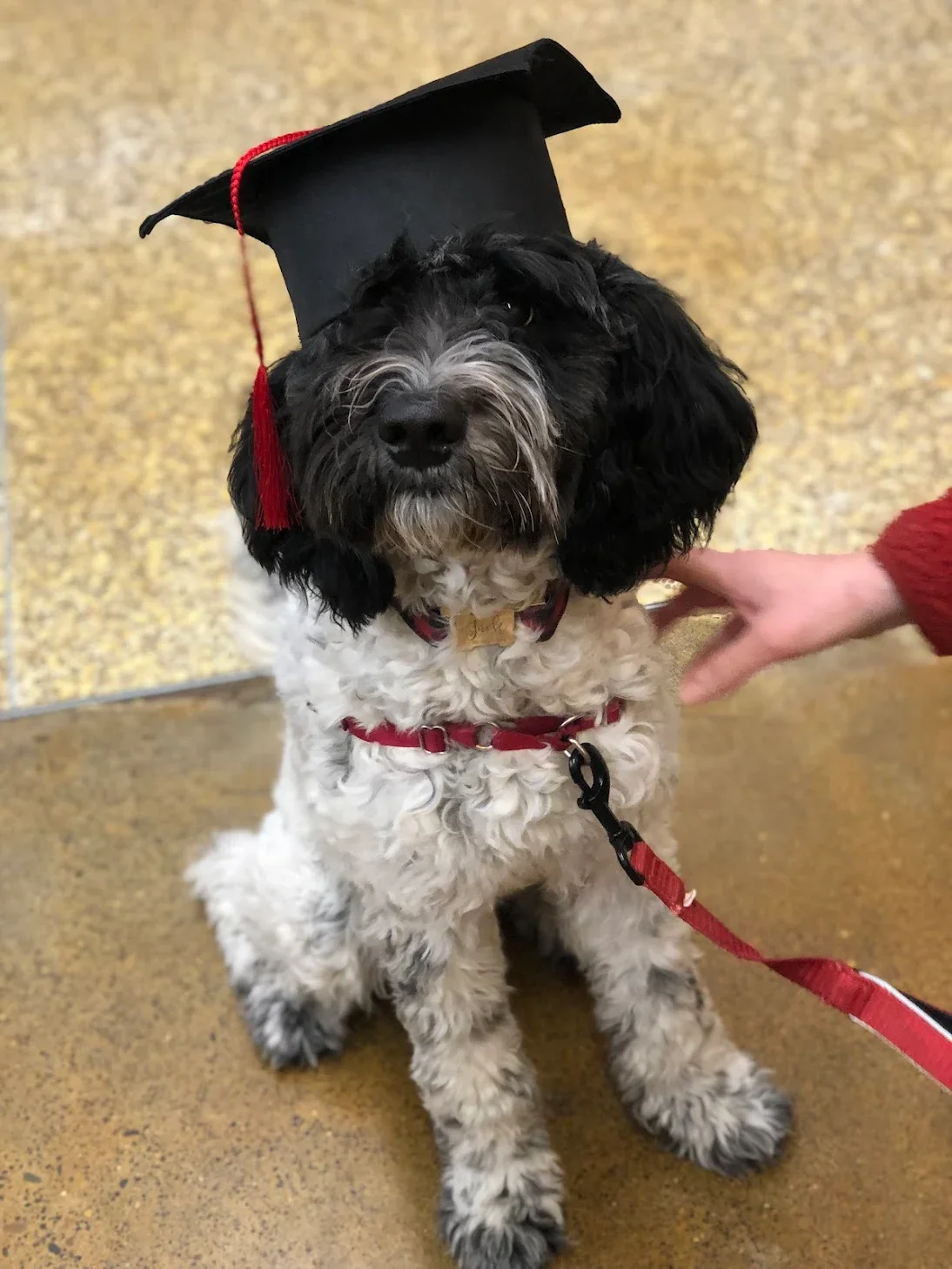
Parti
Parti dogs display large areas of white combined with patches of another color. No two parti dogs are exactly alike, making each one uniquely patterned.
Some parti dogs have nearly equal amounts of white and color, while others may be predominantly white with only a few colored patches.
Common examples include:
Cream & White Parti
Apricot & White Parti
Chocolate & White Parti
Black & White Parti
Merle Parti
Parti is one of the oldest and most recognizable patterns found in Poodles and has become increasingly popular in Goldendoodles as well. Many families are drawn to the playful, distinctive appearance that parti markings create.
Because the amount and placement of white can vary significantly, littermates may look very different from one another even when carrying the same genetics.
➡️ Learn More: Parti Dogs – Understanding Parti Genetics (coming soon)
Brindle
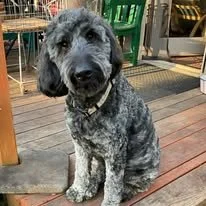
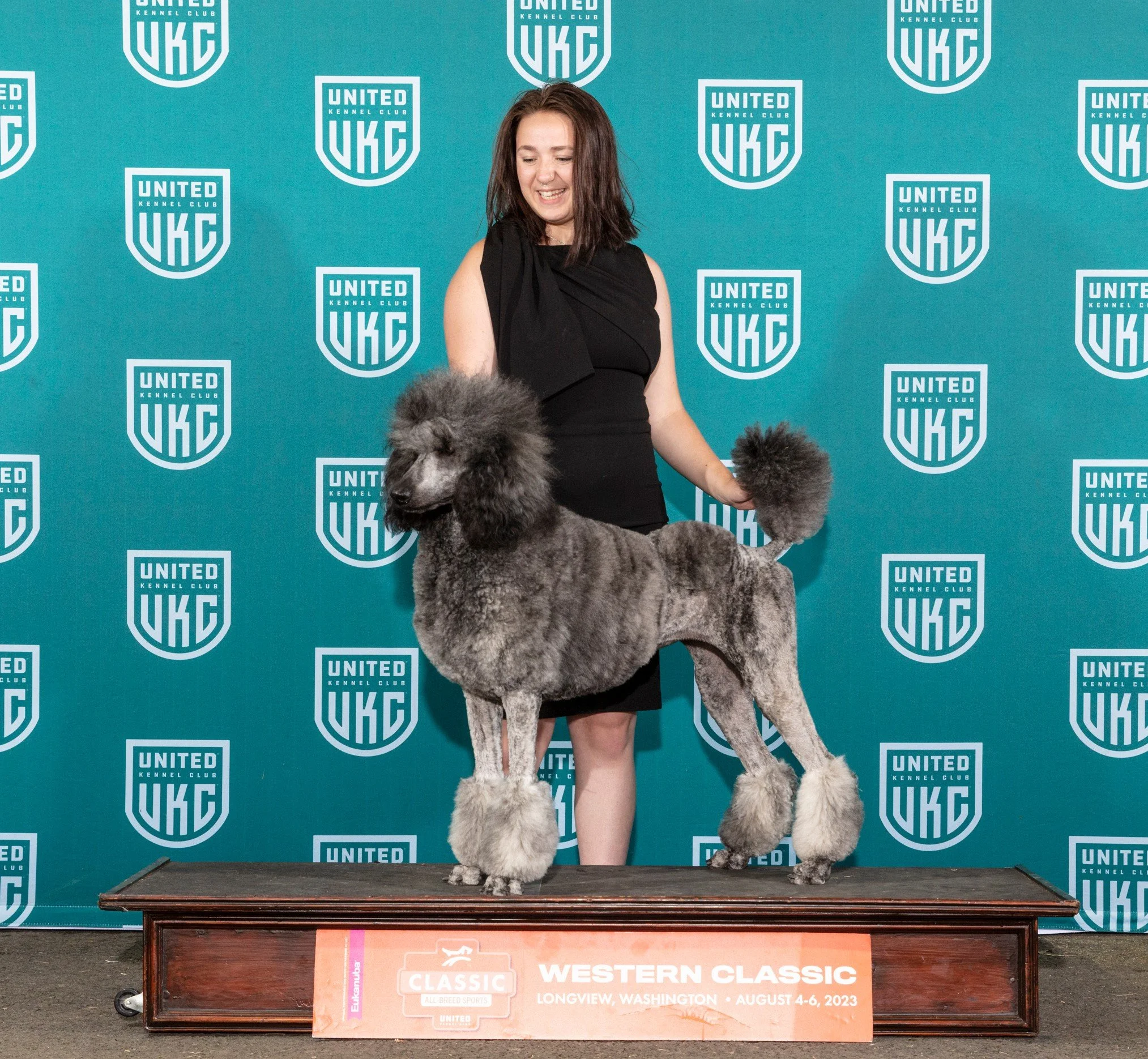
Brindle creates striping throughout the coat that is often described as tiger-striped.
Rather than creating distinct patches or points, brindle adds darker streaks that run through the coat color beneath them.
Brindle may appear in varying intensities depending on the dog's overall genetic makeup. In some dogs the striping is bold and dramatic, while in others it can be subtle and only visible under certain lighting conditions.
Although brindle is less common in many Poodle and Goldendoodle programs, it remains one of the most visually distinctive patterns found in dogs.
For genetics enthusiasts, brindle is particularly interesting because it can combine with other color traits to create highly unique appearances.
➡️ Learn More: Brindle Dogs – Understanding Brindle Genetics (coming soon)
Roan
While roan is not currently part of our breeding program, it remains an interesting color pattern within the broader world of canine genetics. Because this page serves as an educational resource on coat color genetics, we include it here as part of the larger discussion of color inheritance and pattern development.
Silver & Blue
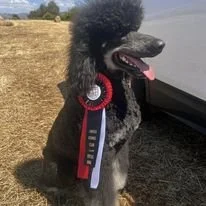
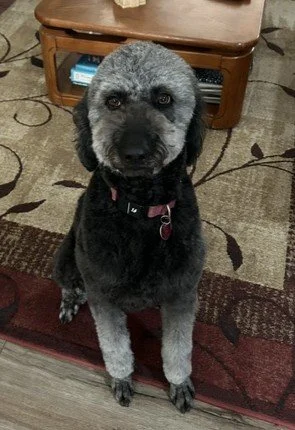
Silver and blue are color progressions that develop from black-based dogs.
Many silver and blue puppies are born appearing black or very dark charcoal. As they mature, the coat gradually lightens through a process often referred to as clearing.
Although silver and blue are closely related, they are not identical.
Silver dogs typically clear more dramatically, often becoming a light silver-gray color.
Blue dogs usually retain a darker steel-gray appearance throughout life.
The final adult color may take several years to fully develop, making it difficult to accurately predict from puppy photos alone.
Because these colors begin life looking much darker than they will ultimately become, they are among the most fascinating examples of color progression in the Poodle world.
➡️ Learn More: Silver Dogs – Understanding Color Progression (coming soon)
Café au Lait & Silver Beige
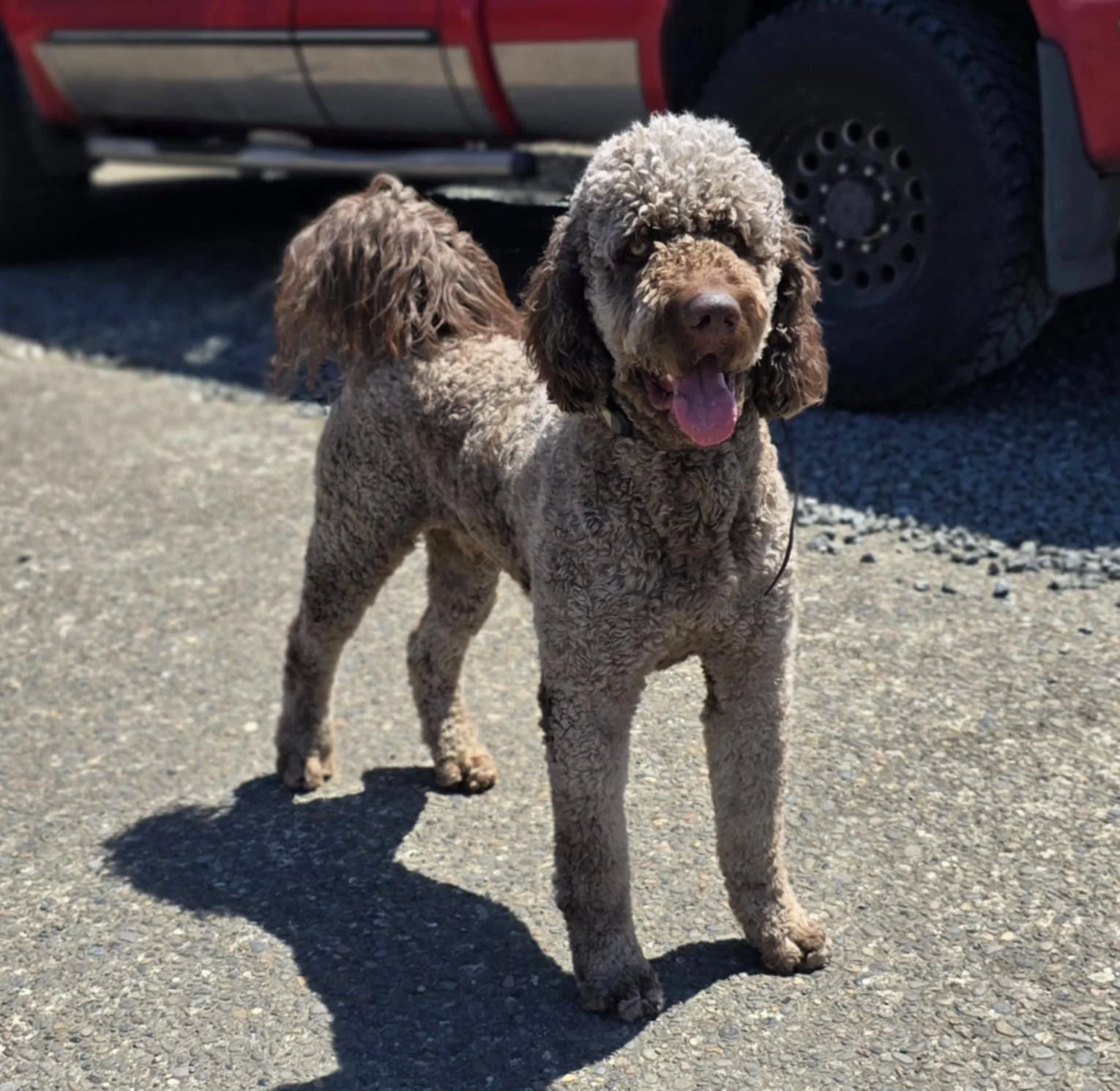
Café au Lait and Silver Beige are the brown-based counterparts to silver and blue.
Rather than developing from black pigment, these colors develop from dogs carrying brown pigment genetics.
Many puppies destined to become Café au Lait or Silver Beige are born dark chocolate or brown and gradually lighten as they mature.
While the two colors are related, they are not identical.
Café au Lait typically develops into a warm coffee-with-cream shade.
Silver Beige generally develops into a lighter, cooler taupe or beige appearance.
Like silver and blue, the final adult color may take years to fully develop, and the mature coat often looks dramatically different from the puppy coat.
These color transitions are one of the reasons Poodle color genetics remain so fascinating to breeders and genetics enthusiasts alike.
➡️ Learn More: Silver Dogs – Understanding Color Progression (coming soon)
Color Combinations
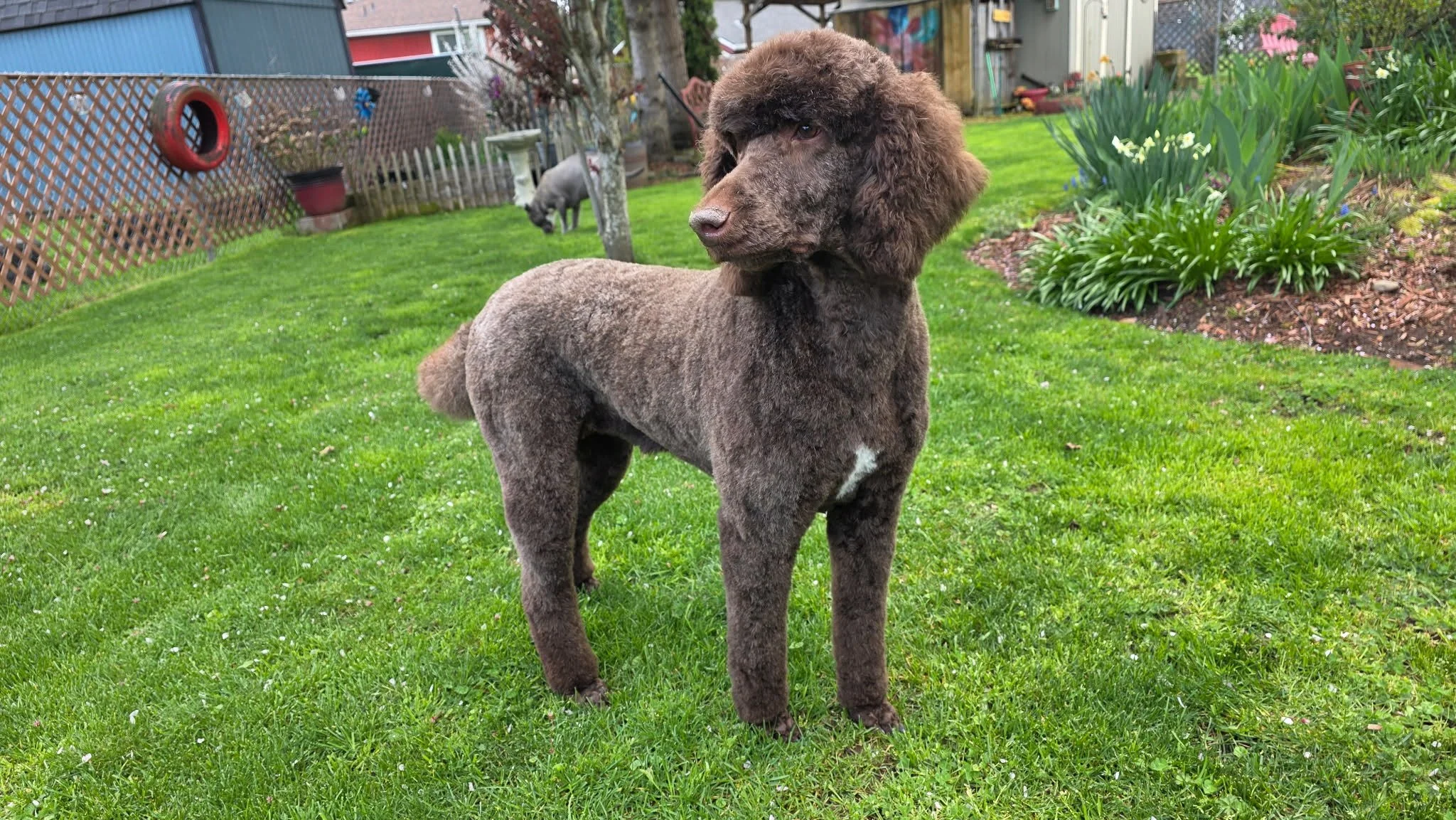
One of the reasons dog color genetics is so fascinating is that many colors and patterns can be combined.
Examples include:
Merle Phantom
Merle Parti
Chocolate Phantom
Chocolate Merle
Parti Phantom (Tri)
Brindle Phantom
Silver Phantom
These combinations occur when multiple color genes interact within the same dog.
Some combinations are relatively common, while others may be quite rare.
While color combinations can be visually striking, our approach remains the same regardless of appearance: evaluate the whole dog first.
Temperament, health, structure, trainability, and overall quality always come before color.
Beautiful color is simply the finishing touch.
How Colors Change Over Time
Many people assume the color they see in an eight-week-old puppy is the color they will see for the rest of the dog's life.
In reality, coat color can change significantly as a dog matures.
Some colors remain relatively stable throughout life, while others may lighten, fade, clear, or develop entirely new shades as the adult coat comes in.
Common examples include:
Red puppies that gradually lighten with age
Apricot dogs that fade into lighter cream tones
Sable puppies that lose much of their dark overlay
Silver and Blue Poodles that begin life looking black before gradually clearing
Café au Lait and Silver Beige dogs that begin life dark brown before lightening over time
The amount of change varies from dog to dog and is influenced by genetics.
This is one reason experienced breeders are often cautious about making absolute promises regarding adult color based solely on puppy photos.
While modern DNA testing allows us to predict many aspects of color inheritance, nature still enjoys surprising us from time to time.
Do Coat Colors Affect Temperament?
One of the most common misconceptions in the dog world is that certain colors automatically produce certain personalities.
You may hear claims such as:
Red dogs are calmer.
Black dogs are smarter.
Merle dogs are more energetic.
Parti dogs are friendlier.
In reality, coat color does not determine temperament.
Temperament is influenced by:
Genetics
Breeding decisions
Parent temperament
Early puppy development
Socialization
Individual personality
A beautiful coat may catch someone's attention.
Temperament is what determines whether a dog is enjoyable to live with for the next 10–15 years.
This is one reason our program places significant emphasis on temperament evaluation, puppy raising, and thoughtful family matching.
When selecting breeding dogs, we prioritize qualities such as:
Confidence
Social stability
Trainability
Workability
Recovery from stress
Human engagement
Long before we consider coat color.
Learn More:
Why We Select Dogs, Not Colors
Color is one of the things that makes dogs beautiful.
It is not what makes them exceptional.
One of the strongest examples of this philosophy can be seen throughout our own breeding program.
Fancy joined our program because of her confidence, trainability, structure, engagement, and outgoing personality.
Her brown merle coat is beautiful, but it was never the sole reason she was selected.
Likewise, Pippin was selected because of his temperament, structure, workability, and overall quality—not because of color.
In fact, from the Fancy × Pippin litter, we are retaining both:
A brown merle male
A non-merle brown male
This decision reflects exactly how we evaluate breeding prospects.
We do not automatically prioritize one puppy over another because of color.
Instead, we evaluate the complete dog:
Temperament
Structure
Health
Workability
Trainability
Overall quality
Our future plans follow the same philosophy.
We currently have plans to add additional merle dogs to the program and maintain interest in future imports. However, we have already passed on multiple opportunities because we are not searching for "a merle puppy."
We are searching for the right puppy.
The puppy must meet our standards for temperament, structure, health, workability, and overall quality before color ever enters the conversation.
Because while colors may be rare, quality is rarer.
Common Myths About Dog Colors
Color genetics can be fascinating, but it has also created plenty of myths and misconceptions over the years.
Here are some of the most common claims prospective puppy buyers encounter when researching coat colors.
Myth: Certain Colors Have Better Temperaments
Perhaps the most common misconception is that specific colors automatically produce specific personalities.
You may hear statements such as:
Red dogs are calmer.
Black dogs are smarter.
Parti dogs are friendlier.
Merle dogs are more energetic.
In reality, temperament is inherited through generations of breeding decisions, influenced by genetics, and shaped by early development and life experiences.
Coat color alone does not determine whether a dog will be confident, trainable, social, calm, or suitable for service work.
Myth: Rare Colors Are Always More Valuable
Rare does not automatically mean better.
A rare color may be visually striking, but rarity alone does not improve temperament, health, structure, or trainability.
The rarest trait in breeding is not a particular color.
The rarest trait is quality.
A dog that excels in temperament, health, structure, and workability will always be more valuable than a dog selected primarily for appearance.
Myth: Breeders Must Choose Between Quality and Color
Some people believe breeders must either focus on quality or focus on color.
We disagree.
Exceptional dogs can possess:
Excellent temperament
Strong structure
Appropriate health testing
Trainability
Confidence
Workability
Beautiful color
Finding those dogs is often more challenging, but we believe both quality and beauty can exist together.
Myth: You Can Always Predict Adult Color From Puppy Photos
Some colors remain relatively stable throughout life.
Others change dramatically.
Depending on genetics, puppies may:
Lighten
Fade
Clear
Develop silvering
Lose sable overlay
Change intensity
This is one reason experienced breeders are often cautious about making absolute promises regarding adult color.
Myth: Merle Automatically Causes Health Problems
Merle itself is simply a coat pattern.
Responsible breeding practices and proper genetic management are what matter.
As with any color or pattern, breeders should understand the genetics involved and make informed breeding decisions.
For a deeper discussion of merle genetics and health considerations, visit:
➡️ Merle Poodles: Genetics, Health & Responsible Breeding
Myth: Color Is The Most Important Part Of Choosing A Puppy
Color is often what first catches a family's attention.
Temperament is what determines daily life with that dog for the next decade or more.
The best puppy is not necessarily the one with the most unusual color.
The best puppy is the one whose temperament, energy level, trainability, and overall personality fit your family and lifestyle.
Frequently Asked Questions About Dog Colors & Genetics
-
Apricot and cream are among the most common colors found in Goldendoodles. Shades can range from nearly white cream to rich apricot and deep red.
-
There is no single rarest color across all breeds.
Rarity depends on the breed, bloodlines, and genetics involved. Colors such as merle, phantom, brindle, and certain color combinations may be uncommon in some programs while being more common in others.
-
Black Goldendoodles are less common than cream, apricot, and red dogs in many breeding programs, but they are not exceptionally rare.
Black remains one of the foundational colors in canine genetics and can produce striking, elegant dogs with beautiful coat texture and contrast.
-
Sometimes.
Some red dogs maintain much of their color throughout life, while others gradually lighten as they mature.
The amount of fading varies depending on genetics.
-
Many dogs naturally change color as they mature.
Common examples include:
Red dogs that lighten with age
Apricot dogs that fade toward cream
Sable dogs that lose dark overlay
Silver and Blue Poodles that gradually clear from black to gray
Café au Lait and Silver Beige dogs that lighten from brown to lighter shades
-
Breeders can often make educated predictions using pedigree information and DNA testing.
However, genetics involves probabilities rather than guarantees.
Even experienced breeders occasionally encounter surprises.
-
No.
Temperament is influenced by genetics, breeding decisions, early development, socialization, and individual personality.
Color alone does not determine whether a dog will be friendly, confident, trainable, calm, or suitable for service work.
-
Merle is simply a coat pattern.
Responsible breeding practices and proper genetic management are important considerations when breeding merle dogs.
Learn more on our:
➡️ Merle Poodles: Genetics, Health & Responsible Breeding page.
-
Yes.
Parti is a recognized pattern within the Poodle breed and can also occur in Goldendoodles.
A parti coat pattern does not make a dog any less purebred.
-
There is no universally best color.
The best dog is the one whose temperament, energy level, trainability, and overall personality are the best fit for your family and lifestyle.
While color may influence what first catches your eye, temperament is what you live with every day.
Continue Exploring
Color Genetics
Merle Dogs: Understanding Merle Colors, Patterns & Development (Coming Soon)
Parti Dogs: Understanding Parti Genetics
Sable Dogs: Understanding Sable Genetics
Silver Dogs: Understanding Color Progression