
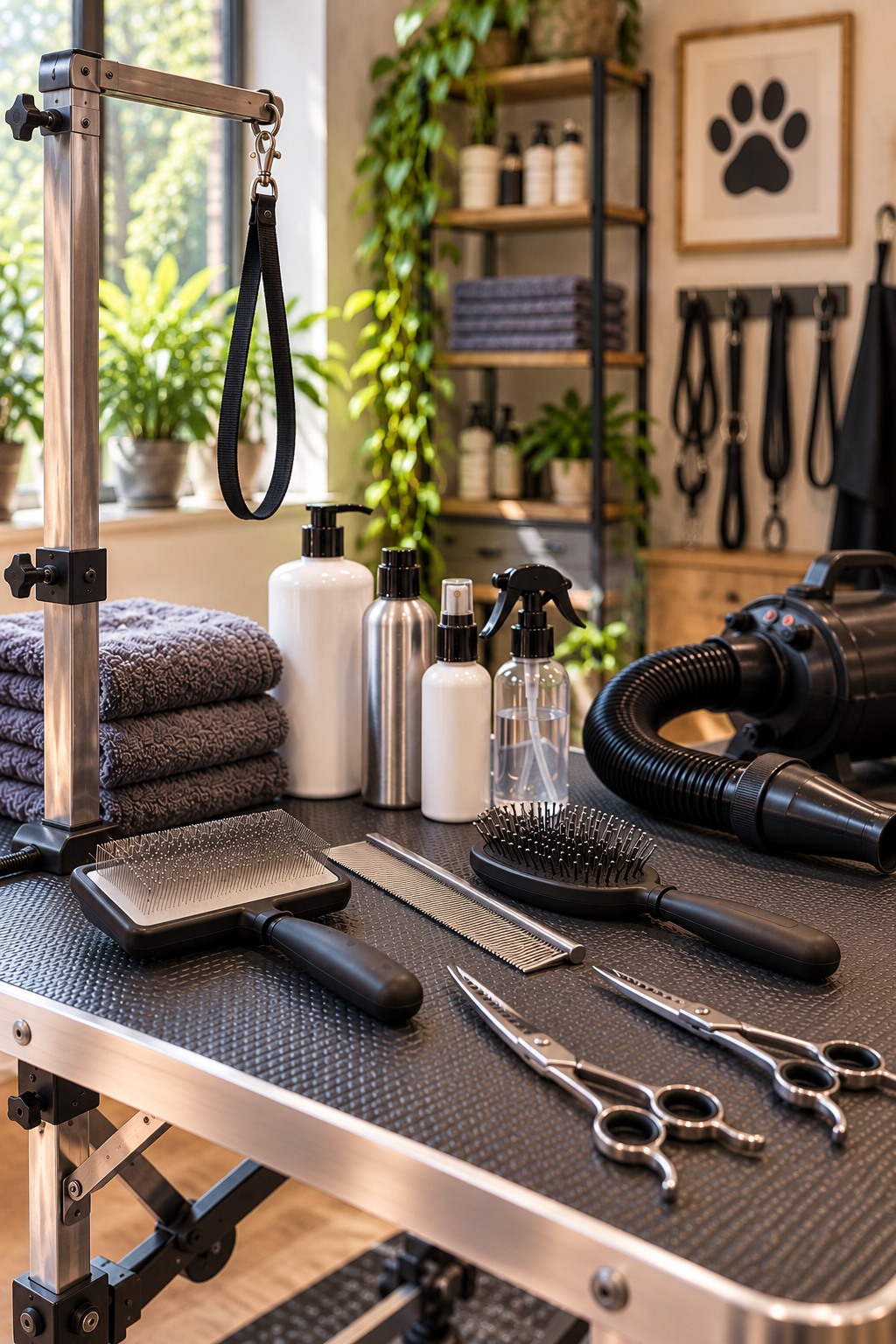
Poodle Coats: Texture, Curl & Grooming
When people think of a Poodle coat, they usually picture curls. But curl is only one part of what makes a Poodle coat look, feel and behave the way it does. Texture, density, curl, coat length and even how the dog is groomed all contribute to the finished result. Two Poodles can both have perfectly normal Poodle coats and feel surprisingly different when you put your hands on them.
Those differences matter beyond appearance. They affect how easily the coat tangles, how much maintenance it requires, how well it holds a sculpted groom and what it is like to live with every day. The coat an experienced show or competitive groomer gets excited about may not necessarily be the coat an everyday family finds easiest to maintain.
Understanding those differences makes it much easier to decide not only whether you want a Poodle, but also how you want to live with the coat once you have one.
What Does a Poodle Coat Actually Feel Like?
A correct Poodle coat is very dense, curly and relatively coarse or harsh in texture. That density and texture give the coat body, allowing it to stand away from the dog and giving a skilled groomer plenty of material to shape and sculpt. When you put your hands into a substantial Poodle coat, there can be a surprising amount of hair there.
You really notice that density in the bath. A dense Poodle coat can be surprisingly difficult to wet all the way to the skin. Water may penetrate the outer coat while the hair underneath remains dry, so you have to deliberately work water and shampoo through it. That same density also means more coat to rinse and dry thoroughly.
Not every Poodle coat feels exactly the same. Some are softer or more fleece-like, while others have the firmer, coarser texture associated with a traditional Poodle coat. Curl varies too. This is why we separate texture, density and curl rather than using “curly” to describe everything.
Those differences affect maintenance. A dense, coarse coat can be spectacular for grooming because it holds shape beautifully, but bathing, drying and working completely through a longer coat takes more time. A softer coat can feel wonderful to pet but isn't automatically easier; fine, soft hairs may grab onto one another and tangle readily, especially with length, friction, dirt and moisture.
Purpose matters too. Someone showing Poodles or participating in grooming competitions may actively seek tremendous density and texture. An everyday family keeping a Poodle in a practical companion trim may value something different. A desirable coat depends partly on what you want to do with it.
What Makes a “Good” Poodle Coat Depends on What You Want From It
There isn't one Poodle coat that is ideal for every purpose. A show exhibitor, competitive groomer and family looking for an everyday companion may appreciate very different things about a coat.
In the show ring, density and texture give an experienced groomer enough coat to shape and sculpt the traditional Poodle outline. Competitive groomers may also love a dense, substantial coat because it gives them an incredible canvas for creating crisp lines and dramatic silhouettes. Those same qualities, however, mean there is simply more coat to wash, dry, brush and maintain.
For an everyday companion, priorities can be different. A family may care more about how the dog feels when they pet them, how easily the coat fits into their lifestyle and how much maintenance they realistically want to do between grooming appointments. A softer coat may feel wonderful, even if it isn't the coat someone would specifically choose for the show ring or grooming competition.
That doesn't make one coat good and another bad. The more useful question is: good for what? Coat quality has to be considered alongside what you actually want to do with the dog and its coat.
Coat Change: When the Easy Puppy Coat Suddenly Isn't So Easy
Poodle puppies begin with a softer puppy coat. As the mature adult coat begins coming in, the two textures coexist, and coat change can be one of the most challenging grooming periods a Poodle owner experiences.
Coat change commonly becomes noticeable around 9–12 months, although timing varies considerably between dogs and the transition can continue well into the second year. The puppy coat doesn't simply disappear before the adult coat arrives. Soft puppy hair and emerging adult coat become mixed together, creating an ideal environment for tangles. A puppy that had been remarkably easy to maintain can suddenly seem to mat almost as quickly as you brush them.
During this period, maintenance often needs to increase. Keeping the coat clean is important because dirt, oils and debris encourage hairs to grab onto one another. Quality grooming products and a good conditioner can make coat change much easier to manage by helping the hairs move past one another rather than continually catching and tangling. Regular bathing followed by thorough force-air drying helps separate the coat so you can work through it systematically. Brushing and combing need to reach through to the skin, with extra attention to friction areas such as behind the ears, under collars and harnesses, and in the armpits.
It is also completely reasonable to shorten the coat during coat change. If preserving several inches of hair means constantly fighting mats and repeatedly brushing the same areas, clipping the dog shorter can be much easier on both the coat and the dog. You can always grow it back once the transition settles.
Color-changing Poodles can have an even longer transition. Blues, silvers and café au laits are born darker and progressively clear toward their mature color. That color change can overlap with the transition into mature coat, so color, texture and curl may all be evolving at the same time. Silvers often begin visibly clearing earlier, while blues and cafés can take considerably longer to reveal their finished appearance.
If coat maintenance suddenly becomes much harder during adolescence, this is also a good time to involve your groomer. Ask what they are seeing, where the coat is beginning to tangle and whether different products, a change in your home routine or simply taking some length off would make the transition easier.
You Don’t Like the Look of a Poodle—or You Don’t Like the Groom?
For many people, the word Poodle immediately brings to mind the Continental trim: lots of sculpted coat, bracelets, a large topknot and a very recognizable silhouette. That image is so closely associated with the breed that people sometimes assume the haircut tells them something about the dog itself. Poodles get stereotyped as fancy, fussy or a bit of a “princess” breed.
The actual dog couldn't be much farther from that stereotype. Poodles are sporting dogs. They are athletic, active dogs with a history as water retrievers, and underneath all that hair is a dog that is perfectly happy getting wet, dirty and muddy. Our own Poodles can be absolute mud monsters and tomboys. A beautiful coat doesn't make the dog underneath it delicate.
The Continental is a grooming style, not the Poodle's natural shape and certainly not its personality. Change the groom and the same dog can look dramatically different. Keep the body short, change the head and ears, leave more or less coat on the face and legs, and suddenly someone who thought they didn't like the “Poodle look” may see the breed completely differently.
That is why, when someone says they don't like the appearance of Poodles, it is worth asking: Do you not like the dog, or do you not like the groom you've always associated with the dog? There is no requirement that your Poodle ever wear a Continental—or any other traditional Poodle style.
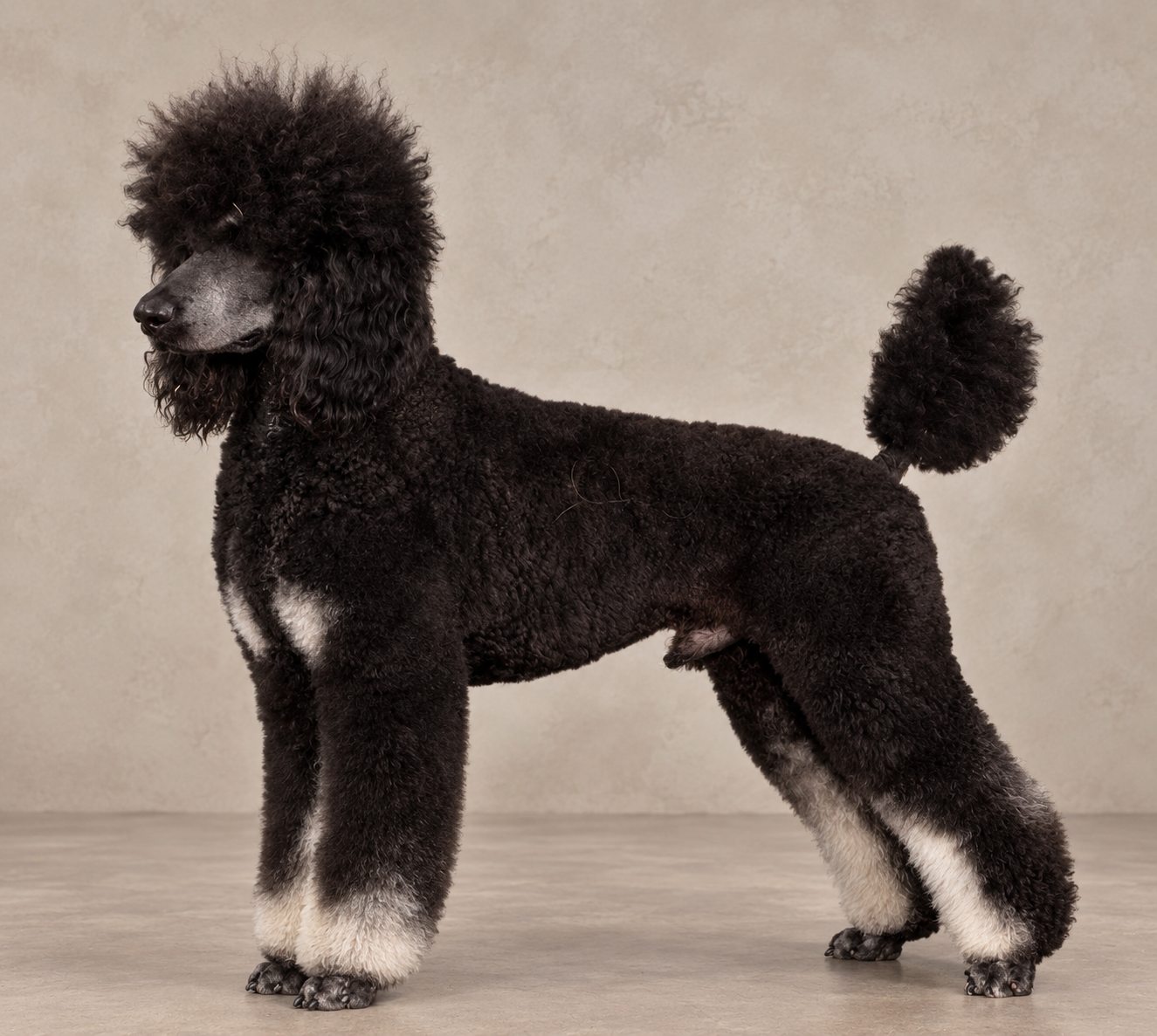
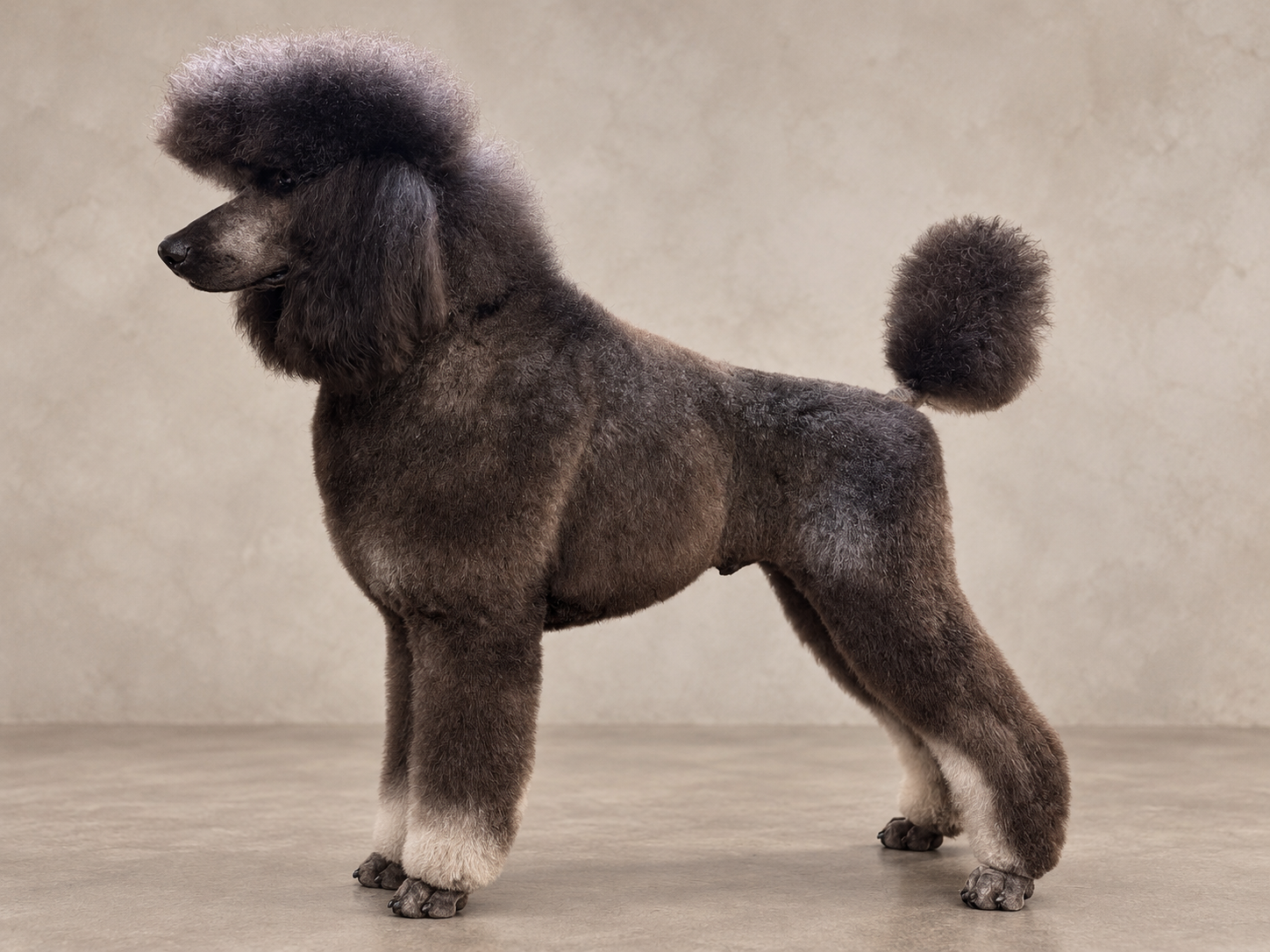
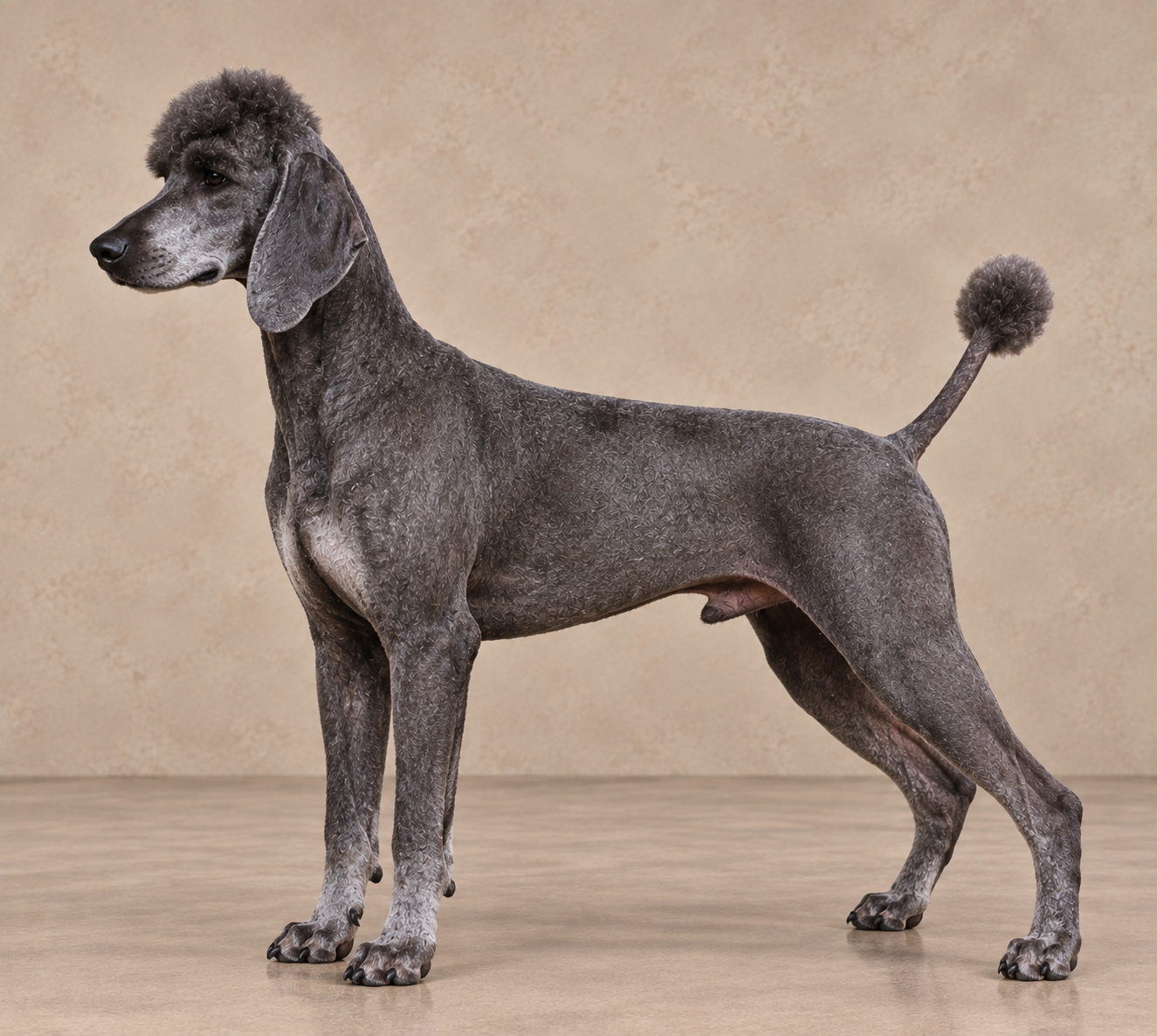
One Poodle. Very Different Looks.
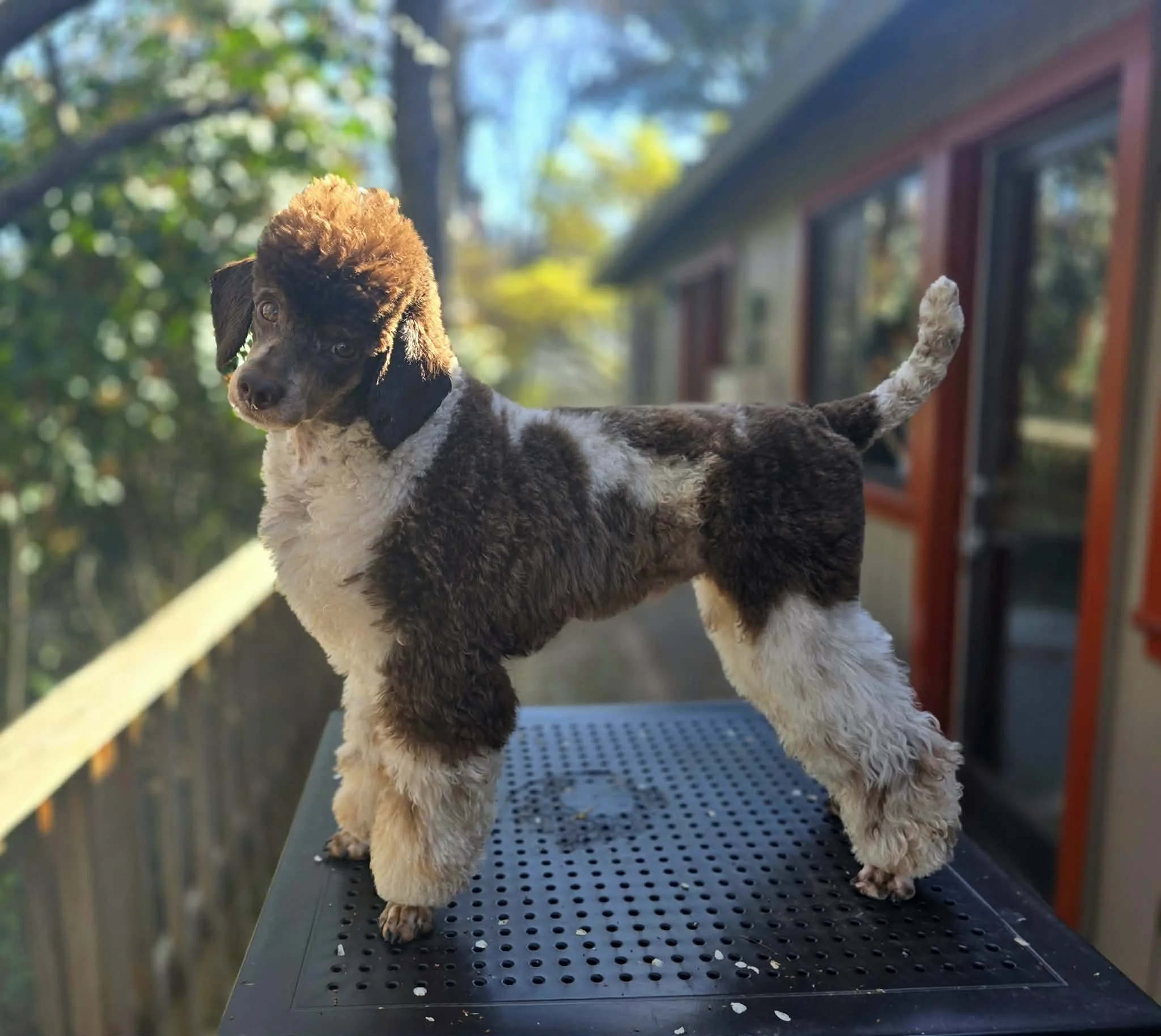
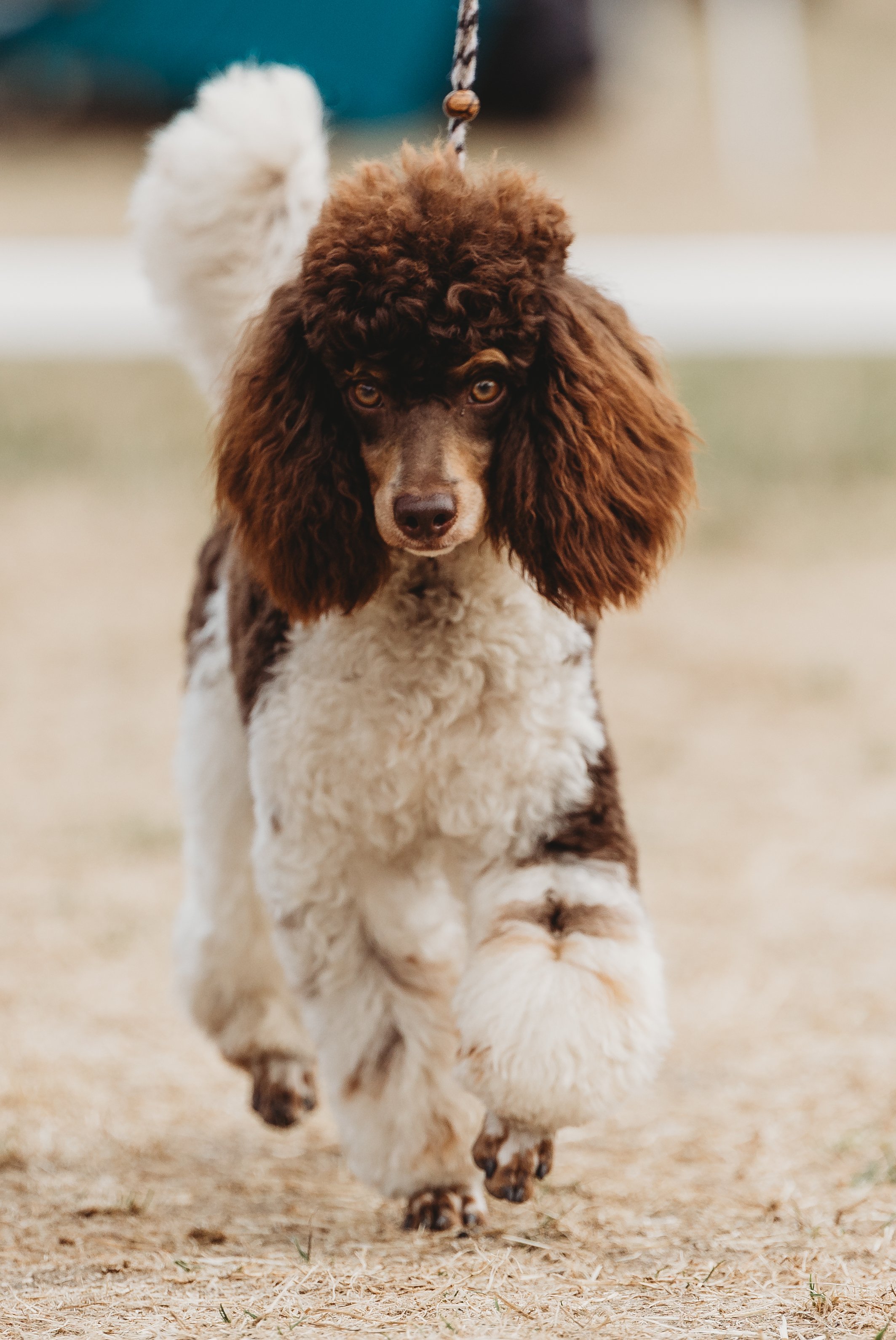
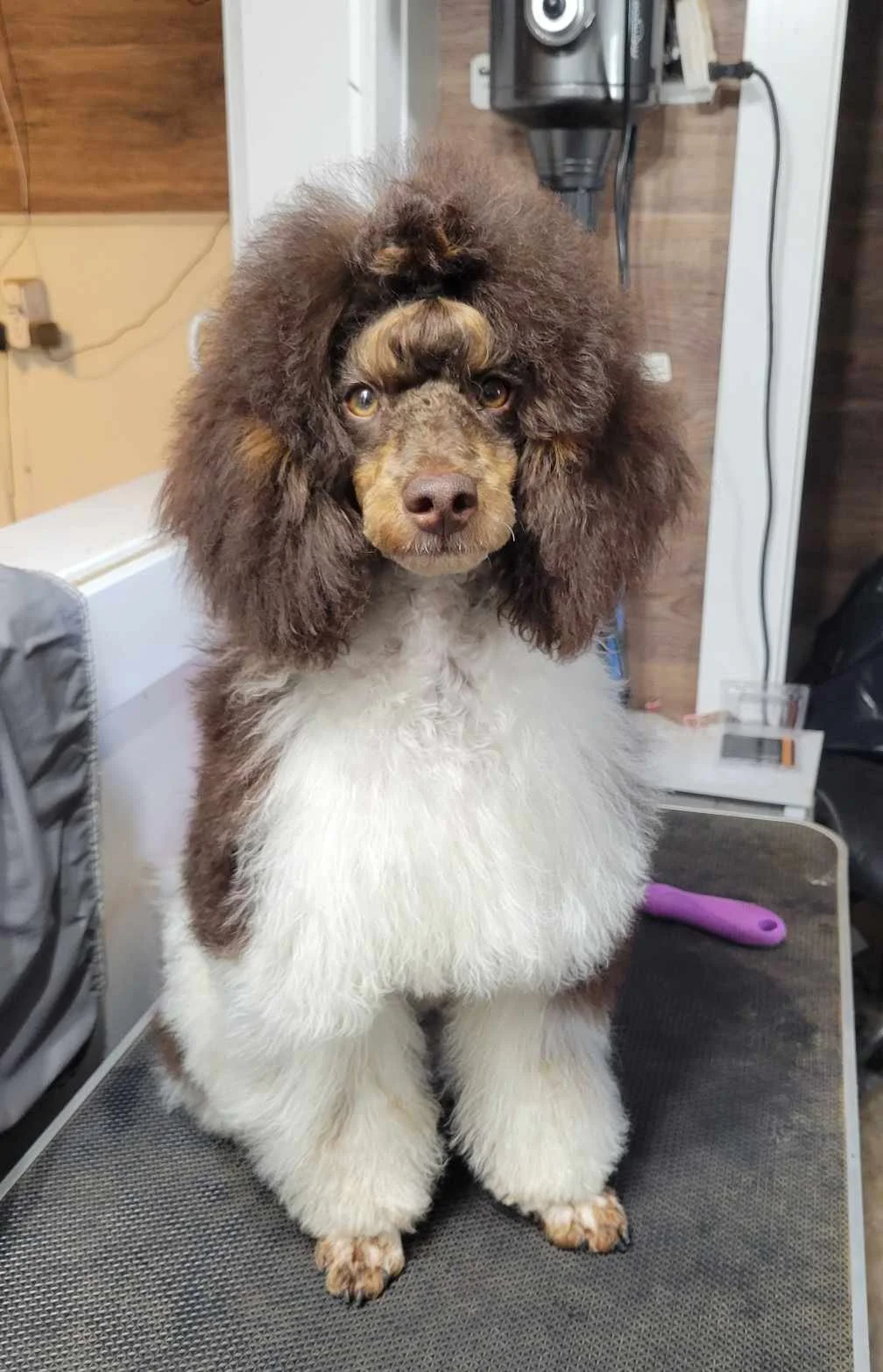
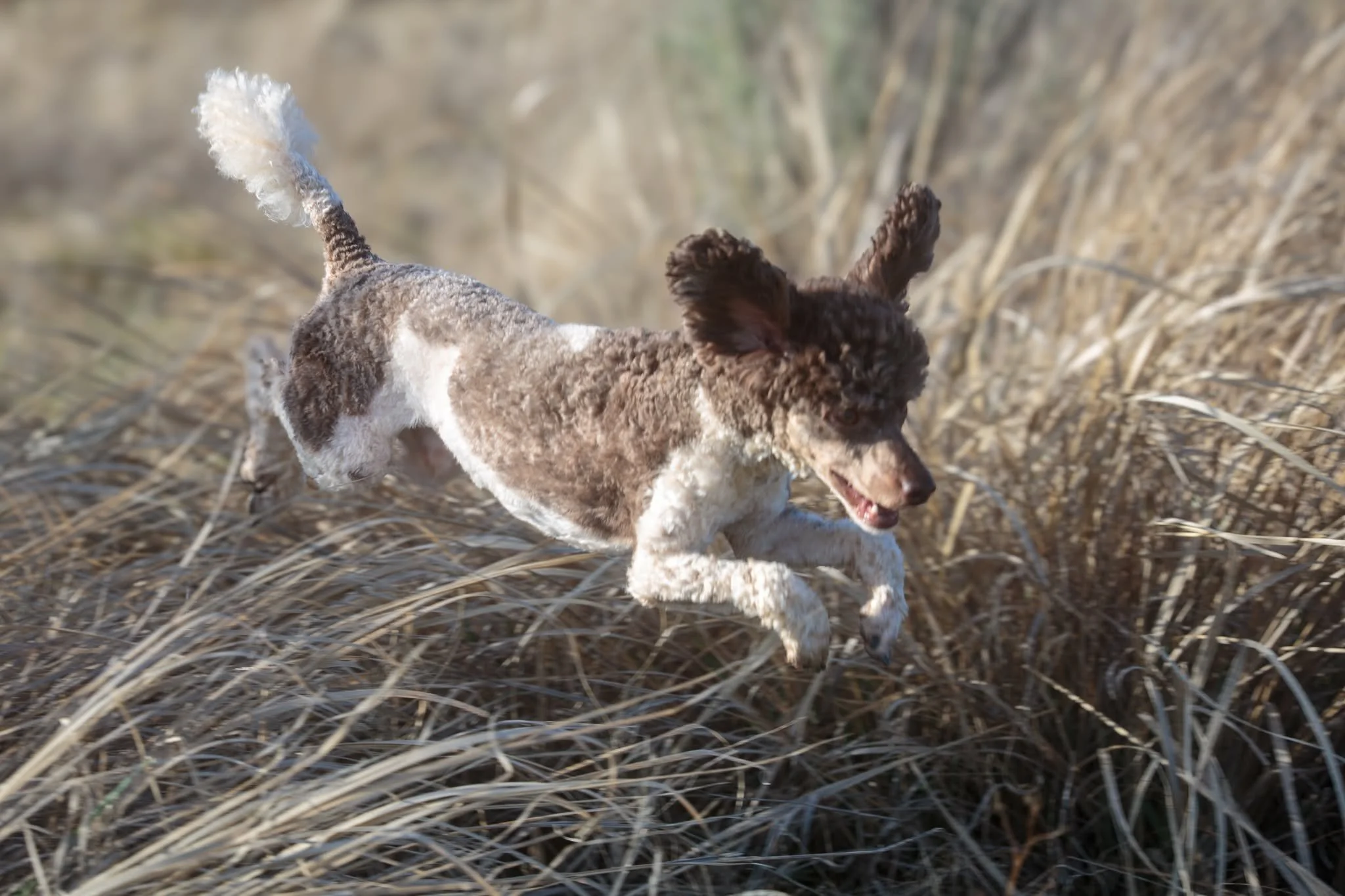
A Poodle's groom can change their appearance dramatically. The amount of coat left on the body and legs, the shape of the head and ears, and even whether the face and tail are left fluffy or shaved can make the same dog look completely different.
Whiskey is the same Standard Poodle in every photo below. His grooms range from highly styled to almost completely shaved down. He is also a blue Poodle, so you're seeing something else happen at the same time: his coat gradually clearing from the nearly black color of his younger years into his mature blue-gray.
Same dog. Different age. Different groom.
Pippin gives us another example on a much smaller Poodle. His different grooms change his silhouette, head shape and overall presentation just as dramatically. In one he looks polished and sculpted; in another softer and fuller; and in a shorter trim, much more athletic and practical. Underneath all of that coat, he is still the same dog.
A Great Groom Can Be Show-Stopping
A beautifully groomed Poodle gets noticed. A quality groom can be genuinely show-stopping—the kind of dog that has strangers stopping you to ask about them. An experienced Poodle groomer understands how to work with the coat, balance the overall silhouette and create a finished dog that looks intentional rather than simply trimmed.
This is where the experience of the groomer can make an enormous difference. There is a difference between making a Poodle shorter and knowing how to groom a Poodle beautifully. Even with a practical companion haircut, a talented groomer can create balance, work with the individual dog's coat and produce a polished finish without requiring an elaborate show style.
You don't need to maintain that look all the time, either. Grooming can be something you have fun with. Grow the coat out and try something dramatic, change the style completely at the next appointment, or keep the dog short and simple most of the year. One of the fun things about a Poodle coat is how many options it gives you.
Coat Length Should Match Your Lifestyle
The haircut you choose determines a large part of the maintenance you take home. A longer coat can be beautiful, but every additional inch gives dirt, moisture, debris and friction more hair to work themselves into. A Poodle that swims, hikes, runs through brush, wrestles with other dogs or regularly wears a harness or vest will challenge a longer coat much more than a dog living a quieter lifestyle.
That doesn't mean an active Poodle can't have long coat. It means you need to be willing to maintain the coat required for that combination of length and lifestyle. Bathing, force-air drying, brushing, combing and removing debris all become more important as you add length.
It is also completely okay to shave your Poodle short. Nothing says a companion Poodle has to be kept styled or fluffy. If you want a dog that can swim, hike, get muddy and then be relatively easy to clean up, a short clip may make far more sense. If you simply don't enjoy maintaining a lot of coat, that is reason enough to keep it short.
Coat length isn't a measure of how well cared for a Poodle is. The goal is to choose a length that you can comfortably maintain while allowing your dog to live the life you actually want to share with them.
Matting: It’s More Than Not Brushing Enough
Matting is one of the realities of living with a Poodle coat, especially if you choose to keep it long. It is easy to reduce matting to “the dog wasn't brushed enough,” but there is much more happening. Friction, moisture, dirt, debris, coat texture, coat change and length all influence how quickly tangles develop.
Friction is a big one. Hair rubbing against hair naturally begins to tangle, which is why mats commonly develop behind the ears, in the armpits and anywhere the dog moves repeatedly. Add a collar, harness or service vest and you create additional friction points. A dog can be beautifully maintained everywhere else and still develop mats exactly where equipment continually rubs against the coat.
A dirty coat also mats more easily. Dust, oils, tiny pieces of debris and whatever your Poodle collected while being a Poodle give individual hairs more opportunities to catch on one another. This is one reason clean coat is often much easier to maintain than dirty coat. Moisture adds another challenge. Swimming, rain, wet grass and even repeatedly damp feet and legs can encourage tangling, particularly when longer coat is allowed to air-dry curled together.
Where Mats Usually Start
Mats tend to show up in predictable places, and learning those places makes coat maintenance much easier. Behind and underneath the ears is one of the first places I check, along with the neck where a collar sits. The armpits are another common trouble spot because the front legs are constantly moving against the body. The chest, belly and groin can also tangle quickly because of movement and hair rubbing against hair.
Pay attention to how your individual dog rests, too. If your Poodle consistently prefers lying on one side, you may notice matting beginning on that hip and rear before it develops on the other side. The weight of the dog repeatedly pressing and rubbing the same coat against the floor, bedding or furniture creates friction. Once you recognize your dog's favorite sleeping position, that side becomes another place to check regularly.
Equipment creates its own patterns. Check underneath collars, along harness straps and beneath service vests, paying particular attention to the edges and places where the equipment moves rather than only where it sits flat. Longer ears, legs and tails can tangle from movement, while feet and lower legs collect water, mud, grass and debris. Dogs that wrestle and play with other dogs may also tangle more readily around the ears and neck.
This is where I really like a force dryer as a coat-checking tool. Rather than repeatedly brushing the entire dog looking for trouble, I can move the air through these high-risk areas and see what the coat is doing. Healthy, separated hair opens under the air and allows me to see toward the skin. Hair that is beginning to web together or mat doesn't separate normally, so I can catch a problem early and work specifically on that area.
Behind the ears deserves especially close attention. A small tangle there can become a substantial mat surprisingly quickly, particularly on a dog with longer ear hair. Once you learn where your particular Poodle mats first, coat maintenance becomes much less about constantly brushing the whole dog and much more about knowing where to look.
Matting Isn’t Just a Cosmetic Problem
A mat isn't simply messy hair. As tangled hair tightens, it pulls continuously on the skin underneath it. Every time the dog walks, stretches, lies down or moves that part of the body, the mat can tug against the skin. Mats in the armpits, groin and other areas of movement can become particularly uncomfortable because the skin and coat need to move freely with the dog.
Severe matting can restrict normal movement and contribute to irritated, inflamed or bruised skin underneath. Moisture and debris can also become trapped close to the skin where you may not even be able to see what is happening. By the time a tight mat is discovered, the skin underneath may already be very sore.
And then we have to consider what we are asking the dog to tolerate when we try to save that coat. Dematting hurts. Even with good products, appropriate tools and an experienced groomer, separating a tight mat means pulling apart hair that is already pulling on tender skin. The dog doesn't understand that we're trying to save its coat; it simply knows that grooming hurts.
That experience matters beyond the appointment itself. A dog that repeatedly experiences painful brushing and dematting can understandably become less tolerant of grooming. Suddenly we aren't only dealing with damaged coat—we may also be creating a dog that anticipates discomfort when the brush, comb or grooming table comes out.
This is why there is a point where shaving is the kinder choice. Preserving several inches of hair is never more important than the dog's comfort. Once matting is extensive or tight against the skin, removing the damaged coat and allowing healthy hair to grow back can spare the dog a long, painful dematting process.
Sometimes the Best Answer Is to Start Over
And sometimes, despite doing everything reasonably well, your Poodle gets matted. It happens. Trying to save every inch of coat isn't always the kindest or most practical choice. Extensive dematting can be uncomfortable for the dog, time-consuming and damaging to the hair you are trying to save.
There is absolutely nothing wrong with clipping the coat short and starting over. Hair grows back. You can use the opportunity to choose a more manageable length, improve your bathing and drying routine, or simply enjoy a short, easy-care Poodle for a while. A shaved Poodle is not a grooming failure. Sometimes it is simply the most sensible decision for the dog and the coat in front of you.
Brushing Can Help the Coat—or Damage It
Brushing is necessary when you keep length on a Poodle, but never dry brush the coat. Repeatedly pulling a brush through dry hair creates friction and breakage and can damage the coat you're trying to preserve. More brushing isn't automatically better, and I don't believe in routinely brushing the entire dog simply because it is “grooming day.”
In fact, when I want to check a coat, I will often reach for the force dryer instead of the brush. Moving air through the coat separates the hair and lets me see down toward the skin. I can see whether the coat is moving freely, find debris and identify areas beginning to web or tangle without unnecessarily running a brush through healthy coat.
When brushing is needed between baths, use a quality brushing or conditioning spray so you aren't working dry hair. Work in sections and concentrate on the areas that actually need attention, then use a metal comb to make sure you have worked completely through the coat.
If there is significant brushing to be done, however, I would rather bathe the dog first. Clean, conditioned hair has much better slip than dirty, dry coat and is far easier to work through without unnecessary breakage. Sometimes the answer to a coat that suddenly seems difficult to brush isn't more brushing. It's time for a bath.
Bathing & Force Drying Are Part of Coat Maintenance
Bathing a Poodle isn't simply about making the dog clean or smell good. Bathing is part of maintaining the coat itself. Dirt, body oils and debris make individual hairs more likely to grab onto one another, while quality shampoo and conditioner leave the coat cleaner and easier to separate and maintain.
With a dense Poodle coat, getting the dog truly wet can take more effort than people expect. Water can appear to be soaking the outside while the coat closer to the skin is still dry. Shampoo and conditioner need to be worked completely through the coat and then thoroughly rinsed. Product left behind in a dense coat isn't something we want sitting against the skin.
Drying is every bit as important as the bath. A longer Poodle coat left to air-dry curls and contracts back on itself, and damp hair lying together can make tangling more difficult to manage. A force dryer separates the hair while it dries, blows loose debris from the coat and gives you an opportunity to inspect all the way down toward the skin.
For a family wanting to maintain a longer Poodle coat at home, a force dryer is one of the most useful pieces of grooming equipment you can own. You don't have to produce a perfectly straight, competition-quality finish. The goal is to get the coat completely dry, separated and moving freely, while using the air to tell you where additional attention is needed.
Finding a Good Poodle Groomer
There is a difference between someone who can groom a dog and someone who really understands Poodle coat and Poodle grooming. An experienced Poodle groomer understands how the coat behaves, how to properly bathe and dry it, how different textures respond to grooming and how to shape the coat to complement the individual dog. Even if you want a simple companion trim, that experience can make an enormous difference in the finished result.
Your groomer can also be one of your best sources of information about how the coat is doing between appointments—but you may have to ask for that information. Grooming is a customer-service business. Groomers want their clients to leave happy, and feedback about matting, coat condition or home maintenance may be delivered gently or sugar-coated. If you really want to know how you're doing, ask. “How was her coat this time?” or “Is there anything I need to be doing differently at home?” gives your groomer permission to be candid.
If they found a problem, ask them to show you. Where is she matting first? Am I missing the coat behind the ears? Is the harness causing breakage? Does she need to come in sooner? “What do you mean?” and “Can you show me?” are incredibly useful questions. You're not challenging your groomer; you're learning how to better maintain your particular dog.
The same applies if your Poodle comes home much shorter than you expected. Groomers don't shave dogs down just because. Removing a badly matted coat is work, and a dramatically shorter haircut is usually telling you something about the condition of the coat they had to work with. Ask what they found and where. Understanding what happened is much more useful than assuming the groomer simply decided to take the coat off.
Communication about the haircut matters too. If you have a particular look in mind, explain what you like, but understand that words such as short, fluffy, teddy bear and especially puppy cut can mean very different things to different people. Your groomer also has to work with the coat your dog has, its condition that day and what your dog will comfortably tolerate on the grooming table.
And don't expect to necessarily discover your perfect groom on the first visit. The right groom can take a couple of appointments to dial in. Your groomer is learning what you like, and sometimes you don't know what you would change until you see your dog finished. Maybe next time you want the ears a little shorter, the legs a little fuller or the body left a little longer. Just tell them at the next appointment and refine it from there.
Your preferences don't have to stay the same, either. I don't necessarily keep my own Poodles in the same groom through summer and winter. Coat length and style can change with the season, what we're doing with the dogs or simply because I want a different look. That's part of the fun of Poodle coat.
A good groomer isn't simply someone who gives you a beautiful haircut. They can become part of your team. Invite honest feedback, ask questions when you don't understand something and communicate what you like. Over time, your groomer gets to know your dog's coat and your preferences, while you become better at maintaining the dog between appointments.
Learning to Groom Your Own Poodle
You absolutely can learn to groom your own Poodle. Poodle grooming is a skill, and like any skill, it gets easier with practice. You don't need to begin with the goal of producing a perfectly sculpted show groom. Learning to bathe properly, force dry the coat, maintain nails and safely use clippers gives you a very solid foundation.
Start simple. Keeping the dog clean, dry and comfortable is far more important than whether your scissor work is perfect. If the legs aren't completely even or the topknot looks a little funny the first few times, it isn't a disaster. It's hair. It grows back. As you groom your own dog, you begin to understand how the coat behaves, how quickly different areas grow and how changing one part of the groom changes the dog's entire appearance.
There is also a tremendous amount of help available to people who want to learn. Facebook groups dedicated to Poodle grooming and DIY grooming can be fantastic resources, with experienced owners and groomers sharing techniques, equipment recommendations, troubleshooting help and guidance on specific grooms. Being able to see how other people approach the same coat or ask for help when something isn't working can make the learning curve much less intimidating.
You also don't have to choose between doing everything yourself and having everything professionally done. Many Poodle owners learn enough to handle bathing, drying and maintenance at home while continuing to use a professional groomer for haircuts. Others eventually learn to do the entire groom themselves. There is no prize for doing all of it yourself. Learn the pieces that are useful to you and your lifestyle.
One of the biggest advantages of learning basic grooming is flexibility. Your dog rolls in something disgusting, goes swimming, gets muddy or develops a small tangle—you don't have to wait for the next grooming appointment to deal with it. You already know how to get your dog clean, dry and comfortable.
The more comfortable you become handling your Poodle's coat, the easier it becomes to recognize when something isn't right. You'll know what the coat normally feels like, where your dog tends to tangle first and what you can comfortably handle yourself versus when it makes more sense to call your groomer. You don't have to become a professional groomer to become very good at caring for your own Poodle.
Grooming Is More Than Hair
It is easy to think of grooming as coat care, but a grooming session is also one of the best opportunities to put your hands and eyes on your entire dog. You're handling every foot, touching the ears, feeling over the body and seeing areas that may normally be hidden underneath several inches of coat. The more familiar you are with what is normal for your dog, the easier it is to notice when something changes.
Nails are an important part of that routine. Nail length isn't simply cosmetic. When nails become too long, they can change how the foot contacts the ground and affect how the dog stands and moves. Regular maintenance keeps nails at a functional length rather than waiting until they're obviously overgrown. Whether you clip, grind or use a combination is personal preference; what matters is maintaining them consistently.
Poodle ears deserve regular attention as well. Look at them and smell them so you learn what is normal for your dog. Changes in odor, redness, discharge, excessive wax, repeated scratching or head shaking are things worth paying attention to. Ear care doesn't have to mean continually cleaning a healthy ear, and not every Poodle needs exactly the same routine. If something keeps recurring, that is a reason to involve your veterinarian rather than continually trying different products at home.
Grooming is also when you may discover a cracked pad, broken nail, sore between the toes, new lump or bump, tenderness somewhere on the body, or a change around the eyes or mouth. You're not just maintaining a haircut; you're regularly checking the dog underneath it. And with a Poodle, one of the easiest things to overlook underneath all that dense coat is the skin itself.
Don’t Forget the Skin Underneath All That Coat
With a dense Poodle coat, it can be surprisingly easy to focus on the hair and forget about the skin underneath it. On a dog kept in several inches of coat, you may rarely get a good look at much of the skin during everyday life. Bathing, drying and grooming give you an opportunity to actually see what is happening underneath the coat.
A force dryer is especially useful for this. As the air separates the hair, you can see down toward the skin and notice redness, irritation, bumps, scabs, flaky areas, sores or other changes that would otherwise be hidden. You're also more likely to notice an area your dog suddenly doesn't want touched, which can be just as important as something you can see.
Products matter too. Poodle coat often benefits from quality shampoo and conditioner, but product needs to be used appropriately and rinsed extremely well from that dense coat. It is easy for shampoo or conditioner to remain closer to the skin when you think the dog is thoroughly rinsed. The same is true of drying: a coat that feels dry on the outside can still hold moisture closer to the skin, so make sure the dog is completely dry.
Skin issues also shouldn't automatically be treated as grooming problems. Persistent itching, redness, odor, recurring sores, unusual flaking, hair loss or repeated skin infections are reasons to involve your veterinarian rather than continually changing shampoos or adding more grooming products.
Ultimately, caring for a Poodle coat means caring for both the hair and the skin growing underneath it. A gorgeous groom isn't the goal if the skin beneath it isn't healthy and comfortable.
Frequently Asked Questions
-
Poodles are considered a low-shedding breed. Loose hairs tend to become caught within the surrounding curly coat rather than falling freely around the house. That is one reason regular coat maintenance matters: hair that remains within the coat can contribute to tangling and matting, particularly as the coat gets lon
-
No. Texture, density and curl can vary from Poodle to Poodle. A traditional correct Poodle coat is dense, curly and relatively coarse or harsh, but some coats are softer or more fleece-like. Those differences affect how the coat feels, how it behaves during grooming, how easily it tangles and how well it holds a sculpted groom.
-
Coat change commonly becomes noticeable around 9–12 months, although there is considerable individual variation and the transition can continue into the second year. During coat change, soft puppy hair and emerging adult coat coexist, making this one of the easiest periods for a Poodle to mat.
-
If an adolescent Poodle that was previously easy to maintain suddenly begins matting, coat change may be responsible. In adults, look at coat length, dirt, moisture and friction as well as changes in routine. Collars, harnesses, service vests, swimming, wet weather and even a dog's preferred sleeping side can create predictable areas where mats begin.
-
There isn't one brushing schedule that works for every Poodle. Coat texture, length, lifestyle and whether the dog is going through coat change all affect maintenance. We don't recommend dry brushing. I often use a force dryer to inspect the coat rather than repeatedly brushing healthy hair. When brushing is needed between baths, use an appropriate brushing or conditioning spray; if substantial brushing is needed, a bath, conditioner and proper force dry are often much more successful.
-
There isn't one correct schedule. The right interval depends on the groom you choose, how quickly your dog's coat grows, how much maintenance you do at home and how much length you want to keep. Your groomer can help you determine an interval that works for your individual dog rather than waiting until the coat becomes difficult to maintain.
-
You don't have to own one if your groomer handles all of your bathing and coat maintenance, but a force dryer is one of the most useful tools for maintaining Poodle coat at home. It helps dry dense coat completely, separates the hair, removes loose debris and lets you inspect the coat and skin for developing tangles or other changes.
-
Yes. When mats are tight or extensive, clipping the coat short can be much more comfortable for the dog than prolonged dematting. Mats pull against the skin and can be painful to live with, while the process of separating severe mats can also hurt. Extensively dematted hair is damaged and may tangle again more readily, so sometimes starting over with healthy new growth is the better option.
-
No. The haircut is a grooming choice, not a requirement of owning the breed. Poodles can be kept in everything from elaborate traditional trims to very practical companion grooms. Choose a style and coat length that you enjoy and can realistically maintain.
-
Absolutely. You can learn the entire grooming process or simply learn enough to handle bathing, force drying and maintenance between professional appointments. There are also active Poodle and DIY grooming communities, including Facebook groups, where owners and professional groomers share techniques and guidance. You don't have to become a professional groomer to become very capable at caring for your own dog's coat.