
Goldendoodle Health:
Common Conditions & Responsible Breeding
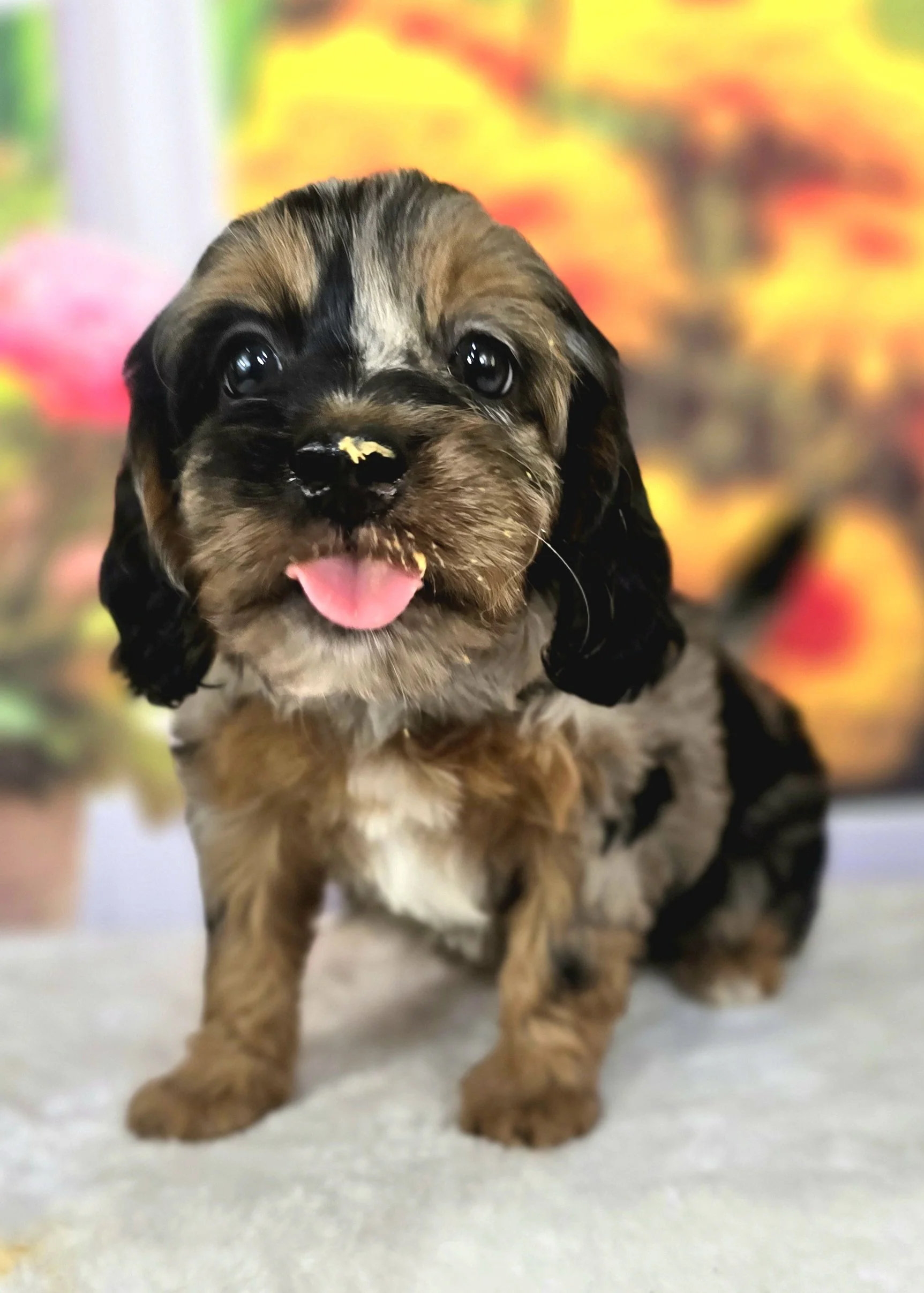
If you are researching Goldendoodles, you have probably encountered two completely opposite claims about their health. One says Goldendoodles are healthier because they are crosses. The other says they inherit every health problem found in both Golden Retrievers and Poodles.
Neither is a particularly useful way to understand the health of an individual dog.
A Goldendoodle can potentially inherit health risks from both sides of its pedigree, which is why responsible Goldendoodle breeding requires understanding Golden Retrievers, Poodles and the individual families being combined. Crossing two breeds does not automatically erase inherited disease, and it does not mean a puppy will develop every condition associated with either breed.
For families, there is also a difference between the health conditions that appear on breed-testing lists and the things you are most likely to manage in everyday life. In our experience raising Goldendoodles and following the dogs we've produced, ears, allergies and dental care—particularly in our smaller dogs—are some of the most common practical health issues families encounter. Orthopedic health, weight, conditioning and preventive care also matter tremendously over a dog's lifetime.
Then there are less common but important inherited or breed-associated conditions that responsible breeders need to understand and screen for when testing is available.
Ear Infections: One of the Most Common Things We See
If there is one health issue we would tell Goldendoodle families to expect to learn about, it is ears. Ear infections are among the most common everyday problems we have encountered.
Goldendoodles commonly combine a drop ear with varying amounts of hair in and around the ear canal. Many also love swimming, and regular bathing and grooming introduce additional moisture. That combination doesn't guarantee an ear infection, but it makes ear care something owners should pay attention to.
Learn what your dog's healthy ears normally look and smell like. Redness, odor, excessive wax, discharge, head shaking, scratching or tenderness tell you something has changed. Drying the ears after swimming and bathing can help, and ear-hair management should be based on the individual dog rather than assuming every Goldendoodle needs exactly the same routine.
Recurring infections shouldn't simply be accepted as “a Doodle thing.” If an infection keeps returning, we want families asking why. Moisture, anatomy and hair can contribute, but recurring ear infections can also be associated with allergies.
Allergies: Skin Problems Can Start in the Ears
Allergies are another issue we see in the real world with Goldendoodles. Sometimes the obvious symptom is itching, but sometimes the first clue is another ear infection.
A dog may lick or chew its feet, develop redness between the toes, rub its face, experience recurring hot spots or skin infections, or simply seem chronically itchy. Some problems are seasonal while others persist throughout the year.
Not every itchy Goldendoodle has allergies. Parasites, bacterial and yeast infections and other medical conditions can produce similar symptoms, so recurring skin or ear problems deserve veterinary evaluation.
The Goldendoodle coat can also hide quite a bit. Whether your dog has a straighter, wavier or curlier coat, grooming is an opportunity to actually look at the skin underneath it. Persistent redness, sores, unusual scaling, odor, hair loss or repeated licking and chewing deserve attention.
Our Goldendoodle Coat Types page explains more about how furnishings, curl and coat genetics affect the type of coat your Goldendoodle may have, but regardless of coat type, skin health should be part of regular grooming.
Dental Health: Especially Important in Smaller Goldendoodles
Dental care becomes increasingly important as we breed Goldendoodles into smaller sizes. A 15-pound Petite Goldendoodle and a 65-pound Standard Goldendoodle don't necessarily face the same dental challenges.
Smaller dogs have the same number of adult teeth packed into considerably less space. Crowding, retained puppy teeth and plaque and tartar accumulation can become more significant concerns, which is why we want families with Petite and Mini Goldendoodles to think about dental care early rather than waiting until disease develops.
Start tooth brushing while your puppy is young and make mouth handling part of normal life. Your veterinarian should monitor the teeth and gums during routine examinations, and families should understand that professional dental cleanings may become part of maintaining their dog's health throughout adulthood.
With our own small dogs, we are proactive about this. When they are spayed or neutered, we have a dental performed at the same time. This allows our veterinarian to thoroughly evaluate and clean the teeth while the dog is already under anesthesia and address retained puppy teeth when necessary.
Developing Bites & Base-Narrow Canines
Base-narrow lower canines, also called linguoverted mandibular canines, can occur when the lower canine teeth sit too far toward the tongue and make contact with the gum or roof of the mouth instead of fitting comfortably into their normal position.
Puppy mouths change tremendously during development. Baby teeth fall out, adult teeth erupt and the jaws continue growing, so what we see in a young puppy isn't necessarily what that dog's adult mouth will look like. We monitor developing bites and work with our veterinarians when intervention is appropriate.
Depending on the puppy and its stage of development, conservative approaches such as appropriately sized ball therapy may be recommended to encourage an erupting canine toward a better position. Persistent traumatic contact with the palate requires veterinary dental evaluation.
We also track these things within families. One puppy experiencing a developmental bite issue gives us information, but repeatedly seeing the same issue among related dogs gives us different information and may affect future breeding decisions.
Joints, Hips & Lifelong Mobility
Goldendoodles range from very small dogs to dogs weighing 70 pounds or more, so orthopedic considerations aren't identical across every size. Hip dysplasia is an important concern in both Golden Retrievers and Poodles, which makes hip health particularly relevant when breeding Goldendoodles.
This is also an area where the breeder and owner both contribute to the dog's long-term outcome. Health testing breeding dogs helps us make informed decisions before puppies are produced, but owners influence what happens after that puppy goes home.
Keeping your Goldendoodle lean is one of the most valuable things you can do for its joints. Appropriate exercise and conditioning are important, but a growing puppy isn't a miniature adult athlete. Repetitive high-impact exercise designed for a physically mature dog isn't necessary while bones and joints are still developing.
Persistent limping, pain, reluctance to exercise, repeated skipping on a rear leg or noticeable changes in gait deserve veterinary evaluation rather than being dismissed as growing pains.
Eyes
Both sides of a Goldendoodle pedigree can carry inherited eye conditions, which is one reason responsible Goldendoodle health testing needs to consider both parent breeds.
Genetic testing can identify some known disease-associated variants, but DNA testing cannot identify every eye disease a dog could develop. That is why physical ophthalmic examinations remain important in addition to genetic testing.
Owners should also pay attention throughout the dog's life. Persistent redness, squinting, cloudiness, unusual discharge, apparent discomfort or changes in vision deserve veterinary evaluation.
Heart Health
Cardiac health is another area we consider when evaluating breeding dogs. Some cardiac abnormalities may be congenital, while other heart disease develops later in life.
A normal cardiac examination before breeding gives us useful information about that dog at that point in time. It does not guarantee that the dog or every puppy it produces will remain free of cardiac disease forever.
For owners, routine veterinary examinations continue to matter throughout adulthood and into the senior years. Unexplained exercise intolerance, fainting, persistent coughing or breathing difficulties warrant veterinary attention.
Thyroid Disease
Thyroid disease can occur in both Golden Retriever and Poodle families, so thyroid health is relevant when evaluating Goldendoodle breeding dogs.
Hypothyroidism may cause symptoms such as unexplained weight gain, lethargy, reduced exercise tolerance and changes in the skin or coat. Those symptoms can have many causes and shouldn't be self-diagnosed, but persistent unexplained changes are worth discussing with your veterinarian.
This is another example of why a health test is a snapshot rather than a lifetime guarantee. A dog can have a normal thyroid evaluation while young and develop thyroid disease later.
Addison's Disease
Addison's disease, or hypoadrenocorticism, is a health concern particularly associated with Poodles and therefore remains relevant when Poodles are part of a Goldendoodle pedigree.
Symptoms can be frustratingly vague. Dogs may experience vomiting or diarrhea, poor appetite, lethargy, weakness, weight loss or episodes of simply seeming unwell. Symptoms may disappear and return, while a severe Addisonian crisis can become a medical emergency.
There isn't currently a simple DNA test that allows a breeder to declare a dog “Addison's clear.” That makes family history particularly valuable. We want to know what has occurred in parents, grandparents, siblings, related dogs and previous offspring rather than assuming a large DNA panel tells us everything we need to know.
In our own dogs, we have had veterinarians suspect Addison's twice when symptoms didn't have an obvious explanation. Both dogs were tested and ultimately negative. It is something our veterinarians have been aware of because of the breeds we work with, even though it has not been the eventual diagnosis in those cases.
Cancer & Golden Retriever Family History
Cancer deserves a different kind of discussion because Golden Retrievers have significant cancer concerns, and there isn't a single pre-breeding test that allows us to label a Golden Retriever—or a Goldendoodle—“cancer clear.”
That makes family history and longevity particularly important on the Golden Retriever side of a Goldendoodle pedigree. We want to know how long dogs lived, what they died from, whether particular cancers repeatedly appear among close relatives, and what we're seeing as previous offspring age.
A Golden Retriever crossed with a Poodle does not automatically leave those risks behind. At the same time, having Golden Retriever ancestry does not mean an individual Goldendoodle is destined to develop cancer. This is where simplistic claims about mixed-breed health stop being useful and understanding the actual dogs behind a pedigree becomes much more important.
Bloat: Particularly Important for Larger Goldendoodles
Standard and larger Goldendoodles can have the deep-chested body type associated with increased risk for gastric dilatation-volvulus (GDV), commonly called bloat. The stomach becomes distended with gas or fluid and can rotate, compromising blood supply and becoming life-threatening very quickly.
Families can take practical steps to help manage risk. Feed two or more smaller meals rather than one enormous daily meal, manage dogs that inhale their food, keep mealtimes relatively calm and avoid strenuous exercise immediately before and after meals. Normal access to fresh water is important; the concern is not routine hydration but situations such as an at-risk dog rapidly consuming a very large volume immediately after vigorous exercise.
Current evidence does not support elevating food bowls simply as a way to prevent GDV. Families with larger, deep-chested Goldendoodles can also discuss prophylactic gastropexy with their veterinarian. Gastropexy attaches the stomach to the abdominal wall to help prevent it from twisting, although it doesn't prevent the stomach from becoming distended.
Even with careful management, owners need to recognize the emergency. Sudden restlessness or distress, repeated attempts to vomit without producing anything, excessive drooling, abdominal enlargement, weakness or collapse can be signs of GDV. Suspected bloat requires immediate emergency veterinary care.
Longevity: Looking Beyond a Number
Goldendoodles vary tremendously in size and ancestry, so assigning one universal lifespan to every Goldendoodle isn't particularly useful. In dogs generally, smaller size is associated with greater longevity, which means we would not expect a 15-pound Petite Goldendoodle and a 75-pound Standard Goldendoodle to necessarily have identical lifespan expectations.
We also care about healthspan, not simply the age written on a dog's final veterinary record. Was the dog still comfortable, mobile, mentally engaged and enjoying life during its senior years? What did it eventually die from? What about its siblings, parents and grandparents?
This is information we can only collect over time. A breeding dog's health testing tells us important things when that dog is young. Watching its parents and grandparents age tells us something different, and following the offspring we've produced gives us another layer of information.
All of it matters.
Does Hybrid Vigor Make Goldendoodles Healthier?
This deserves its own discussion because “hybrid vigor” is one of the most oversimplified claims in the Doodle world.
Crossing two breeds can increase genetic diversity compared with breeding within a closed population, and greater heterozygosity can have biological advantages. But simply breeding a Golden Retriever to a Poodle does not automatically create a healthier dog.
If both parent breeds share susceptibility to a condition, crossing them doesn't magically remove that risk. Hip dysplasia is an obvious example because it occurs in both breeds. The same principle applies whenever both sides of a pedigree contribute risk.
Recessive genetic diseases provide another good example. If a disease-causing variant exists on both sides of a cross, affected offspring may still be possible depending on how that disease is inherited and the genetic status of the parents. This is why breeders need to understand the actual genetic results of the dogs being bred rather than relying on the fact that they are different breeds.
Hybrid vigor is therefore not a substitute for health testing. You don't get to skip health testing because you're breeding a cross.
Responsible Goldendoodle breeding requires understanding the health concerns of the Golden Retriever, understanding the health concerns of the Poodle, testing the actual dogs being considered for breeding, researching their families and then making a pairing based on all of that information.
What Can You Do to Help Your Goldendoodle Live Well?
Once your puppy goes home, you become a major part of its health story. Maintain a lean body condition, provide appropriate exercise and conditioning, care for the teeth, monitor the ears and skin, maintain the coat, and provide routine veterinary and preventive care appropriate for your dog's lifestyle.
Learn what is normal for your individual dog. Changes in appetite, thirst, weight, energy, movement, coat, skin, bathroom habits, sleep or behavior can all provide useful information. As your dog matures, discuss routine bloodwork with your veterinarian so you have baseline information, and adjust preventive care as your dog enters its senior years.
For larger Goldendoodles, learn the signs of bloat before you ever need that knowledge. For smaller Goldendoodles, take dental health particularly seriously. For every Goldendoodle, recurring ear and skin problems deserve investigation rather than being accepted as inevitable parts of owning a Doodle.
What Can a Responsible Goldendoodle Breeder Do?
Goldendoodle health testing should never be based on the idea that crossing two breeds makes testing less important. If anything, a breeder needs to understand two breeds instead of one.
That means knowing which health concerns occur in Golden Retrievers, which occur in Poodles, which overlap, which genetic variants are relevant to the individual dogs, and what has happened within the actual families being bred.
At Oregon's Legendary, our breeding decisions aren't based on a DNA panel alone. We use orthopedic evaluations, cardiac and eye screening, other appropriate physical health testing, genetic disease testing, pedigree information, longevity, temperament, structure and what we have learned from previous offspring and related dogs.
Health testing generally takes place between 18 and 24 months, and our females are not bred before their second birthday. That gives us time for the appropriate adult health evaluations rather than making breeding decisions based primarily on puppy examinations and DNA results.
DNA Panels Are Only as Good as Today's Testing
Genetic testing has given breeders extraordinary tools. When researchers identify a disease-associated variant and understand how it is inherited, we can test potential parents before breeding and use those results to avoid producing affected puppies for many conditions.
But a large clear DNA panel doesn't mean a dog is genetically perfect. It means that dog tested clear for the variants included on that panel at the time it was tested.
New variants are discovered. Tests are added. Scientific understanding changes. Some important diseases are complex rather than controlled by one simple mutation, while others still don't have a useful genetic screening test at all.
That is why we don't use “DNA clear” as a synonym for “health tested.”
Carriers Can Be Used Responsibly
For simple recessive diseases, a carrier isn't necessarily sick or unhealthy. A dog with one copy of a recessive disease-associated variant can often be bred safely to a clear partner without producing affected puppies.
Automatically removing every carrier from breeding can unnecessarily remove otherwise valuable genetics from a population. Responsible breeding means understanding how the condition is inherited, knowing the status of both parents and planning the pairing appropriately.
This becomes especially important in Goldendoodles because the breeder needs to understand which variants are present in both breeds and both individual family lines, rather than simply running a generic panel and looking for the word “clear.”
Health Testing Doesn't Guarantee a Healthy Puppy
Two comprehensively health-tested dogs can still produce a puppy that eventually develops a health problem. Hip dysplasia is influenced by more than a single gene. Allergies don't disappear because both parents passed their health clearances. Addison's disease doesn't currently have a simple test that lets us eliminate it. Cancer cannot be reduced to a single “clear” result.
Health testing is still incredibly important because it gives us information and allows us to avoid risks that we know how to avoid. It just shouldn't be presented as something it isn't.
Responsible breeding is risk reduction, not a promise of biological perfection.
Family History Matters
Some of the most valuable information in a breeding program never appears on an OFA certificate or DNA report.
How old is the dog's mother? Is she healthy? What did its grandparents die from? Did a sibling develop epilepsy? Have several related dogs developed the same cancer? Are previous offspring developing allergies? Are there repeated orthopedic problems? Are older relatives still active and comfortable?
This is why relationships with other breeders and communication with puppy families matter. We cannot track what nobody tells us.
One affected dog doesn't automatically prove that a problem is inherited or mean an entire family should be removed from breeding. But patterns matter, and recognizing those patterns requires breeders to keep paying attention long after puppies leave.
What Should You Ask a Goldendoodle Breeder?
Ask to see the health testing on both parents, not simply a statement that the parents are “health tested.” Ask what physical testing was performed in addition to DNA testing and whether those results can be independently verified.
Ask whether the testing was appropriate for the breeds and sizes behind the litter. Ask what the breeder knows about parents, grandparents, siblings and previous offspring, and ask whether they continue following the health of the puppies they've produced.
One of our favorite questions for families to ask a breeder is: What health problems have you actually seen?
A breeder who has produced dogs for enough years to have meaningful experience is working with biology, and biology isn't perfect. We think it is much more useful to know what a breeder has encountered, what patterns they watch, what they've learned and whether that information has changed future breeding decisions than to hear that a program has supposedly never produced a health problem.
Our Approach to Goldendoodle Health
At Oregon's Legendary, our goal isn't simply to produce a puppy that looks healthy at eight weeks old. We are trying to make breeding decisions that give that puppy the opportunity for a long, healthy and functional life.
That means understanding the Golden Retriever and the Poodle, not assuming one breed somehow cancels out the other. It means health testing the individual dogs, understanding what DNA testing can and cannot tell us, studying families, paying attention to longevity and continuing to follow the dogs we've produced as they age.
Then our families take over the next part. They maintain the teeth, ears, skin, coat, weight and conditioning; provide appropriate veterinary and preventive care; and tell us when something significant happens later in the dog's life.
Health testing happens before breeding, but understanding the health of a breeding program takes years. Every dog, every litter and every family that stays in touch gives us more information to use when we make the next decision.
Goldendoodle Health FAQ
-
Goldendoodles can be healthy, long-lived dogs, but being a mixed breed does not automatically make an individual dog healthy. A Goldendoodle can inherit health risks from both Golden Retrievers and Poodles, which is why the health of the individual parents, their families and the dogs already produced from those lines matters. Responsible breeding can reduce many known risks, but no breeder can eliminate every possible health problem.
-
There is a difference between conditions associated with the parent breeds and the problems owners are most likely to manage in everyday life. In our experience, ear infections and allergies are among the most common issues we see in Goldendoodles, with dental health becoming increasingly important in our smaller dogs. Orthopedic health, particularly hips, is also important because hip dysplasia occurs in both Golden Retrievers and Poodles. Less common conditions such as Addison's disease, inherited eye disease, epilepsy, cardiac disease and bloat are important for breeders and owners to understand even though an individual Goldendoodle may never experience them.
-
Not automatically. Crossing two breeds can increase genetic diversity, but it doesn't erase inherited disease. A Goldendoodle receives genes from both a Golden Retriever and a Poodle, and some health concerns occur in both breeds. The health of the resulting puppies depends on far more than whether their parents belong to different breeds. The individual parents, health testing, family history, genetic compatibility, longevity and breeding decisions all matter.
-
No. Hybrid vigor is not a substitute for health testing. Crossing two breeds may increase heterozygosity, but a breeder still needs to understand the health concerns found in both breeds and the individual dogs being bred. If anything, Goldendoodle breeders need to understand two sets of breed health concerns rather than one.
-
Golden Retriever ancestry can contribute risk for orthopedic disease, certain cardiac and eye conditions, skin and allergy problems, thyroid disease and cancers found within Golden Retriever families. Not every Golden Retriever or Goldendoodle will develop these conditions, and many cannot be reduced to a single genetic test. This is why we care about the health and longevity of the actual Golden Retriever family behind a Goldendoodle rather than simply knowing that one parent passed a DNA panel.
-
Poodle ancestry can contribute risks including certain inherited eye diseases, Addison's disease, epilepsy, orthopedic concerns and other conditions that vary somewhat by Poodle size and family. Smaller Poodle ancestry can also contribute some of the dental challenges commonly seen in small dogs. Again, ancestry creates potential risk rather than a prediction that an individual Goldendoodle will develop a particular disease.
-
Goldendoodles have drop ears and varying amounts of hair around and within the ear canal. Swimming, bathing, grooming and retained moisture can contribute to ear problems as well. In our experience, ear infections are one of the most common health issues Goldendoodle families actually encounter. Repeated infections shouldn't simply be dismissed as “a Doodle thing,” because recurring ear problems can also be associated with allergies or another underlying issue.
-
Yes. Health testing reduces known and avoidable risks; it doesn't eliminate biology. Some conditions are influenced by many genes, some are affected by environment, some develop later in life, and others don't yet have useful screening tests. This is why responsible breeding also includes pedigree research, family history, longevity and following previously produced puppies as they mature.
-
Ask to see the actual health results for both parents and find out what testing was performed beyond a DNA panel. Ask what the breeder knows about the parents, grandparents, siblings and previous offspring, whether they track longevity and cause of death, and what health problems they have actually encountered in their program. A breeder's willingness to discuss problems they've seen and what they learned from them can tell you much more than simply hearing that their dogs are “health tested.”
-
Allergies are one of the more common issues we have encountered in Goldendoodles. They can appear as itchy or irritated skin, paw licking or chewing, recurring ear infections, hot spots or repeated skin infections. Not every itchy dog has allergies, so persistent problems should be evaluated by a veterinarian rather than automatically diagnosed at home.
-
Dental care is particularly important as Goldendoodles become smaller. Petite and smaller Mini Goldendoodles can have considerable tooth crowding in a small mouth, and retained puppy teeth, plaque, tartar and periodontal disease may require active management. We recommend starting tooth brushing while puppies are young. With our own small dogs, we also have a dental performed when they are spayed or neutered so our veterinarian can clean and evaluate the teeth and address retained puppy teeth when necessary.
-
Hip dysplasia is relevant to Goldendoodles because it occurs in both Golden Retrievers and Poodles. Genetics contribute to risk, which is why evaluating the hips of breeding dogs matters, but genetics aren't the only factor affecting lifelong joint health. Owners can also help by maintaining a lean body condition, providing appropriate exercise and conditioning, and avoiding inappropriate repetitive high-impact exercise while a puppy is developing.
-
Yes. Addison's disease is a recognized concern in Poodles and can therefore occur in Goldendoodles. There isn't currently a simple DNA test breeders can use to declare a dog “Addison's clear,” so family history and long-term tracking of relatives and offspring become particularly important. Owners should also be aware that Addison's can produce vague symptoms such as recurring gastrointestinal problems, lethargy, weakness, poor appetite and weight loss.
-
Cancer is an important health concern in Golden Retrievers, so we don't think it should be ignored when discussing Goldendoodle health. However, Golden Retriever ancestry does not mean an individual Goldendoodle is destined to develop cancer, and there is no single test that can tell a breeder a dog or litter will be “cancer free.” Longevity, cause of death and patterns of cancer among parents, grandparents, siblings and other relatives provide useful information when evaluating a family.
-
Larger and deeper-chested Goldendoodles can be at risk for gastric dilatation-volvulus, or GDV. Families can help manage risk by feeding multiple smaller meals, slowing dogs that gulp their food, keeping mealtimes relatively calm and avoiding strenuous exercise around meals. Owners of larger Goldendoodles can also discuss prophylactic gastropexy with their veterinarian. Regardless of prevention choices, families should know the signs of GDV because suspected bloat is an emergency requiring immediate veterinary care.
-
There isn't one meaningful lifespan that applies equally to every Goldendoodle because their sizes vary tremendously. Smaller dogs generally tend to live longer than larger dogs, so a Petite Goldendoodle and a large Standard Goldendoodle may have different lifespan expectations. We also pay attention to healthspan: how long dogs remain comfortable, mobile, mentally engaged and able to enjoy their lives. Longevity and cause of death among relatives are valuable pieces of information when evaluating a breeding family.
-
A Goldendoodle breeder should base health testing on the breeds and sizes behind the dogs being bred rather than relying on a generic DNA panel. Physical screening for orthopedic, cardiac and eye health may be appropriate in addition to genetic disease testing, and results should be considered alongside family history and longevity. A statement that a dog is “DNA tested” is not the same thing as comprehensive health testing.
-
No. DNA testing can identify known genetic variants for many diseases, but it cannot evaluate the actual structure of a dog's hips or elbows, physically examine its eyes or heart, or predict every complex disease it could develop. It also cannot test for diseases whose genetic causes haven't yet been identified. Responsible health evaluation combines genetic testing with appropriate physical screening and information about the dog's family.