
Phantom Dogs: Understanding Phantom Markings in Poodles & Goldendoodles
Phantom Markings in Poodles & Goldendoodles
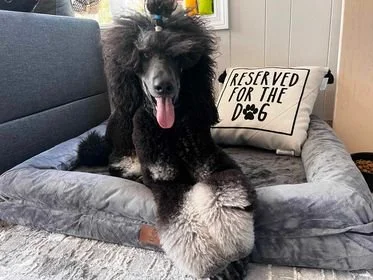
Phantom is one of the most recognizable and highly sought-after coat patterns found in both Poodles and Goldendoodles.
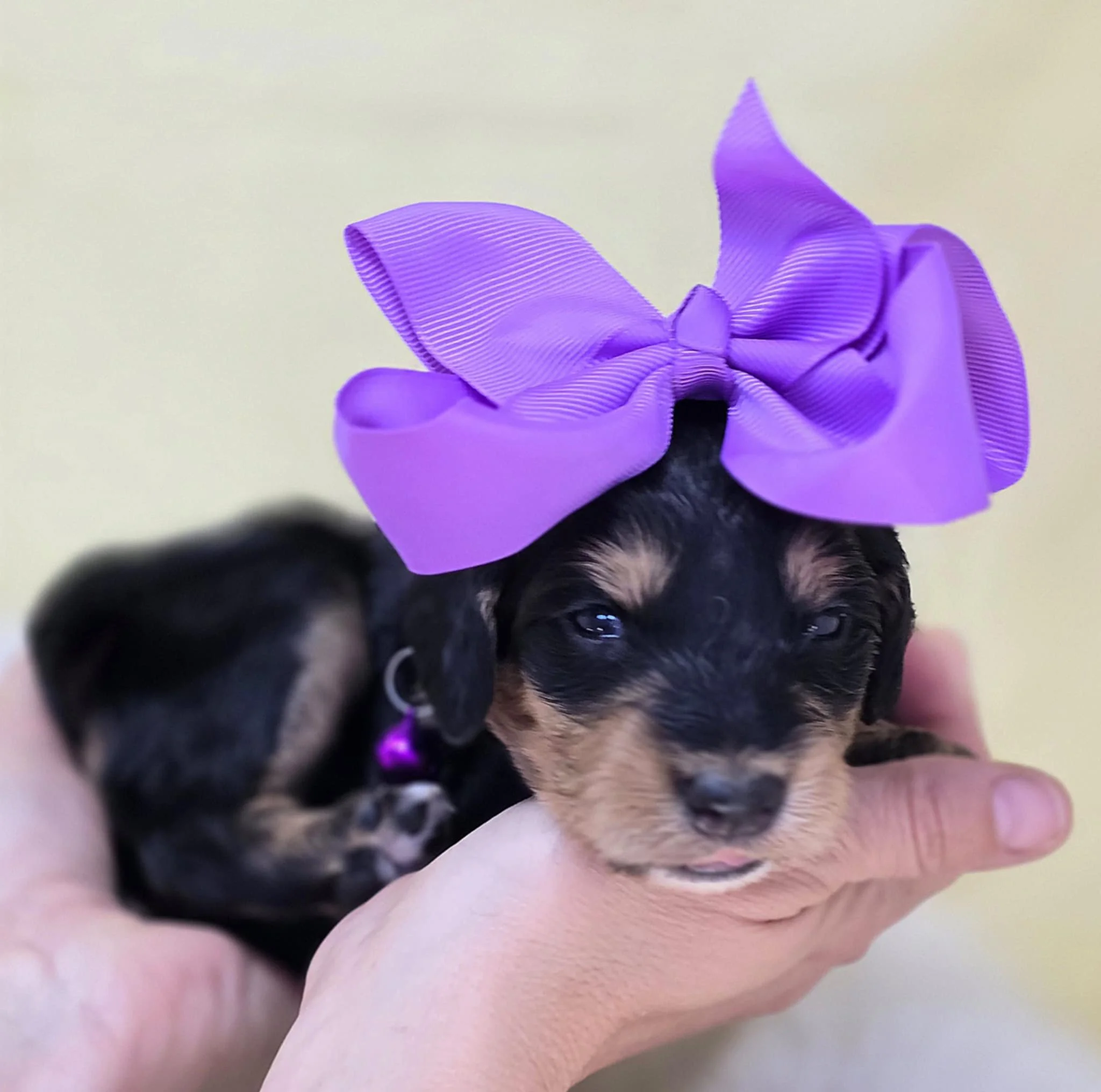
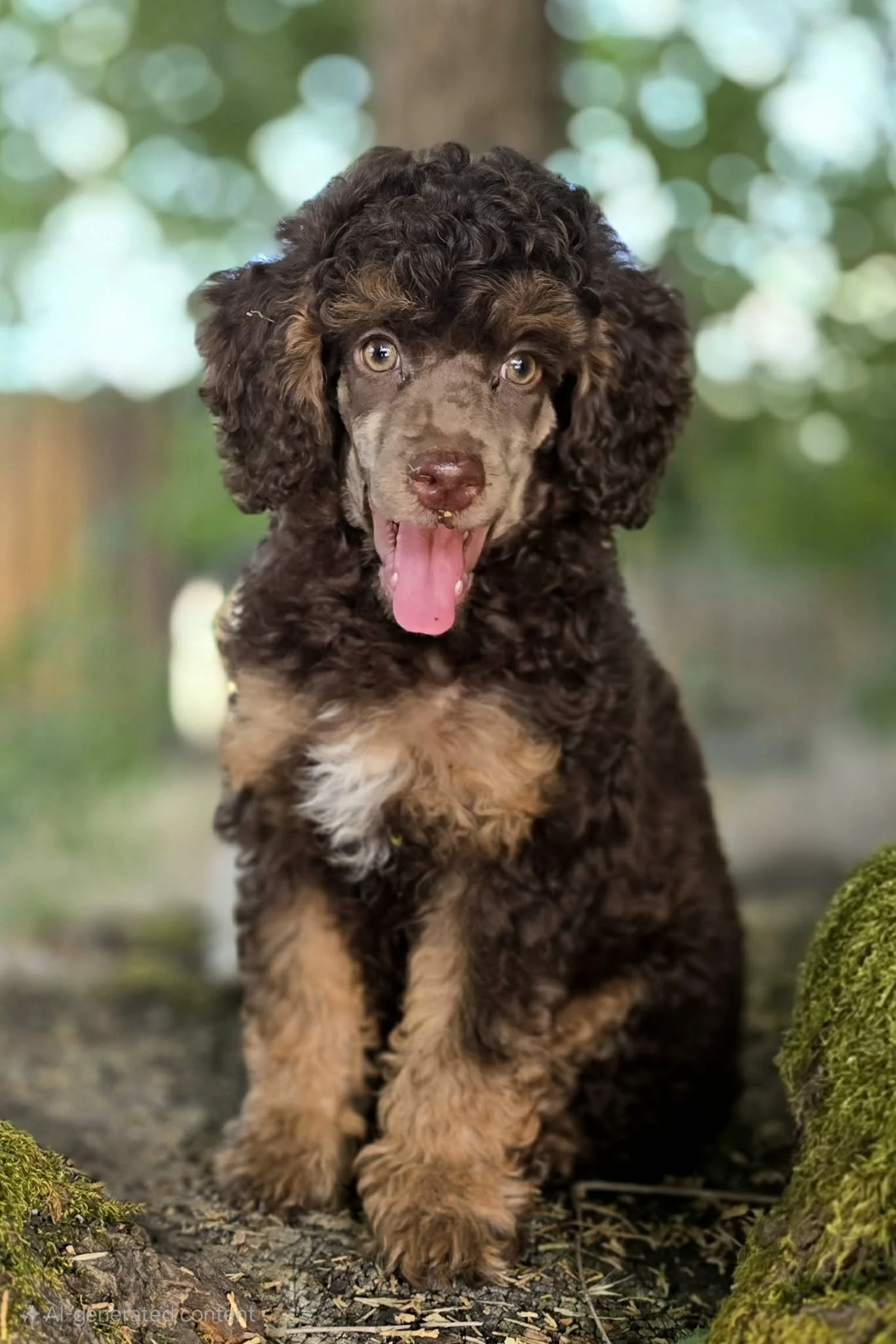
Phantom dogs have lighter markings in predictable locations, usually above the eyes, on the cheeks, chest, legs, and beneath the tail. These markings are often compared to the pattern seen in breeds such as Dobermans, Rottweilers, and Black and Tan Coonhounds.
At Oregon’s Legendary Goldendoodles & Poodles, phantom is one of the patterns we regularly produce and genuinely appreciate. It can appear in many forms, including black phantom, brown phantom, merle phantom, brindle pointed phantom, and parti phantom, often called tri-color.
As with every color and pattern in our program, phantom is appreciated as part of the whole dog. Temperament, structure, health, trainability, and overall quality always come first.
What Is a Phantom Dog?
A phantom dog has a specific pattern of markings that appear in predictable areas of the body.
Common phantom markings include:
Eyebrows
Cheeks
Chest
Lower legs
Under the tail
These markings may appear cream, tan, apricot, red, silver, or brindled depending on the dog’s underlying genetics.
Phantom is not a color by itself.
It is a pattern layered over a base color.
This is why phantom can appear in so many different forms. A dog may be black phantom, brown phantom, silver phantom, merle phantom, or even parti phantom.
Phantom Genetics Explained Simply
Phantom is related to the tan-point pattern found at the Agouti locus.
In simple terms, the dog has lighter markings in specific locations while the rest of the body remains a darker base color.
The pattern itself has existed in dogs for generations and appears across many breeds.
Modern DNA testing allows breeders to better understand whether a dog carries the genetics needed to produce phantom markings. However, visible expression can still vary depending on the dog’s base color, coat progression, and other modifying genes.
Phantom Is a Pattern, Not a Color
One of the biggest misconceptions about phantom dogs is that phantom refers to one specific color.
It does not.
Phantom is a pattern.
The base color may be:
Black
Brown
Blue
Silver
Café au Lait
Silver Beige
Merle
Parti
The pattern remains the same, but the final appearance can look very different depending on the dog’s other color genetics.
This is why two phantom dogs may both be genetically phantom yet look dramatically different from one another.
Phantom Markings Can Be Strong or Subtle
Not all phantom markings are equally bold.
Some dogs display strong, high-contrast markings that are easy to recognize even as young puppies. Others may have much more subtle markings that are harder to see, especially in photos, low lighting, or longer coats.
Phantom markings can vary in:
Size
Contrast
Brightness
Placement
Sharpness
Visibility as the dog matures
A weakly marked phantom may still be genetically phantom even if the markings are not dramatic.
This is one reason phantom dogs can be more complex than they first appear. The pattern may be present, but the way it expresses can vary significantly between individual dogs and bloodlines.
Phantom Puppies vs Adult Dogs
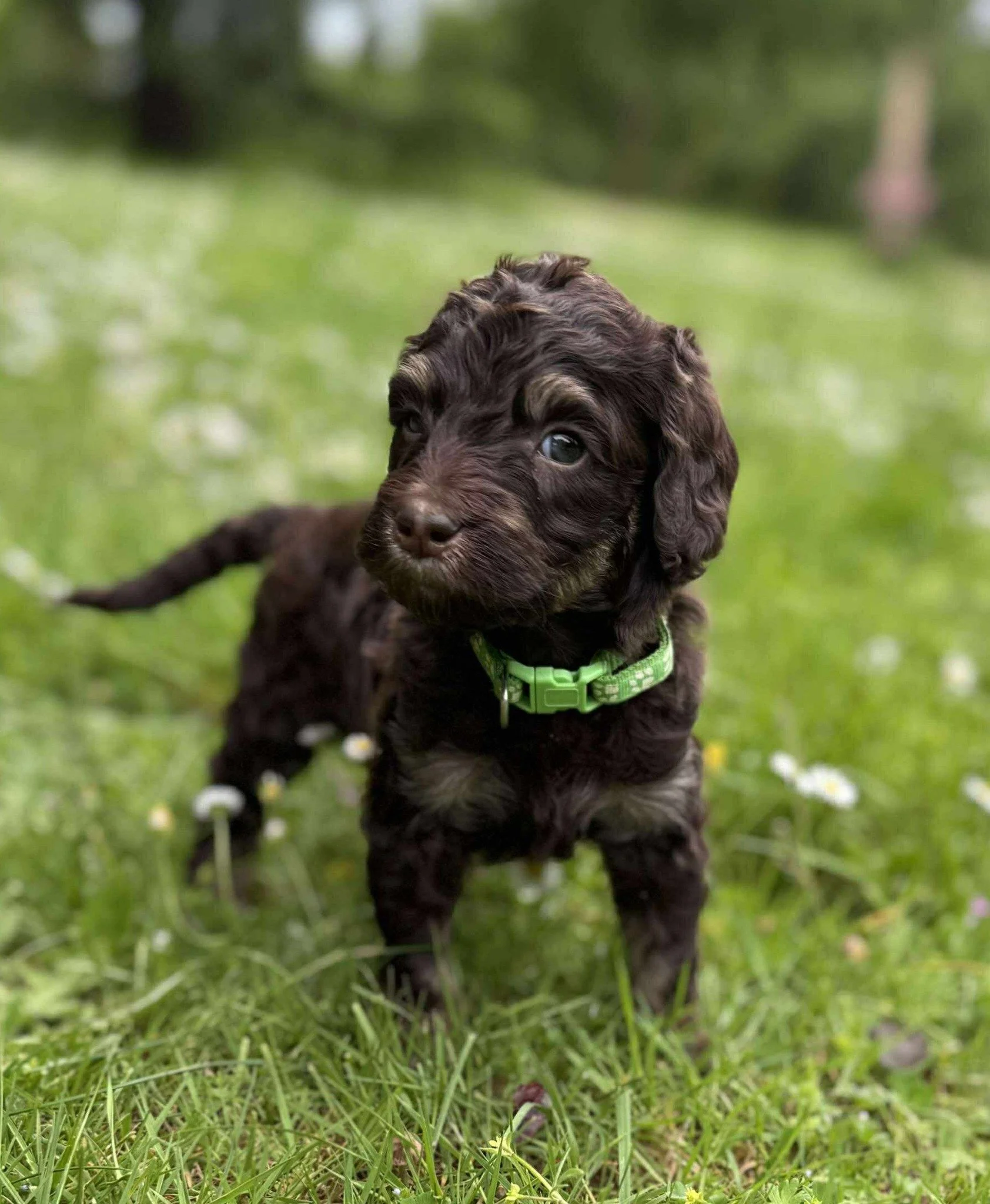
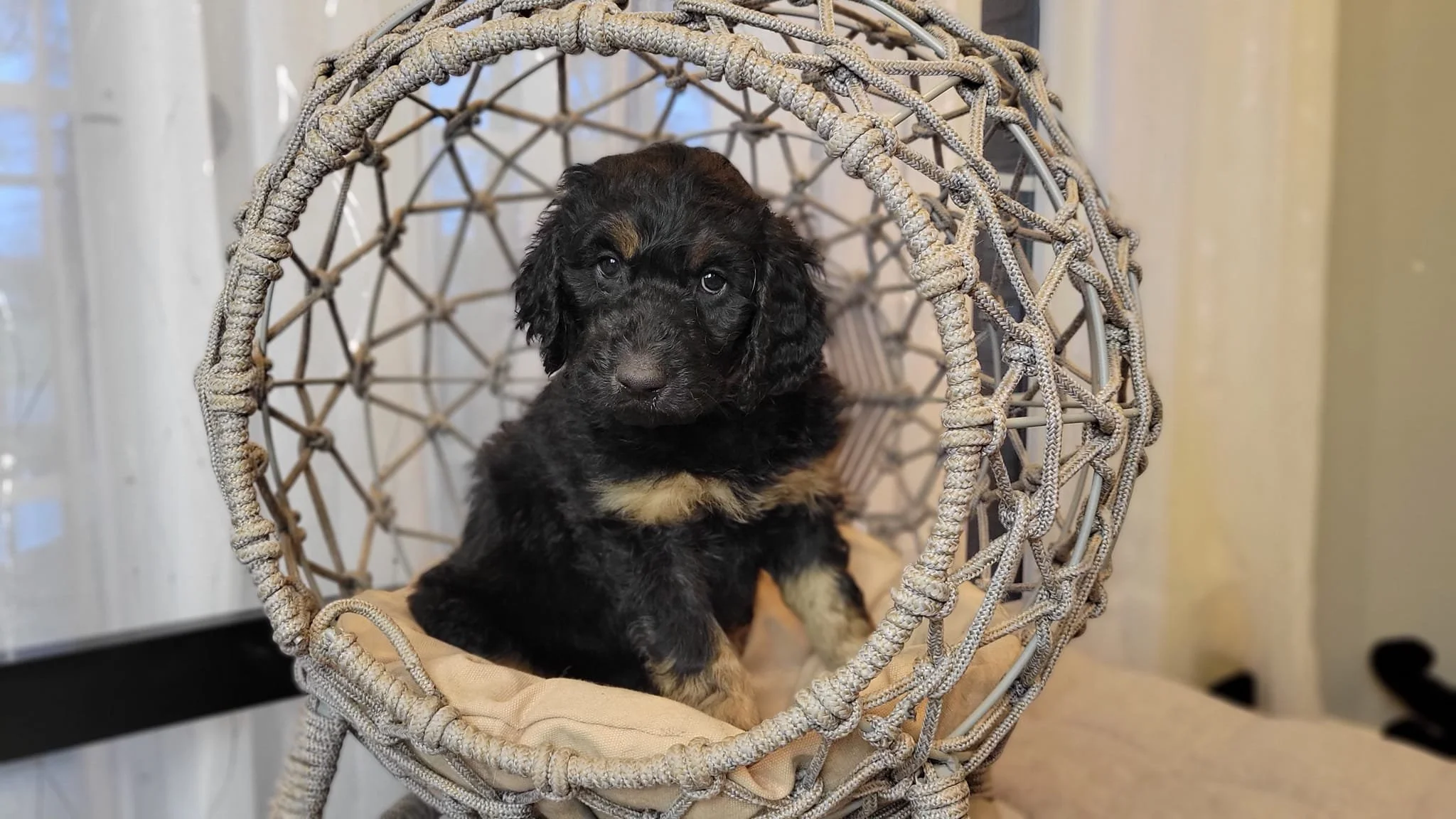
Phantom markings do not always look the same at eight weeks as they do in adulthood.
In some puppies, the phantom points are bold and obvious early.
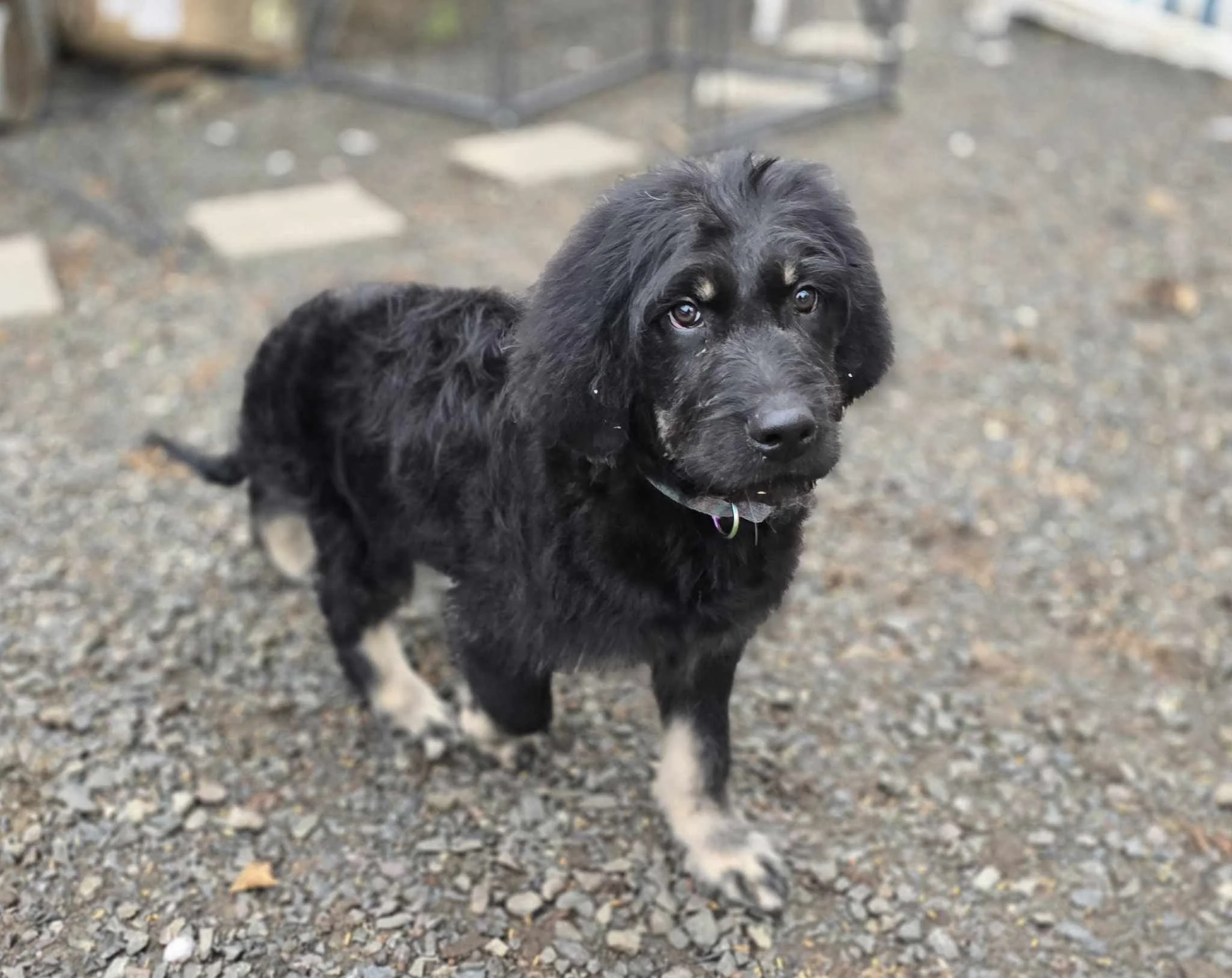
In others, the markings may begin small, dark, muted, or difficult to see. As the coat matures, those markings may become more visible and easier to recognize.
Certain lines are known for producing phantom markings that start weaker and become stronger with age. Whiskey is a good example of how phantom markings can become more obvious as the dog matures.
This is one reason experienced breeders are careful when evaluating young puppies. A puppy with small or subtle markings may develop stronger contrast later, while another puppy with obvious early markings may soften as the adult coat comes in.
Grooming, coat length, lighting, and color progression can also affect how easy the markings are to see.
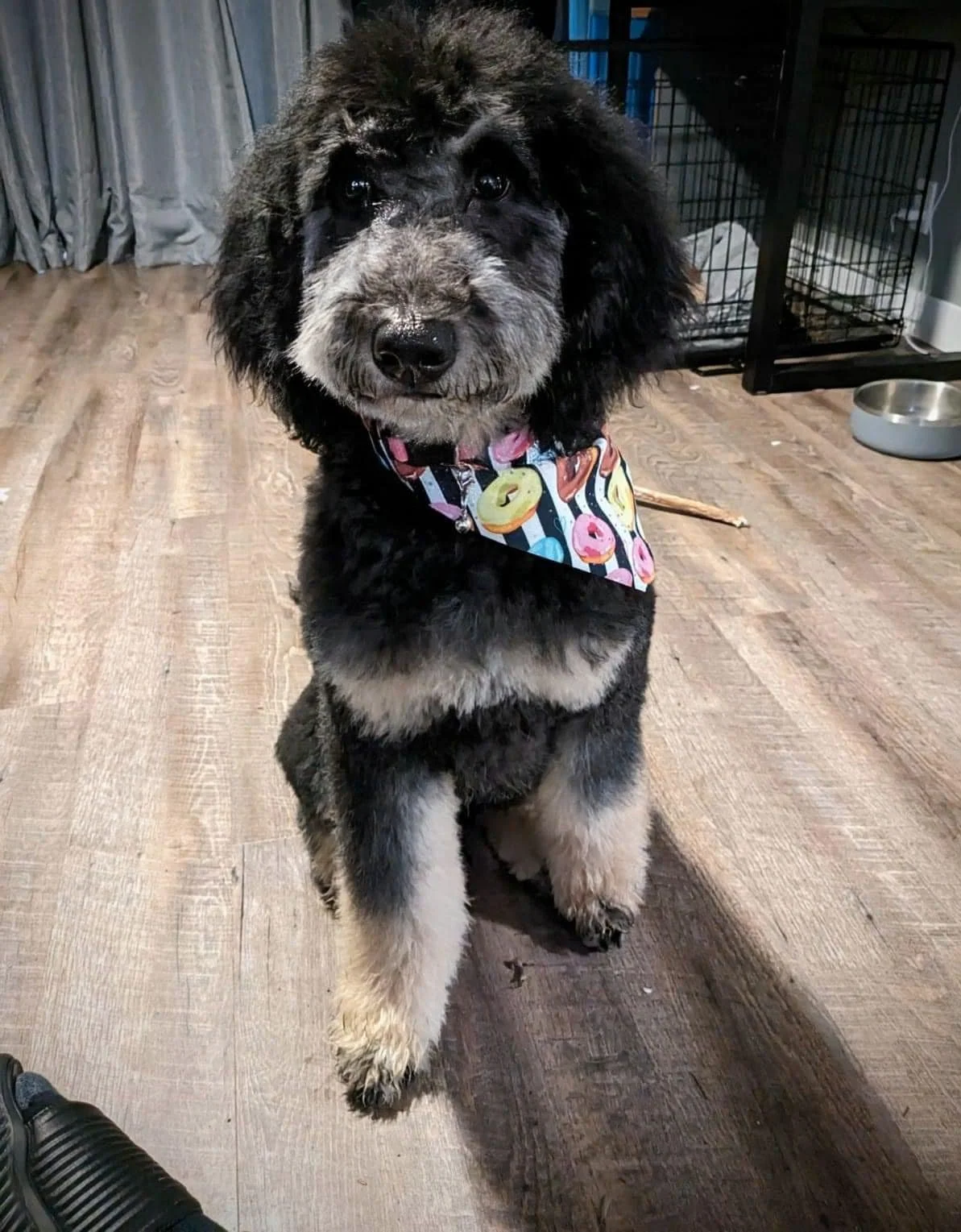
Grooming Can Dramatically Change Phantom Markings
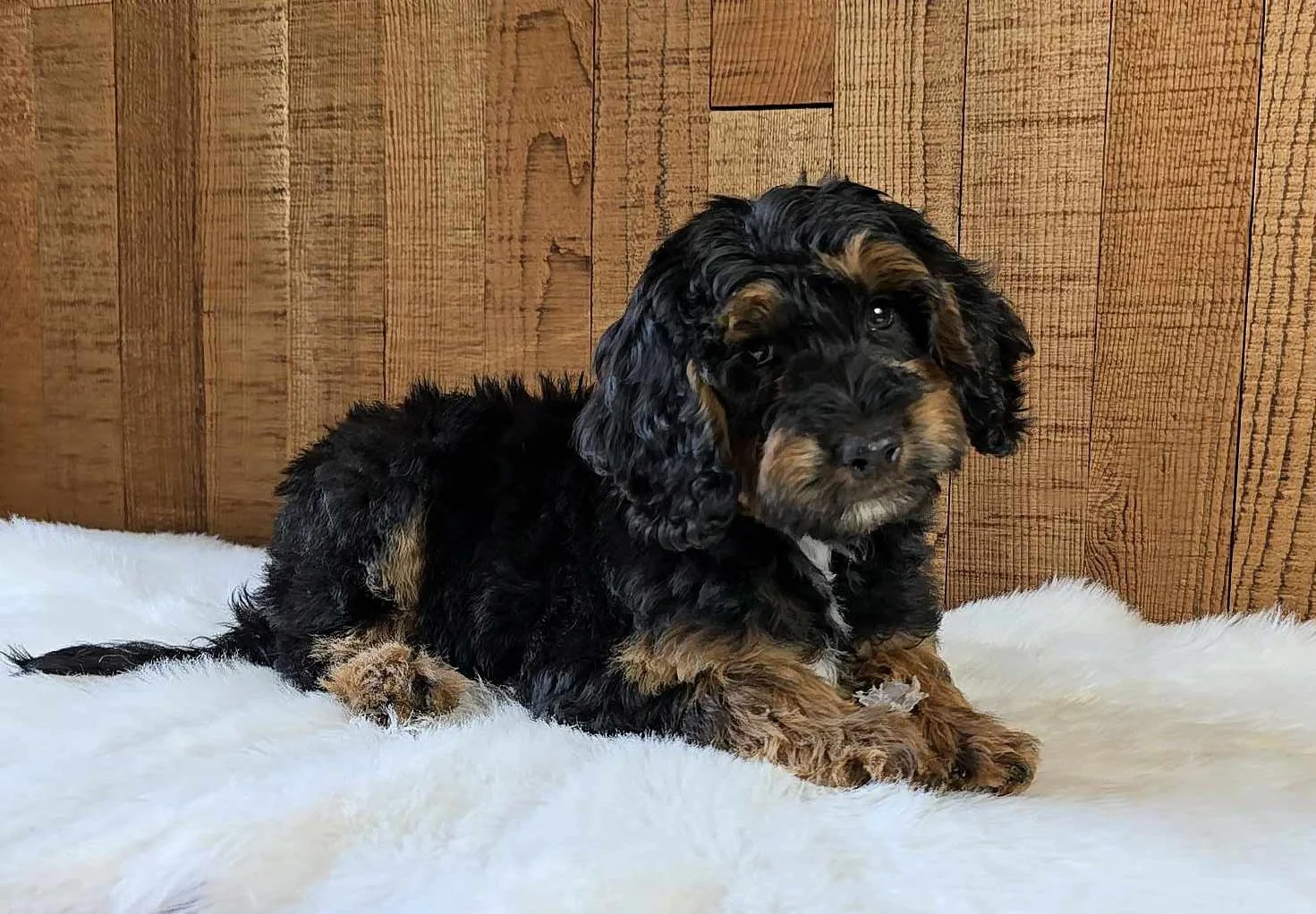
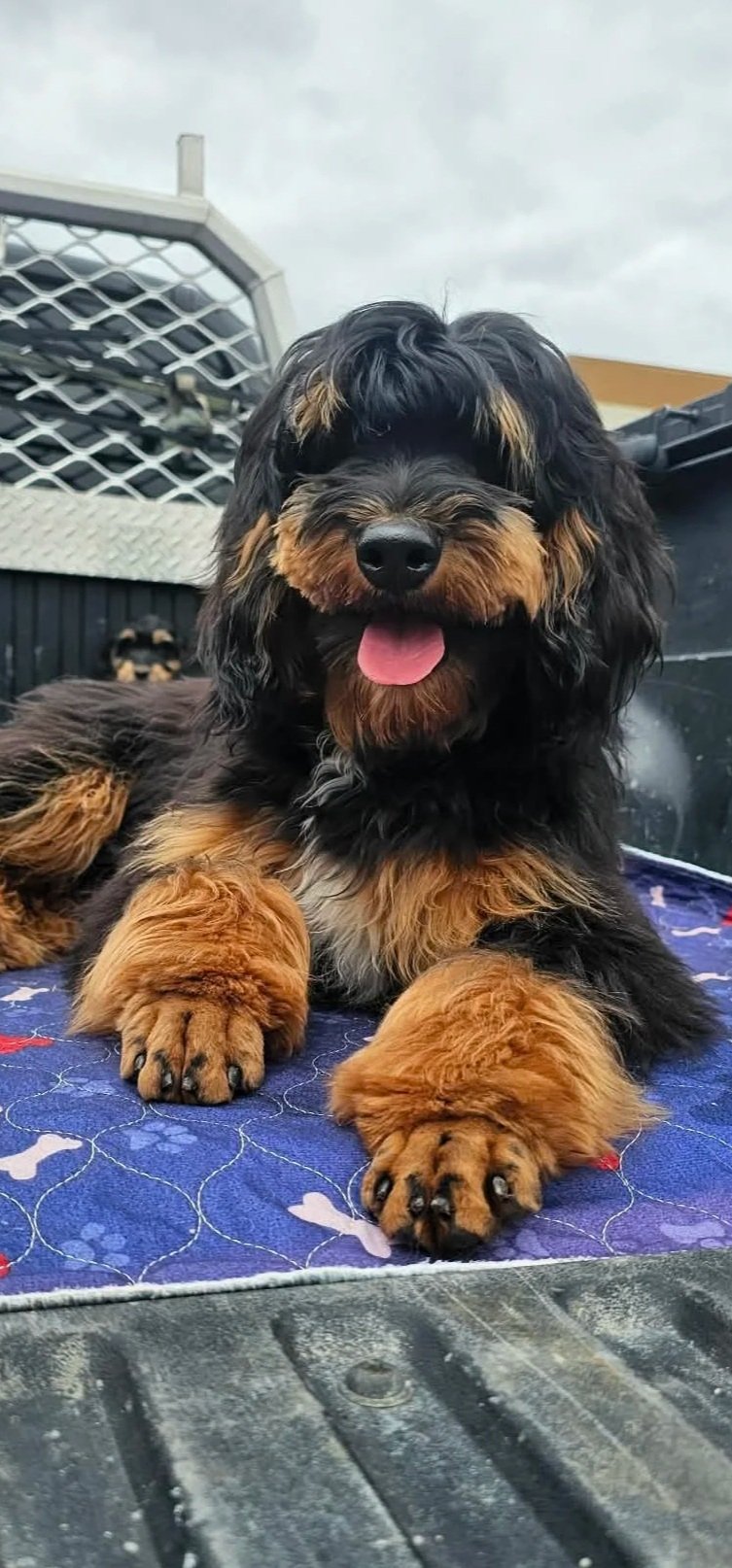
Many owners are surprised by how different their puppy looks after its first professional haircut.
The photos below were taken of Pippin just one week apart.
His genetics didn't change.
His phantom markings didn't suddenly appear.
The haircut simply removed much of the fluffy puppy coat, allowing the existing markings to become much easier to see.
This is one reason families sometimes believe their puppy has "changed color" after grooming. In reality, coat length can hide or soften facial markings, eyebrows, chest points, and leg markings during puppyhood.
As the puppy coat is replaced and regular grooming begins, phantom markings often appear sharper and more defined—even though the underlying pattern has been there all along.
Understanding the difference between coat presentation and genetic color development helps set realistic expectations for how a phantom puppy may look throughout its first year.
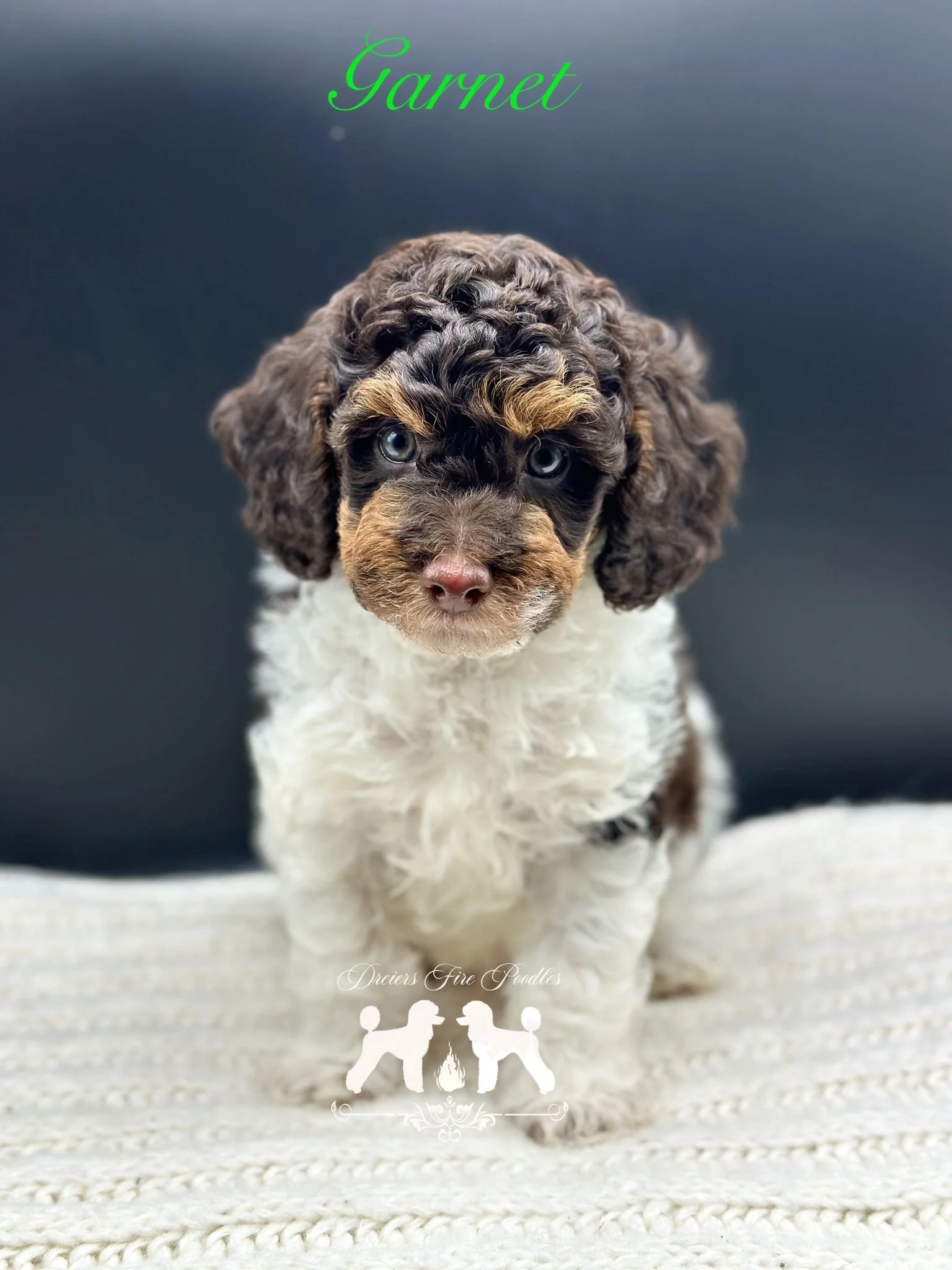
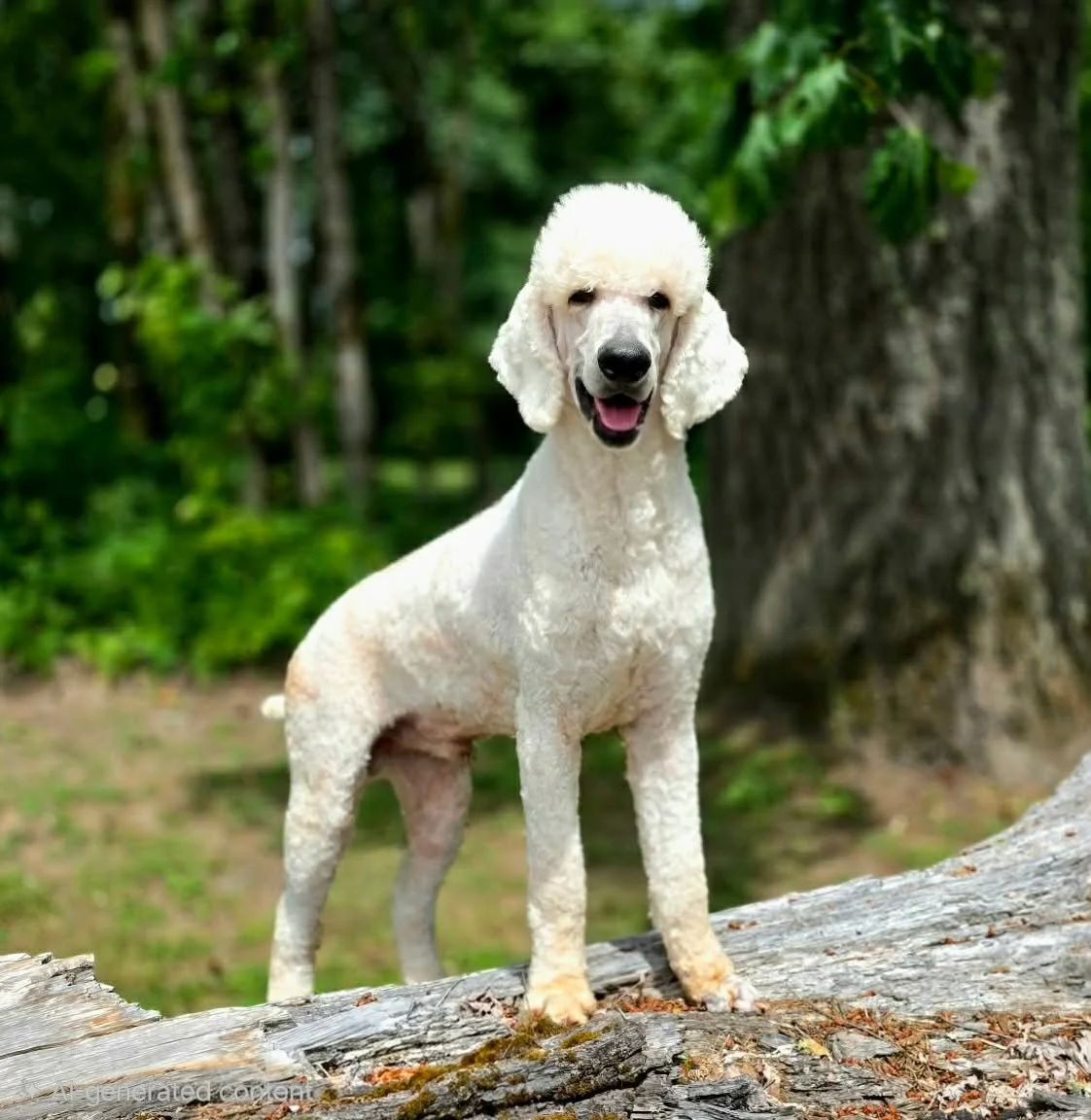
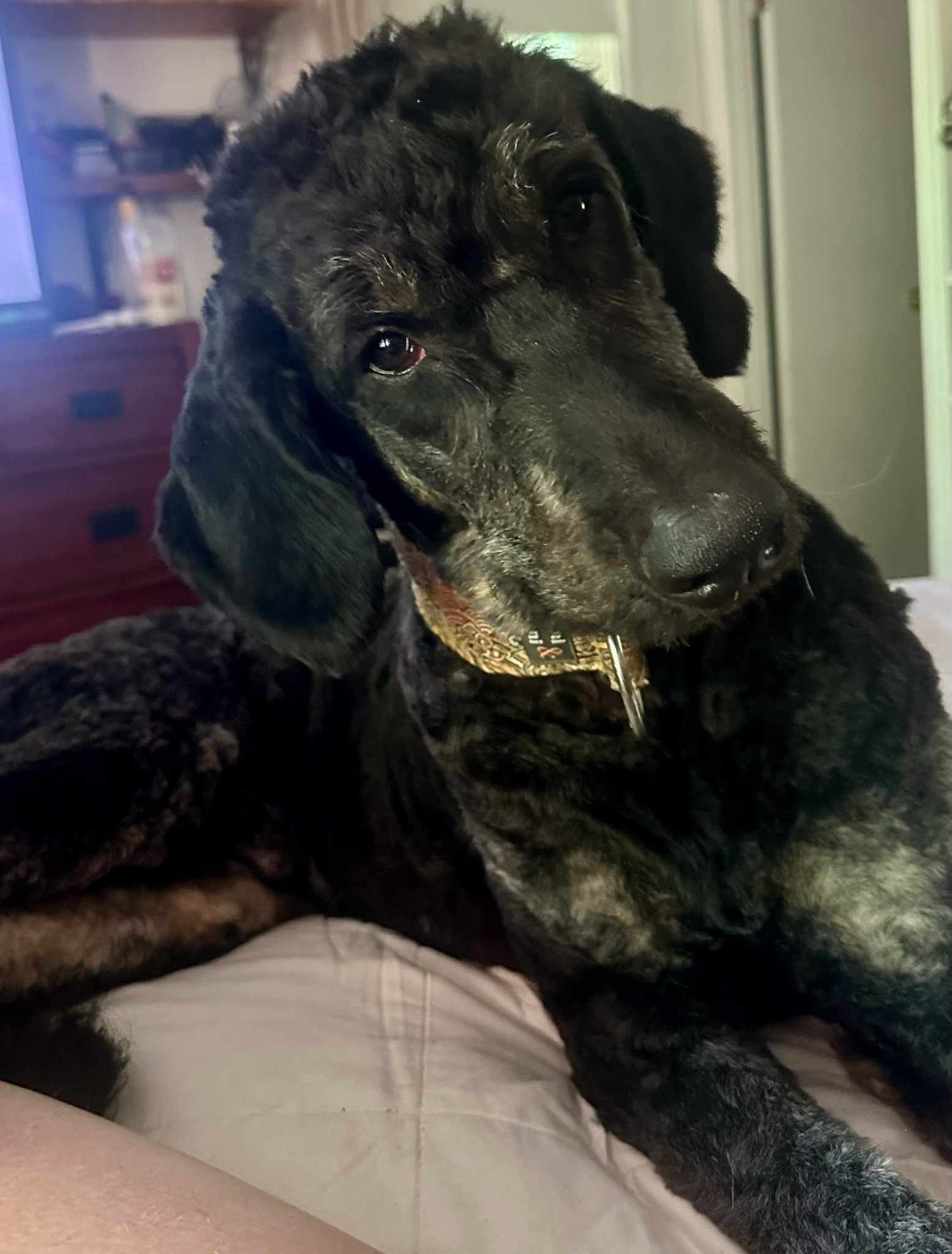
Ronald is a White Standard Poodle with hidden phantom. He carries the genetics and can produce phantom in future pairings
Saddle Tan & Phantom Pattern Development
Saddle tan is closely related to the phantom pattern and can affect how markings develop as a dog matures.
In a traditional phantom dog, the darker base color remains over most of the body while the lighter markings appear in specific point locations.
In a saddle tan dog, the lighter markings may expand over time while the darker pigment recedes toward the back, shoulders, and upper body. This can create a dog that looks less like a classic phantom and more like a dog with a darker “saddle” across the back.
This development can make some phantom-patterned dogs look very different as adults than they did as puppies.
Because phantom and saddle tan exist within the same general pattern family, the distinction is not always obvious to the average family. Some dogs may fall somewhere between traditional phantom and saddle tan expression.
For color genetics, this is part of what makes the pattern so interesting.
Brindle Pointed Phantom
A brindle pointed phantom is a phantom dog whose lighter point markings contain brindle striping.
Instead of solid cream, tan, apricot, or red points, the dog’s phantom markings may show darker striping within the point areas.
Brindle may appear in:
Eyebrows
Cheeks
Chest
Legs
Under-tail markings
The intensity can vary. Some brindle pointed phantoms have very obvious striping, while others are much more subtle.
This pattern is especially interesting because multiple genetic traits are working together at once. The dog is expressing phantom markings, and those markings are influenced by brindle.
Merle Phantom Dogs
Merle phantom combines two separate genetic traits:
Merle patterning
Phantom markings
The result is one of the most visually striking and highly sought-after combinations found in both Poodles and Goldendoodles.
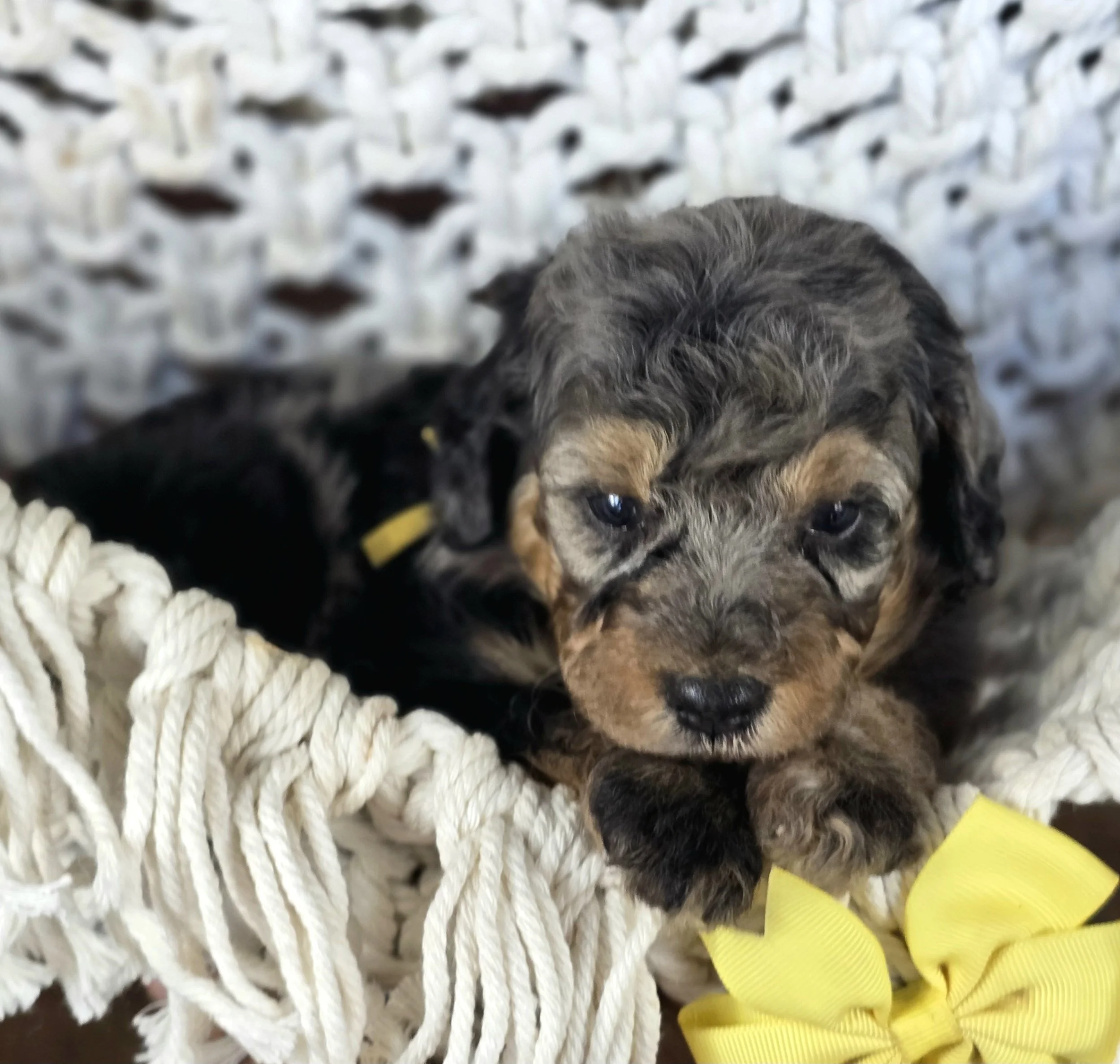
A merle phantom dog displays both the marbled merle pattern and the characteristic phantom markings above the eyes, on the cheeks, chest, legs, and beneath the tail. Because multiple genes are interacting, no two merle phantom dogs look exactly alike.
What Will a Merle Phantom Puppy Look Like as an Adult?
One of the questions we hear most often is whether a merle phantom puppy will look the same as an adult.
Usually, the answer is no.
As puppies mature, several changes often occur:
Phantom markings may become more defined and easier to recognize.
The merle pattern often becomes more apparent as the adult coat replaces the puppy coat.
Grooming can reveal marbling and phantom points that were hidden beneath the fluffy puppy coat.
Overall contrast may become stronger or softer depending on the individual dog's genetics.
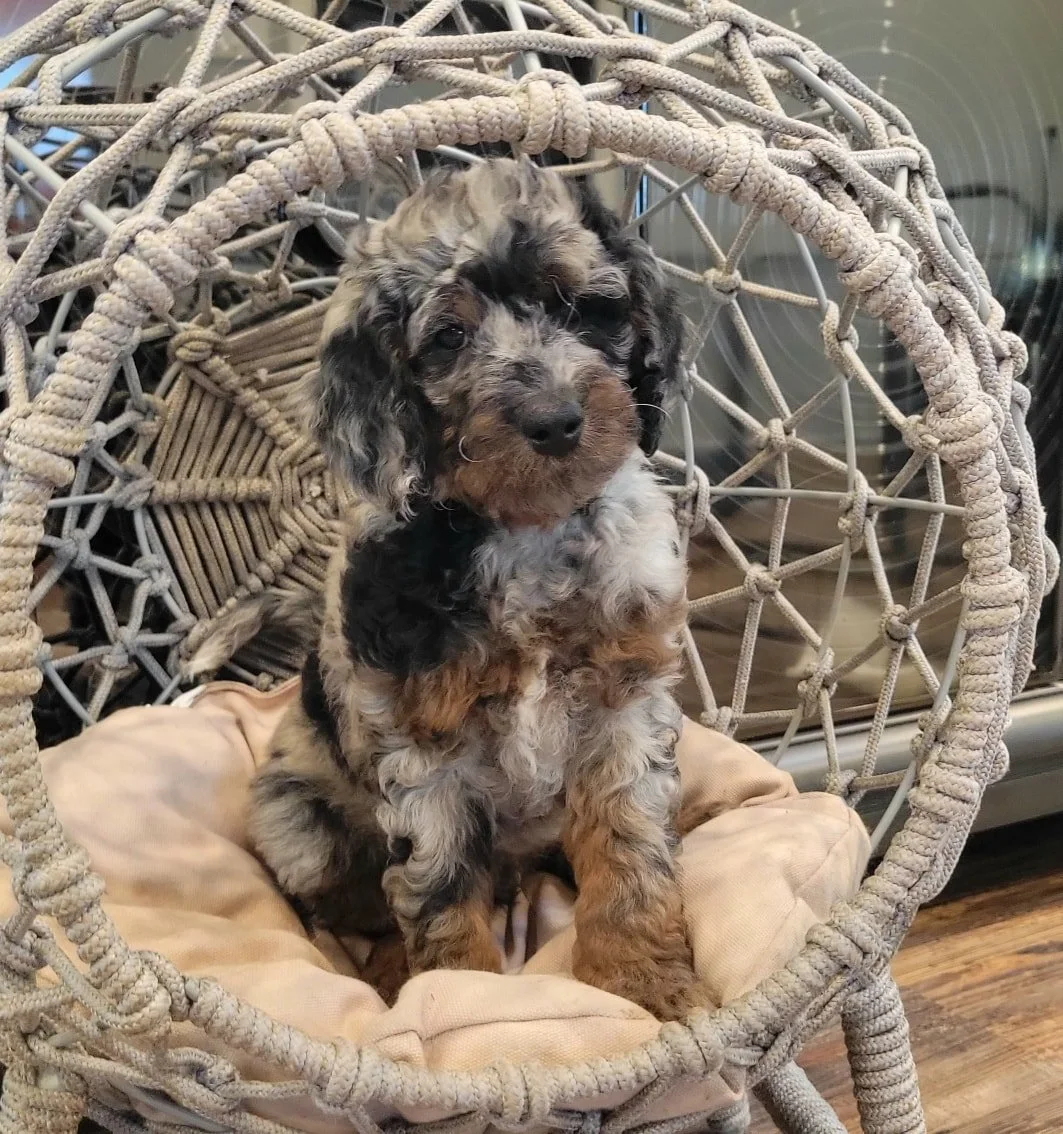
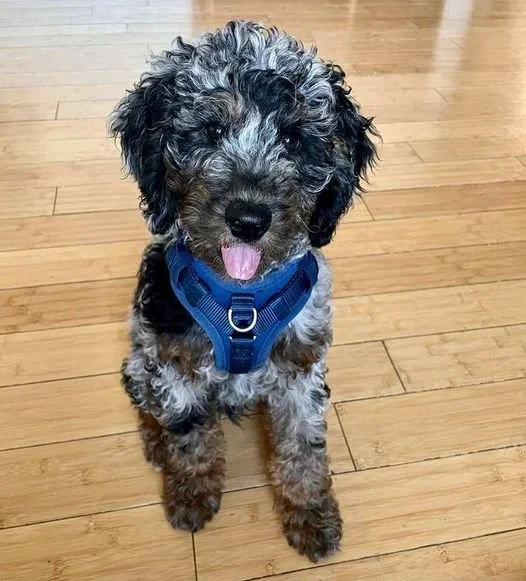
These photos show Rocky at approximately 7 weeks of age and again at 2 years old.
While his overall pattern remained the same, the adult coat reveals much greater detail and contrast than was visible as a young puppy. His progression is an excellent example of why experienced breeders are cautious about predicting exactly how a merle phantom puppy will look as an adult.
Every merle phantom develops a little differently, which is part of what makes this combination so fascinating.
➡️ Merle Dogs: Understanding Merle Colors, Patterns & Development (Coming Soon)
Can Phantom Be Hidden?
Yes, but there are different ways this can happen.
Some dogs display very subtle phantom markings that are difficult to recognize. In those cases, the pattern is present but weakly expressed.
There is also another situation that occurs with genetically red dogs.
A dog that is genetically red, cream, or apricot at the E locus cannot visually express traditional phantom markings, even if the dog carries the genetics responsible for phantom.
This is because genetically red dogs do not produce the dark pigment pattern needed for visible phantom contrast.
In practical terms, a red-based dog may carry phantom but not show it.
That dog can still pass phantom genetics to future generations. If paired with a black-based or brown-based dog capable of expressing phantom, puppies may visibly display the pattern.
This is one reason breeders cannot rely only on appearance when evaluating color genetics. Genetic testing, pedigree knowledge, and what related dogs have produced all matter.
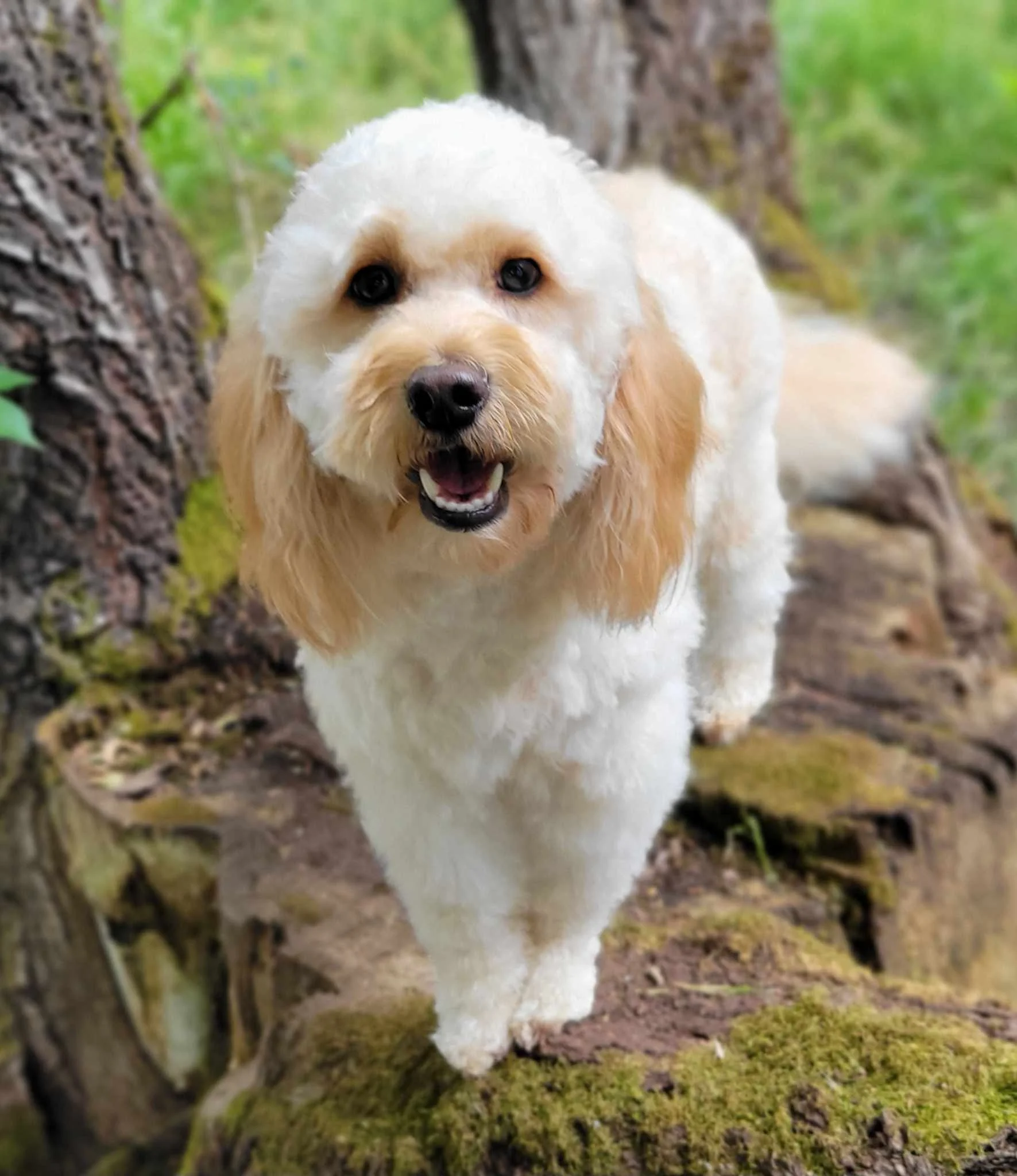
Honey is a mini goldendoodles with hidden phantom and hidden merle. She carries the genetics and can produce phantom &/or merle in her offspring
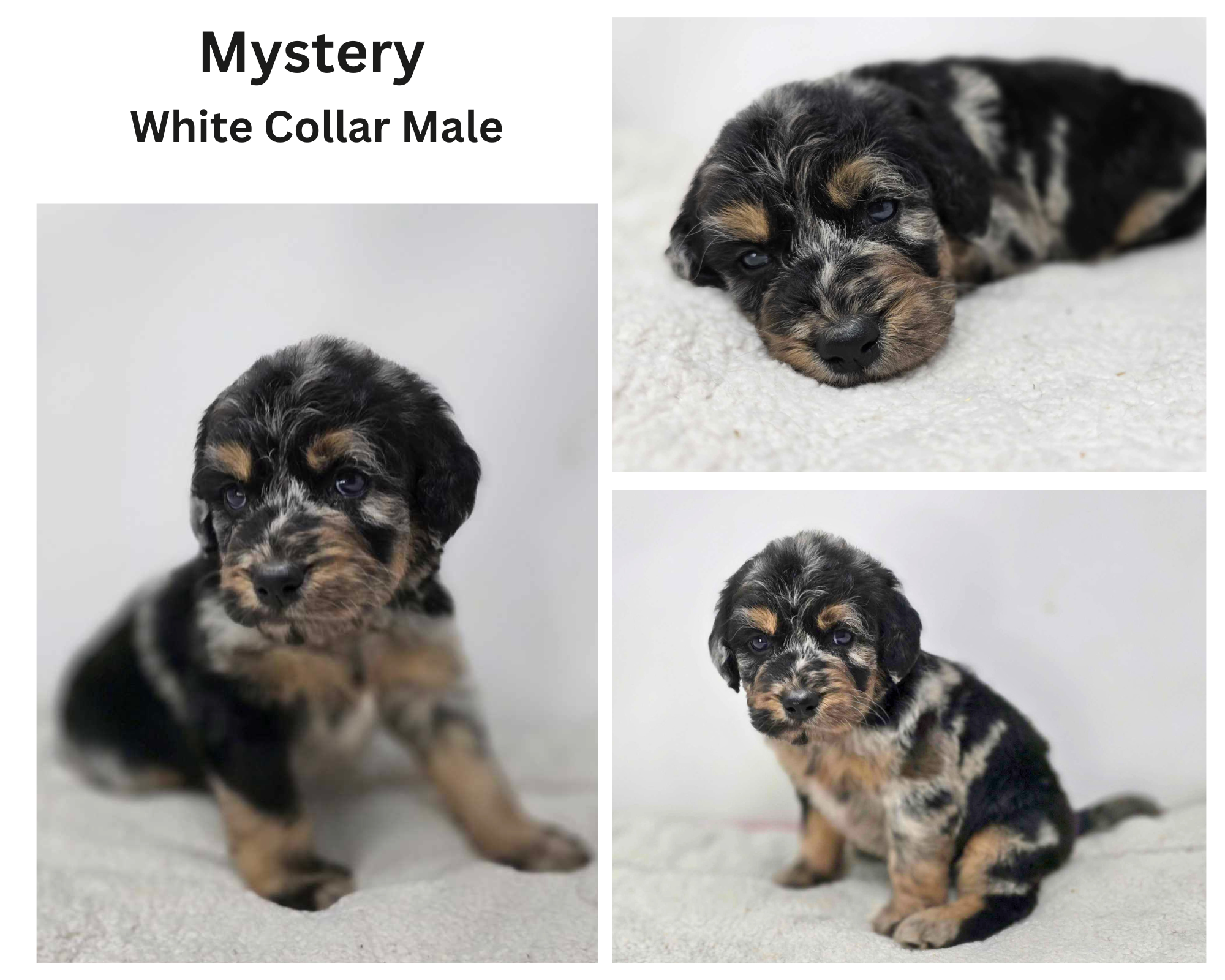
Rocky at 7 weeks an 1 year
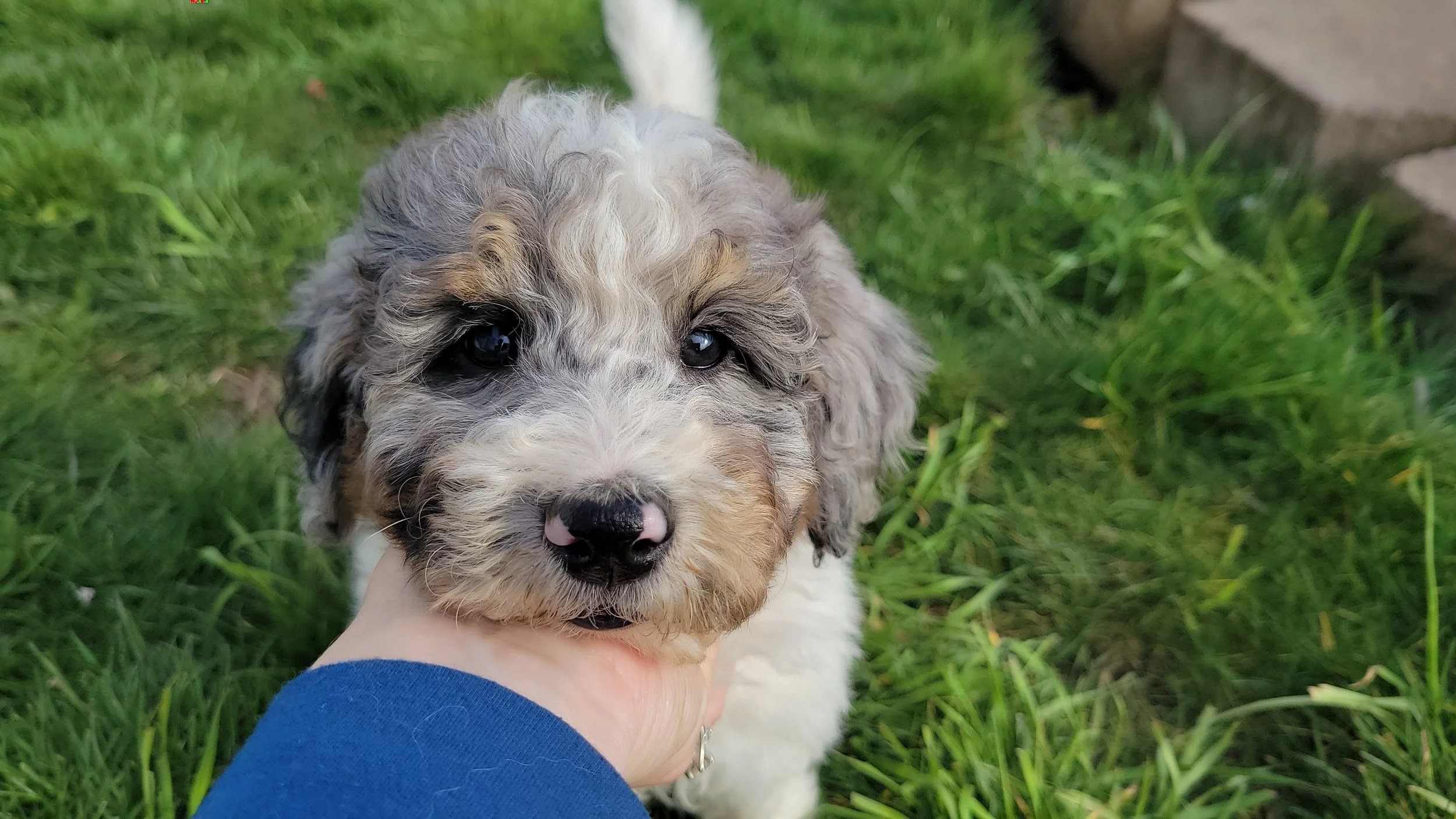
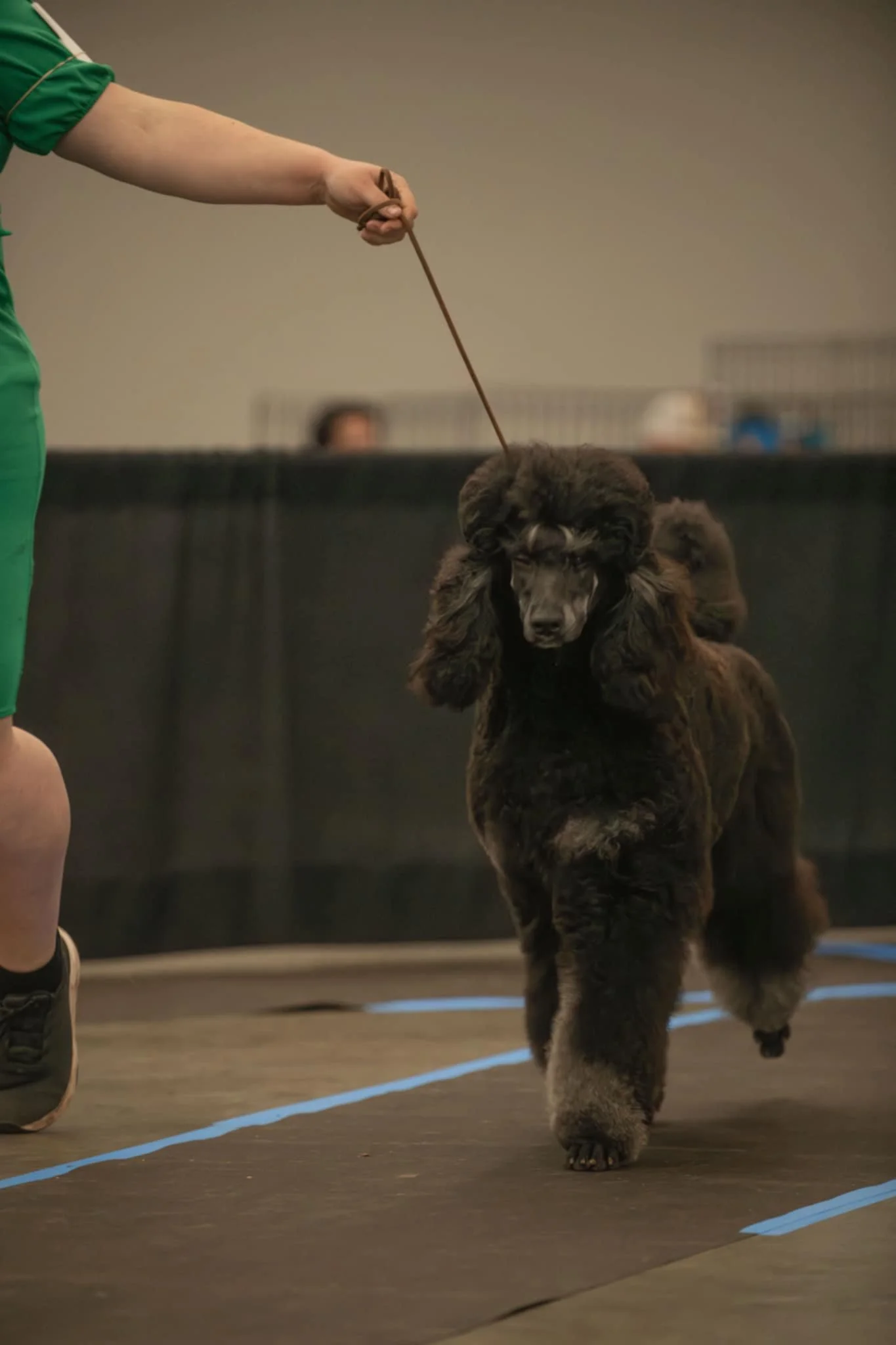
Black Phantom Dogs
Black phantom is one of the most recognizable versions of the phantom pattern.
The contrast between the black base coat and lighter phantom points often creates the classic phantom look families recognize first.
Black phantom dogs may have markings that appear cream, tan, apricot, red, silver, or brindled depending on the genetics behind the dog.
Because black provides strong contrast, black phantom dogs often display some of the clearest phantom markings.
Internal link:
➡️ Black Dogs: The Most Underappreciated Color (future page)
Brown Phantom Dogs
Brown phantom combines brown pigment genetics with phantom markings.
Instead of a black base coat, the dog has brown or chocolate pigment with lighter markings on the face, chest, legs, cheeks, and beneath the tail.
The result can be warm, rich, and highly distinctive.
Brown phantom may appear in both Poodles and Goldendoodles. In Poodles, the base color is usually called brown. In Goldendoodles, families often call it chocolate.
➡️ Brown (Chocolate) Dogs: Understanding Brown Pigment Genetic
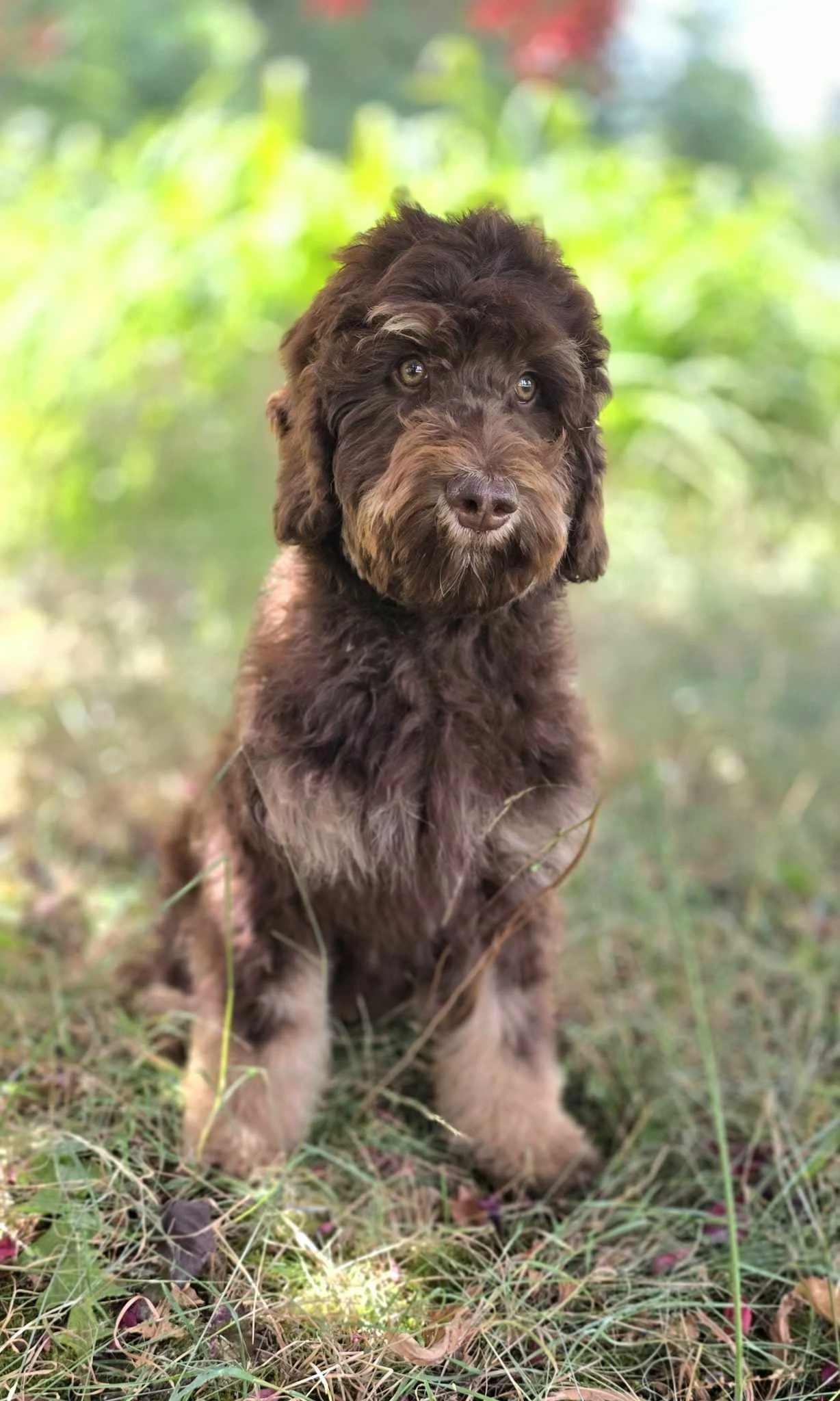
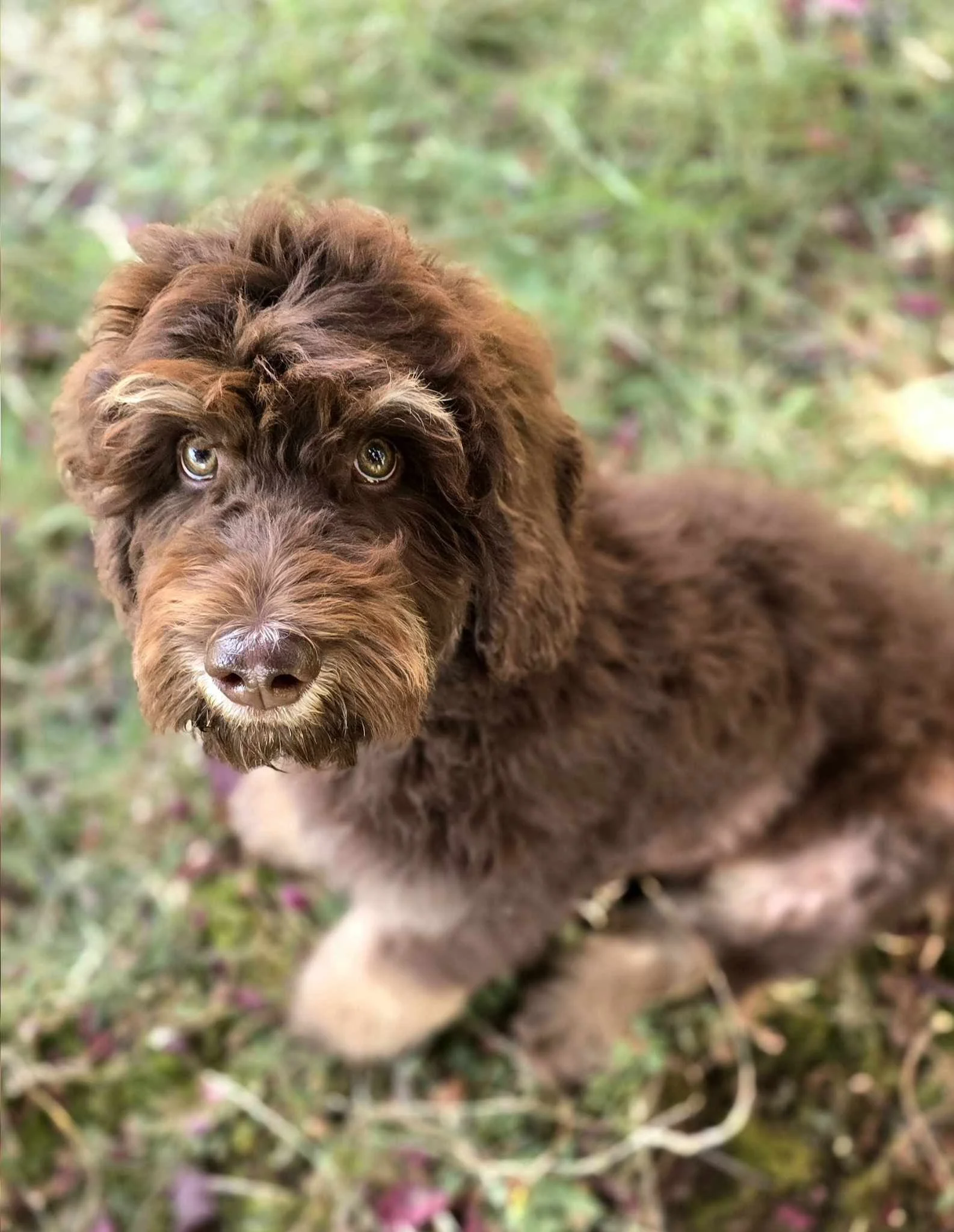
Mocha at 5 weeks & 8 Months
Blue & Silver Phantom Dogs
Because phantom is a pattern rather than a color, it can also appear in dogs that experience color progression.
Blue and silver phantom dogs may begin life looking black or very dark, then gradually lighten as they mature.
As the base coat clears, the contrast and overall appearance of the phantom markings may change.
This can make blue and silver phantom dogs especially fascinating, but also harder to predict from young puppy photos alone.
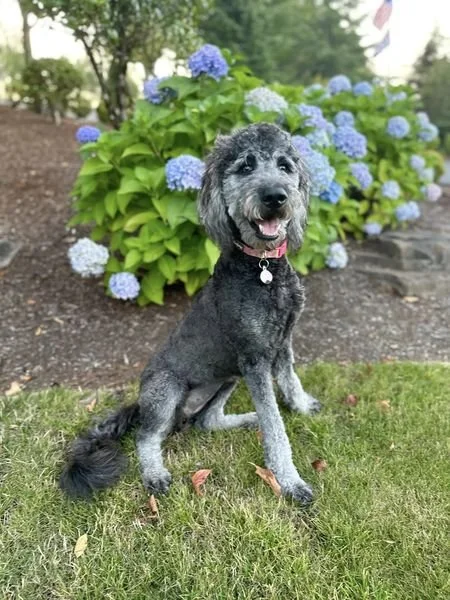
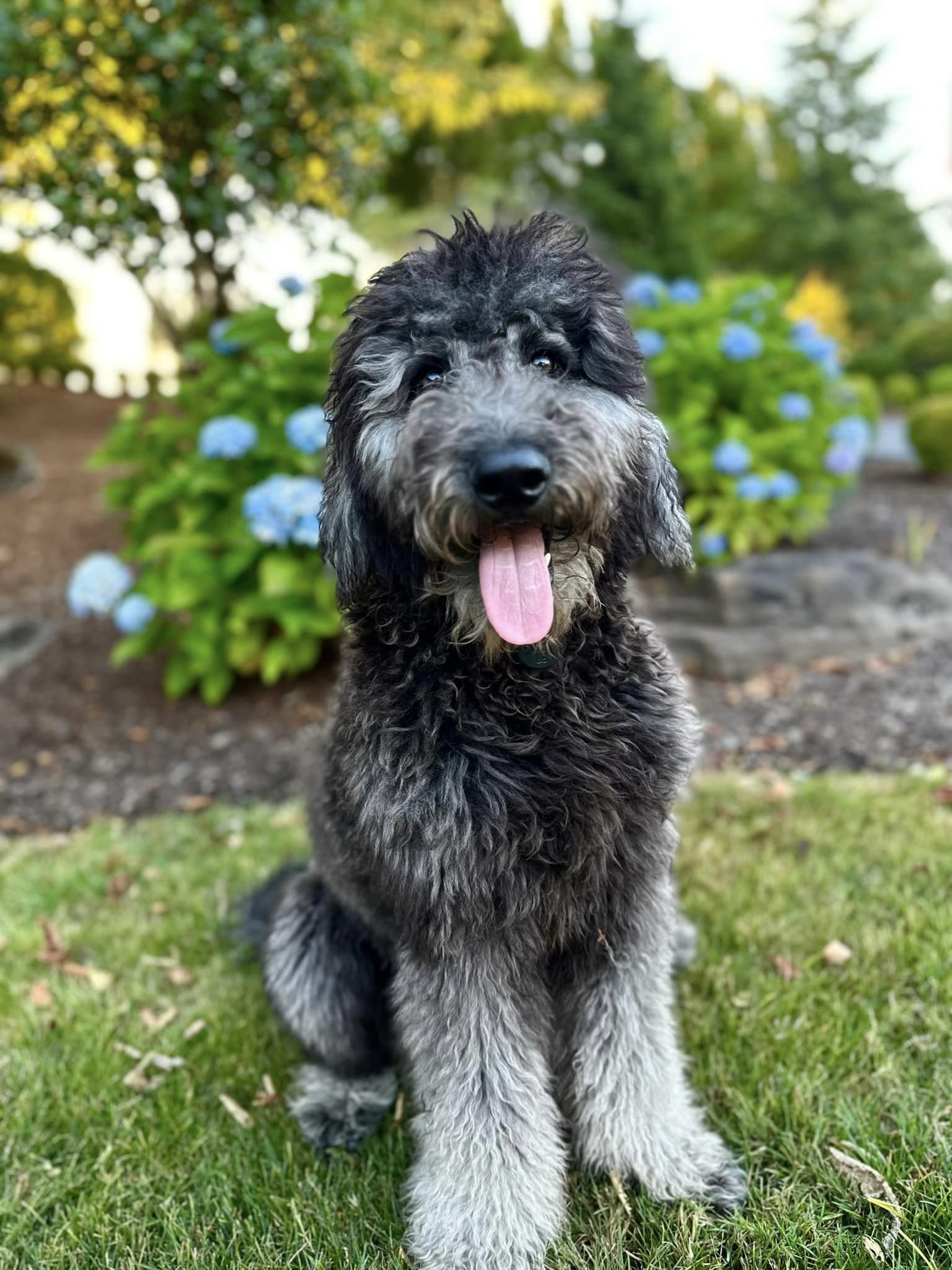
2 years old, before and after a groom
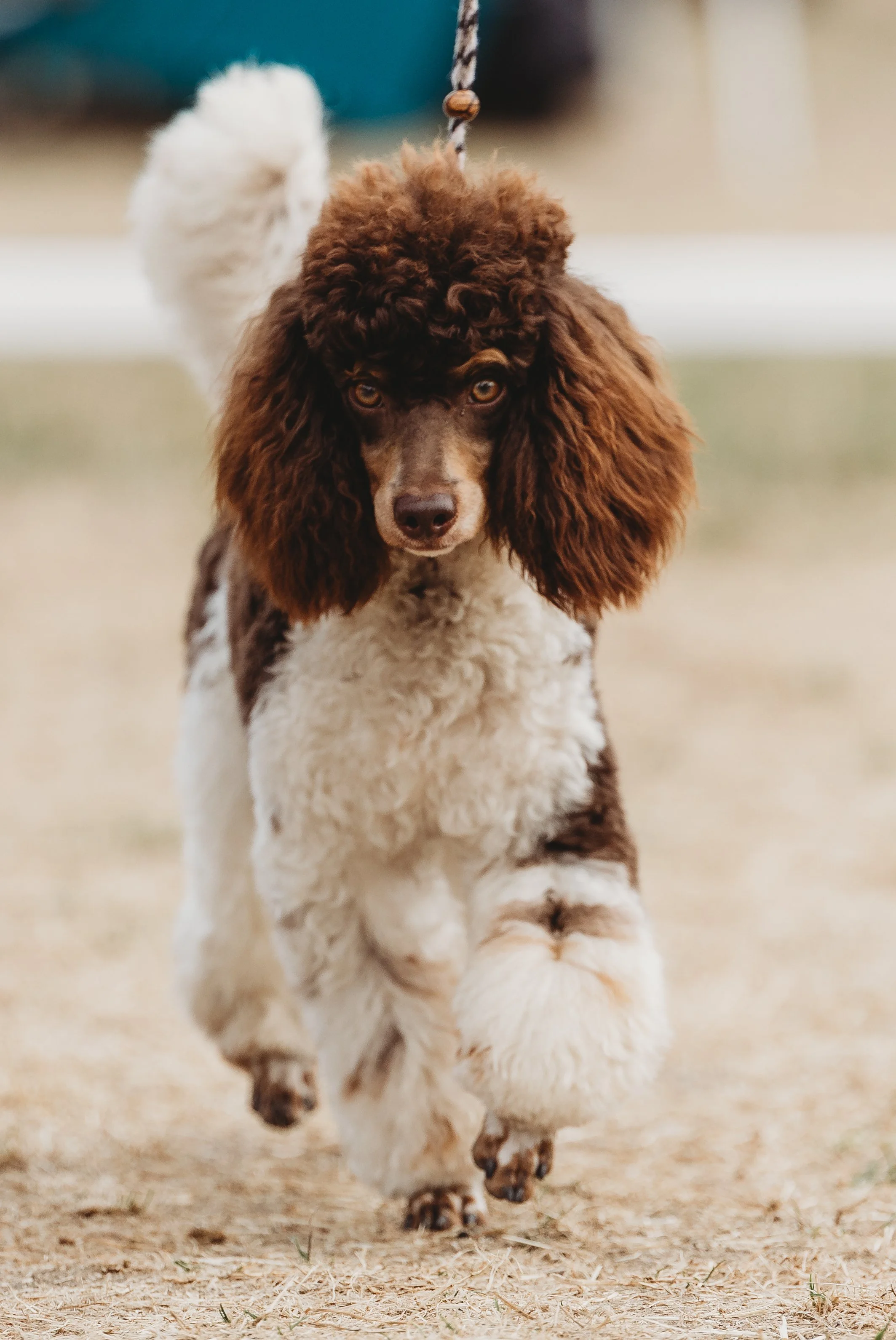
Parti Phantom / Tri-Color Dogs
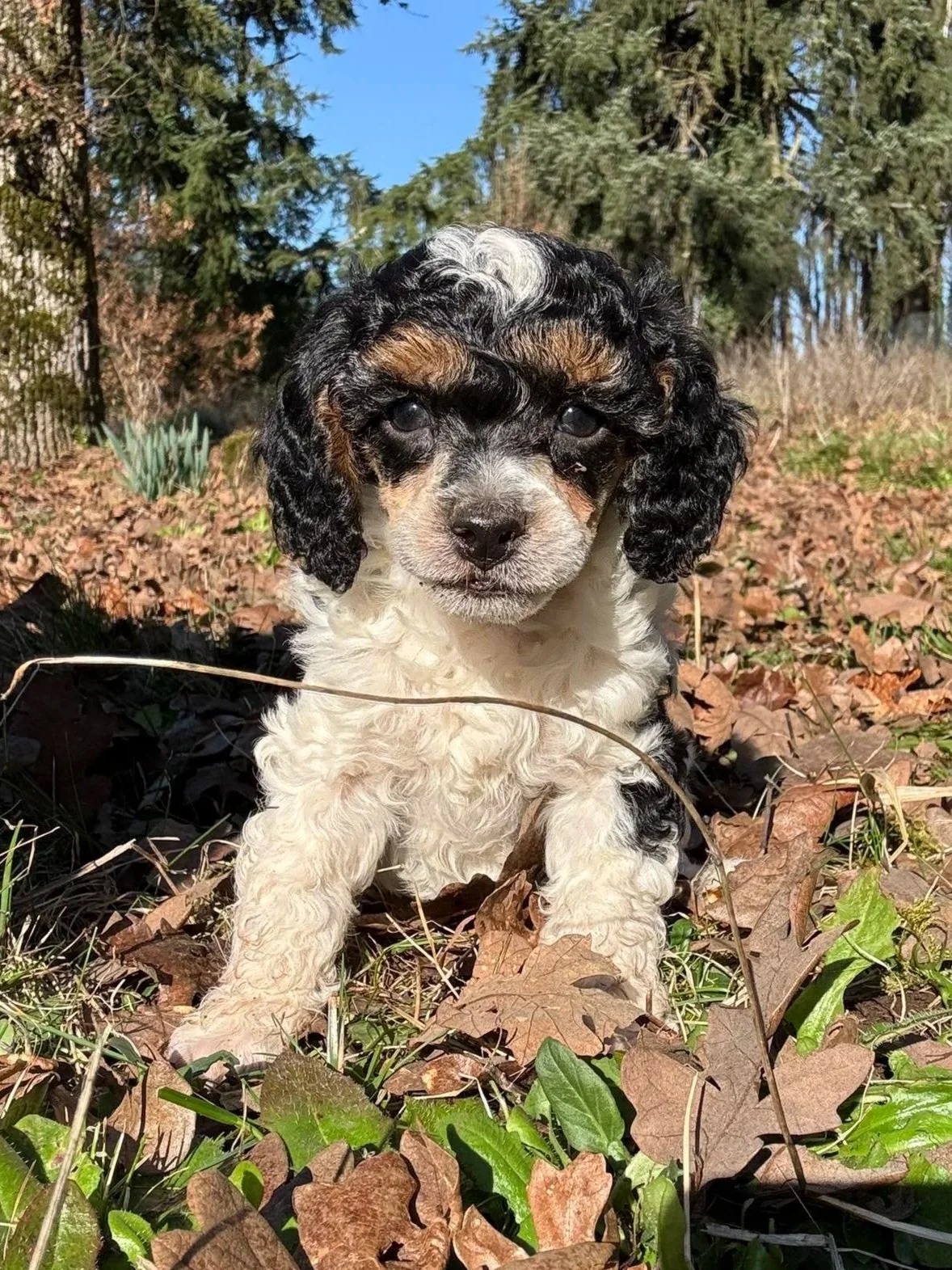
Parti phantom, more commonly called tri-color, combines three distinct characteristics:
Phantom markings
Parti (white spotting) genetics
An underlying base color
The result is a dog with white areas, colored patches, and the classic phantom points above the eyes, on the cheeks, chest, legs, and beneath the tail.
Because each of these traits can vary independently, no two tri-color dogs look exactly alike.
Our own Pippin is an excellent example of this beautiful combination.
What Will a Tri-Color Puppy Look Like as an Adult?
While the puppy coat changes dramatically during the first year of life, the overall pattern usually remains recognizable.
As tri-color puppies mature:
The puppy coat is replaced by the adult coat.
Phantom points often become more defined.
Grooming reveals details that were hidden beneath the fluffy puppy coat.
The dog's changing proportions make the pattern appear more balanced and dramatic.
Pippin's puppy and adult photos demonstrate how much the presentation can change while the underlying pattern remains the same.
For a complete look at how white spotting develops—including abstract, Irish spotting, parti, extreme parti, merle parti, and tri-color progression—visit our White Spotting Genetics page.
Like every dog in our breeding program, Pippin was selected because of his temperament, structure, trainability, confidence, workability, and overall quality. His striking tri-color pattern is simply one part of an exceptional dog.
➡️ Parti Dogs & White Spotting Genetics in Poodles & Goldendoodles (future page)
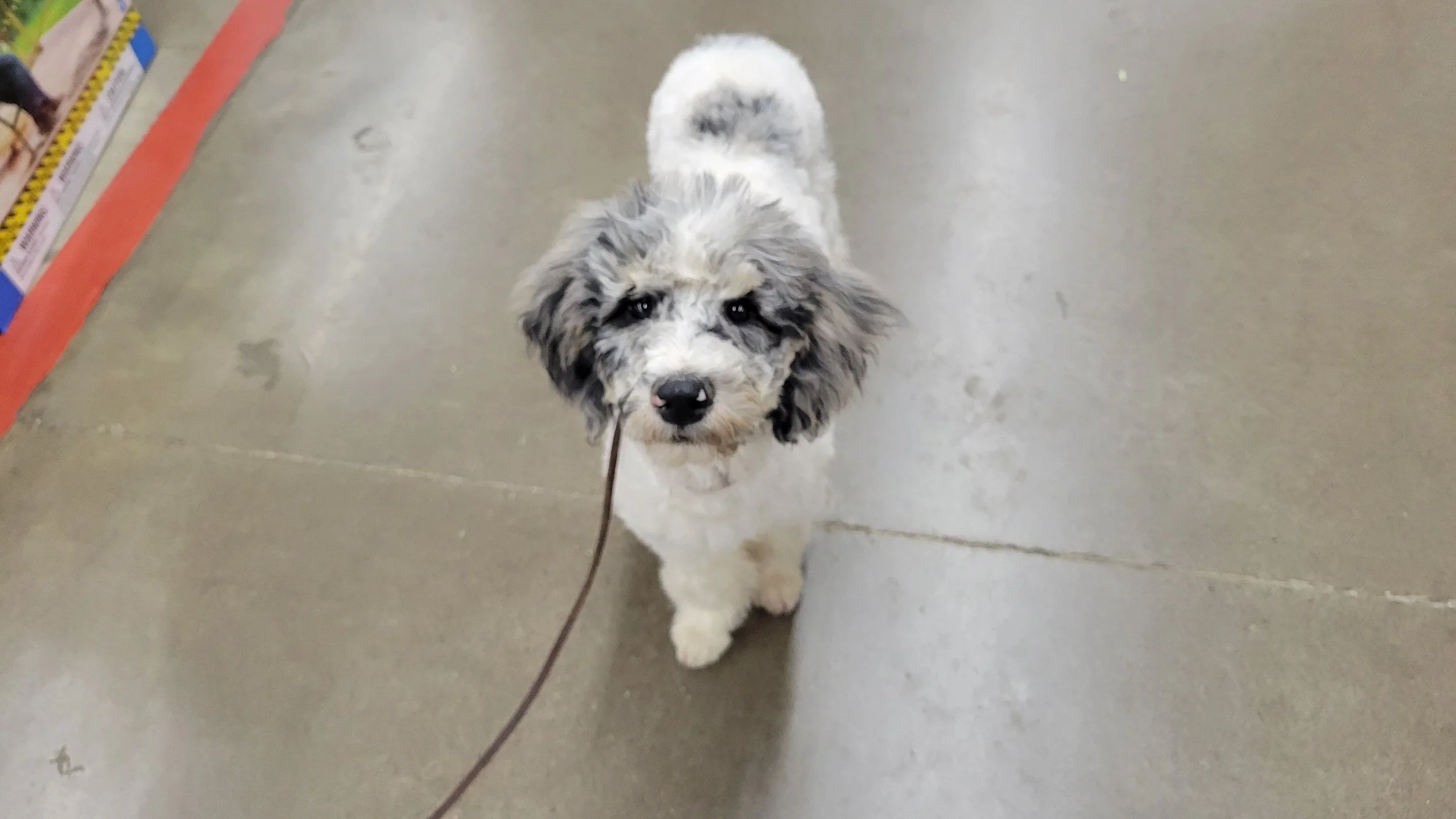
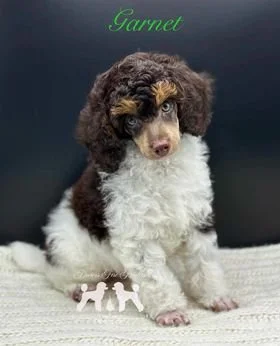
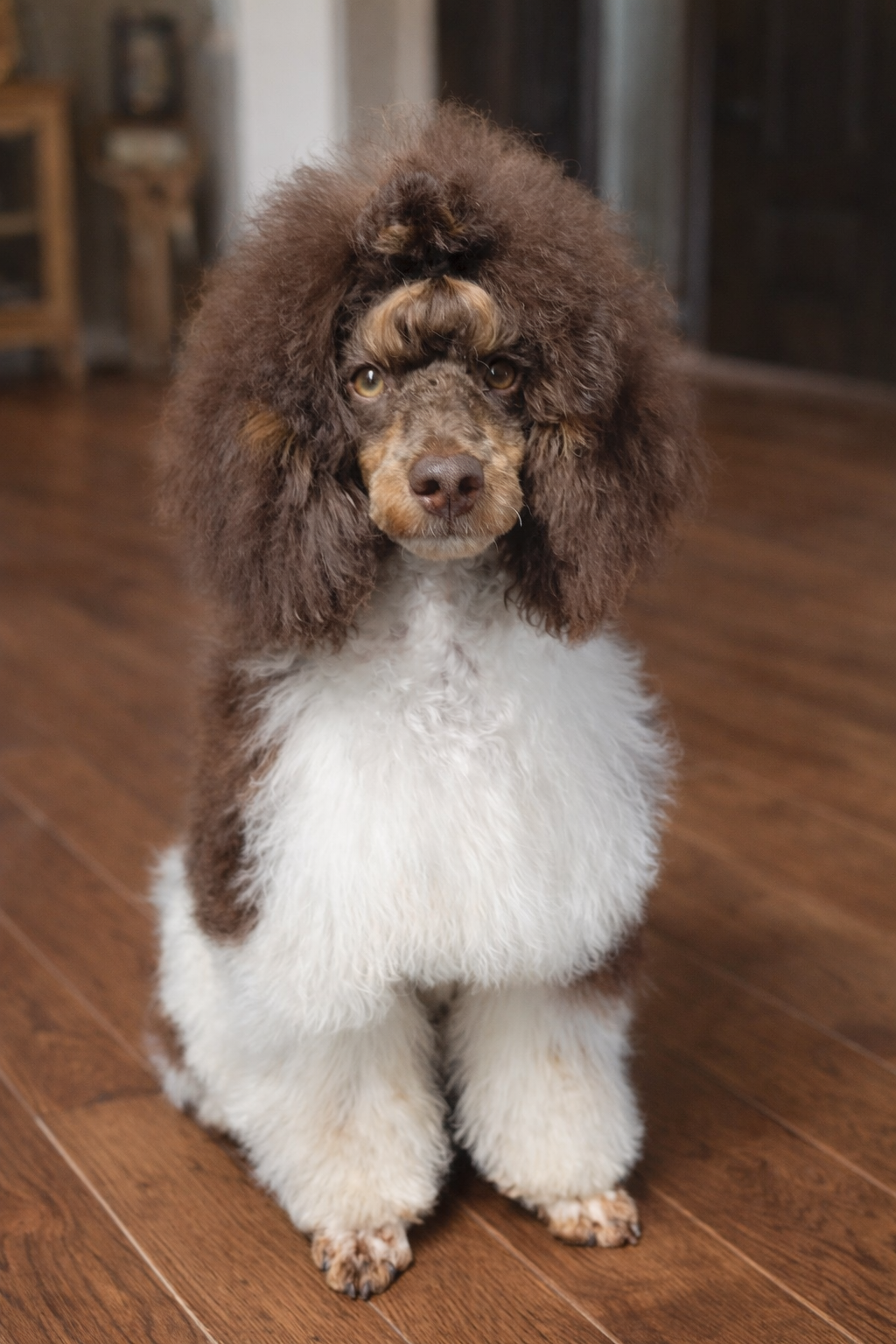
Pippin's photos illustrate how a tri-color puppy matures from early puppyhood into adulthood. While his coat texture, proportions, and overall presentation changed dramatically, the underlying tri-color pattern remained consistent. This is a helpful reminder that a puppy's appearance will evolve, but the pattern itself generally stays true to the dog it was born with.
Merle Tri-Color Dogs
Merle tri-color dogs combine three separate genetic traits:
Merle patterning
Phantom markings
Parti (white spotting) genetics
The result is one of the most visually complex and eye-catching coat patterns found in Poodles and Goldendoodles.
A merle tri-color dog may display marbled merle patches, white spotting, and the characteristic phantom points all on the same dog. Because each of these traits can vary independently, no two merle tri-color dogs will ever look exactly alike.
What Will a Merle Tri-Color Puppy Look Like as an Adult?
Like merle phantoms, merle tri-color puppies often change considerably as they mature.
As the adult coat develops:
The marbled merle pattern may become more defined.
Phantom points often become easier to recognize.
Grooming can reveal markings that were hidden beneath the fluffy puppy coat.
The overall pattern often becomes more balanced as the dog's body proportions mature.
Every merle tri-color develops a little differently, making each dog truly one of a kind.
While these dogs are undeniably beautiful, our breeding philosophy remains unchanged. We never make breeding decisions based solely on a rare or desirable color combination. Temperament, health, structure, confidence, and overall quality always come first.
Internal Links
➡️Merle Dogs: Understanding Merle Colors, Patterns & Development (Coming Soon)
➡️ Parti Dogs & White Spotting Genetics in Poodles & Goldendoodles(future page)
Phantom in Our Program
Phantom is one of the coat patterns we regularly produce and one that we genuinely enjoy working with.
Its versatility allows it to appear in many beautiful combinations, including:
Black Phantom
Brown Phantom
Merle Phantom
Parti Phantom (Tri-Color)
Merle Tri-Color
Each combination offers a unique appearance while sharing the distinctive phantom points that make the pattern so recognizable.
Although we appreciate the beauty of phantom markings, they have never been the driving force behind our breeding decisions.
Every dog considered for our breeding program is first evaluated for:
Temperament
Structure
Health
Trainability
Confidence
Social stability
Overall quality
Only after those traits meet our standards do we consider color and pattern.
To us, phantom is another beautiful way quality can be expressed—not the definition of quality itself.
➡️ Our Program
Color, Coat Type & Shedding
One of the most common misconceptions is that phantom markings determine the type of coat a puppy will have.
They do not.
Coat color, coat pattern, coat texture, furnishings, curl, and shedding are all inherited independently.
A phantom puppy may have:
A curly coat
A wavy coat
A straighter coat
Lower or higher shedding tendencies
These characteristics are influenced by different genes than those responsible for phantom markings.
When selecting a puppy, we encourage families to consider coat type separately from color. While a phantom pattern may catch your eye, understanding the expected grooming requirements and shedding characteristics is equally important for finding the right fit.
➡️ Curly vs. Wavy Goldendoodles
➡️ Understanding Shedding in Goldendoodles
➡️ Understanding F1, F1B & Multigenerational Goldendoodles
Common Myths About Phantom Dogs
Phantom is one of the most recognizable coat patterns found in Poodles and Goldendoodles, but it is also one of the most misunderstood.
Myth: Phantom is a color.
Phantom is a pattern that appears on top of an underlying coat color. It can occur on black, brown, silver, blue, merle, and other color combinations.
Myth: All phantom dogs are black and tan.
Black phantom is one of the most familiar examples, but phantom can also occur on brown, merle, silver, blue, and many other base colors.
Myth: Phantom puppies always look the same as adults.
Coat length, grooming, maturity, and genetic modifiers can all influence how phantom markings appear as a dog develops.
Myth: Red, cream, and apricot dogs cannot carry phantom.
Genetically red (ee) dogs cannot visibly express phantom markings, but they can still carry and pass the genetics responsible for the pattern to future generations.
Myth: Phantom determines temperament.
Coat pattern has no influence on personality, intelligence, confidence, trainability, or suitability for family life.
Myth: Tri-color and phantom are the same thing.
Tri-color refers to a dog that combines phantom markings with parti (white spotting) genetics. Every tri-color is a phantom, but not every phantom is tri-color.
Frequently Asked Questions About Phantom Dogs
-
A phantom Goldendoodle has lighter markings in predictable locations, including above the eyes, on the cheeks, chest, legs, and beneath the tail. Phantom is a pattern rather than a color and can occur on several different base colors.
-
A phantom Poodle displays the same characteristic point pattern. The underlying coat may be black, brown, silver, blue, or another color, but the phantom markings appear in consistent locations on the body.
-
Phantom is a pattern.
The markings are layered over an underlying coat color, which is why phantom can appear in so many different color combinations.
-
A phantom dog displays lighter point markings on a solid-colored base coat.
A tri-color dog combines phantom markings with parti (white spotting) genetics, creating white areas in addition to the phantom points.
-
Yes.
Some puppies develop stronger phantom markings as they mature, while others simply become easier to appreciate after the puppy coat is replaced or after their first haircut.
-
Yes.
A genetically red (ee) dog cannot visibly express phantom markings, but it can still carry and pass phantom genetics to future generations.
-
No.
Phantom markings have no effect on coat type or shedding. Coat texture, furnishings, and shedding are inherited independently.
-
No.
Temperament is influenced by genetics, breeding decisions, early development, and individual personality—not coat color or pattern.
-
Absolutely.
Phantom is simply a coat pattern. Service potential depends on the individual dog's temperament, confidence, health, trainability, and work ethic rather than its appearance.
-
Yes.
Even when two puppies inherit the phantom pattern, they may look surprisingly different from one another.
The amount of contrast, the size and placement of the phantom markings, the underlying coat color, white spotting, merle, brindle, and other modifying genes can all influence a puppy's final appearance.
One puppy may have bold, high-contrast markings, while a littermate has much more subtle phantom points.
This natural variation is one of the reasons every phantom puppy is unique, even within the same litter.
Continue Exploring Color Genetics
Whether you're researching phantom markings or trying to understand how coat colors develop, these guides provide a deeper look at the genetics behind many of the colors and patterns found in Poodles and Goldendoodles.
Color Genetics
➡️ Color & Coat Genetics in Poodles & Goldendoodles
➡️ Brown (Chocolate) Dogs: Understanding Brown Pigment Genetics
➡️ Merle Dogs: Understanding Merle Colors, Patterns & Development (coming soon)
➡️ Parti Dogs & White Spotting Genetics in Poodles & Goldendoodles (coming soon)
➡️ Black Dogs: Understanding Black Pigment Genetics (coming soon)
➡️ Red, Apricot & Cream Dogs: Understanding the Red Color Spectrum (coming soon)
Coat Types & Grooming
➡️ Curly vs. Wavy Goldendoodles
➡️ Understanding Shedding in Goldendoodles
➡️ Understanding F1, F1B & Multigenerational Goldendoodles
Learn About Our Program
➡️ Our Program