White Spotting Genetics in Poodles & Goldendoodles
White spotting creates some of the most recognizable and visually striking coat patterns found in both Poodles and Goldendoodles. From a tiny white chest patch to dramatic black-and-white, chocolate-and-white, or tri-color dogs, white spotting exists on a spectrum that produces tremendous variety.
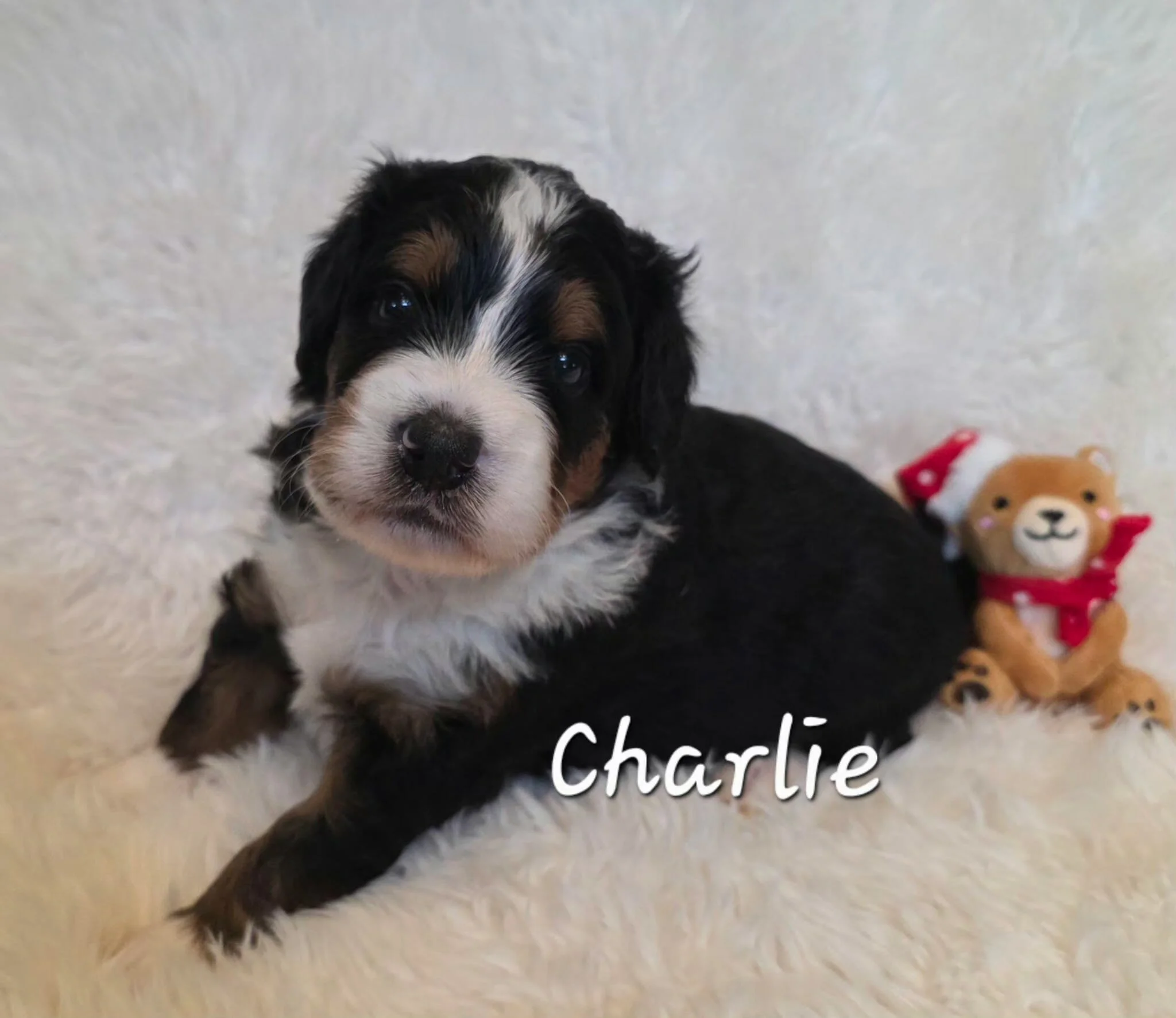
Many families use terms like parti, Irish spotting, tuxedo, or tri-color without realizing these aren't separate colors—they're different expressions of white spotting genetics.
Understanding white spotting helps explain why puppies from the same litter can have dramatically different markings and why white can combine with nearly every major color and pattern found in both breeds.
On this page, we'll explore:
Abstract (minimal white)
Irish spotting (often called tuxedo)
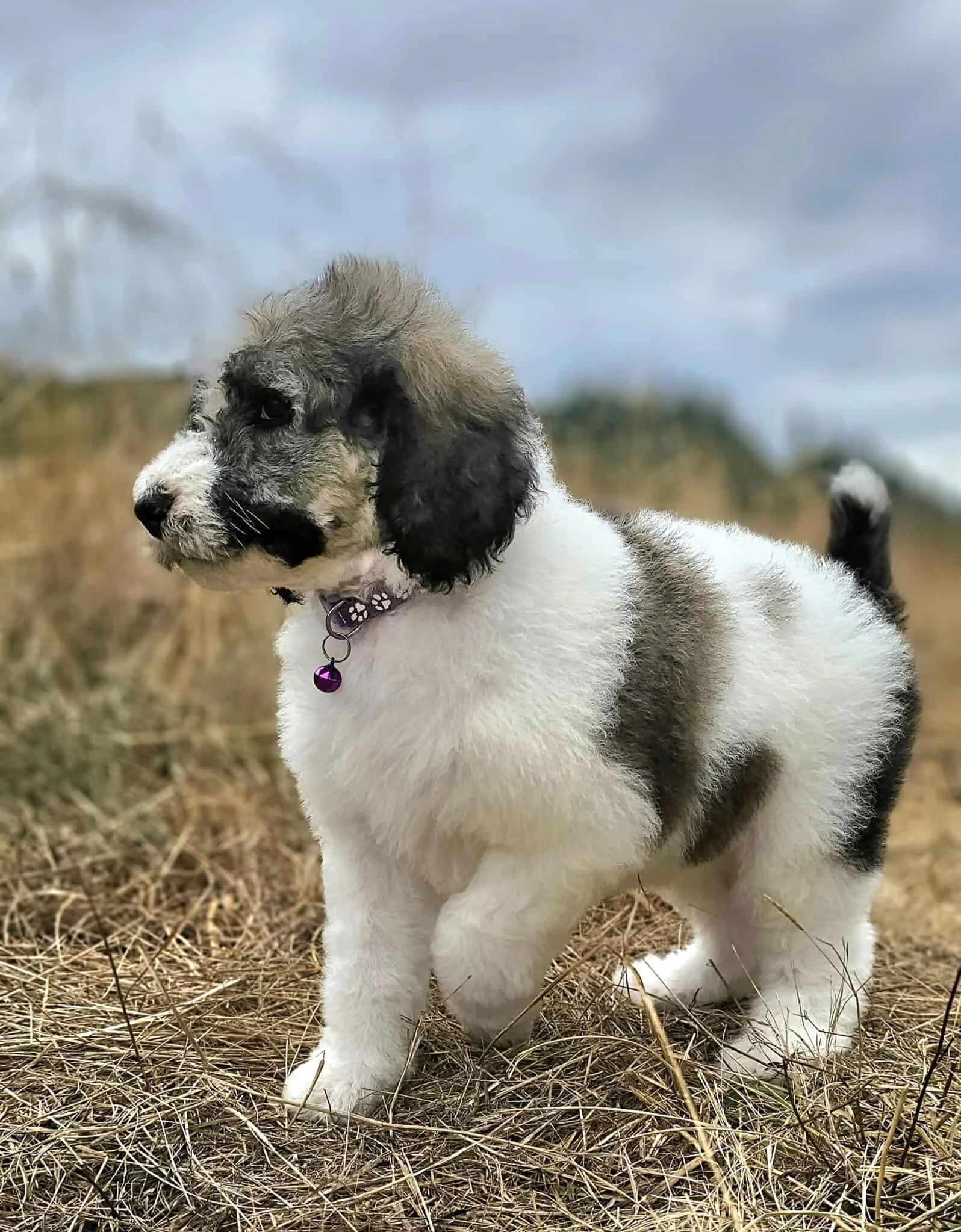
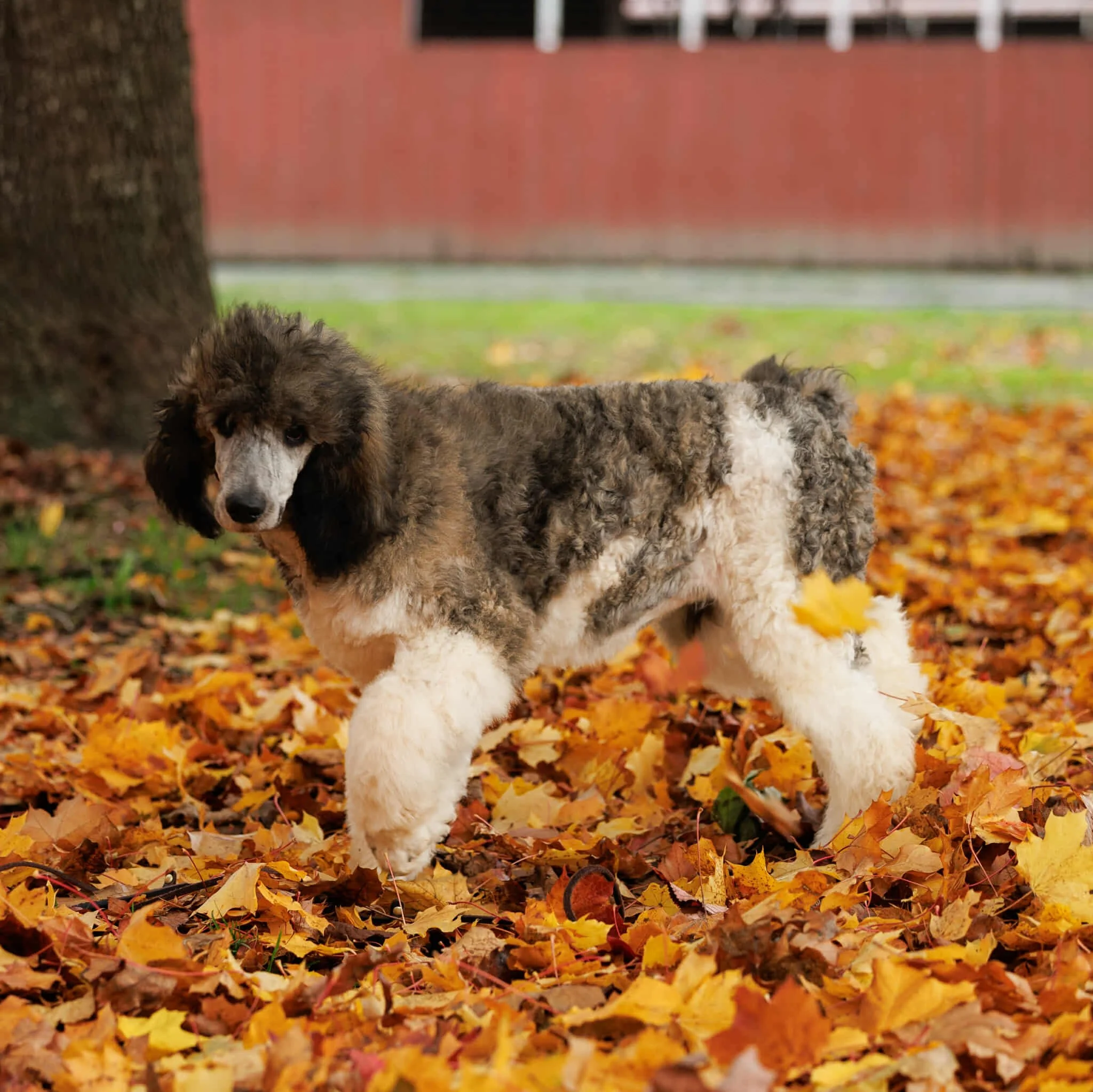
Parti
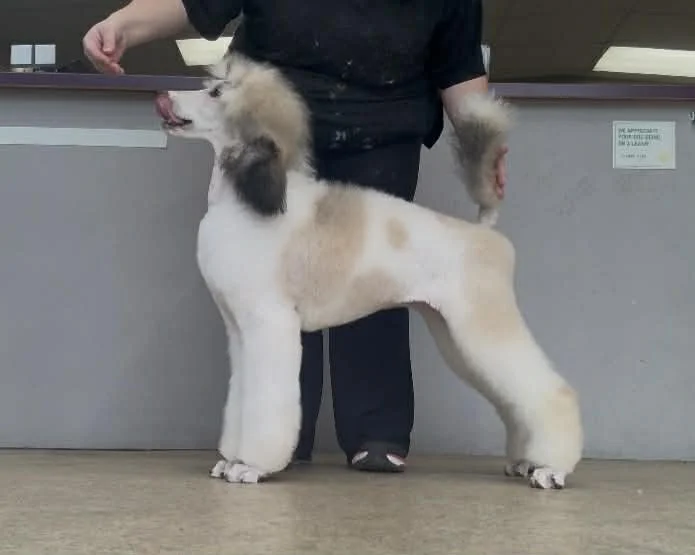
Extreme parti
Ticking and freckling
Tri-color (parti phantom)
Merle parti
Merle tri-color
How white spotting combines with brown, black, blue, silver, sable, brindle, merle, and other coat colors
Throughout this guide you'll see real examples from dogs we've bred and raised, including puppy-to-adult progressions that show how these patterns develop over time.
Rather than relying on stock photos or simplified explanations, we've built this resource using dogs from our own breeding program to help families better understand one of the most fascinating areas of canine coat color genetics.
Learn More:
➡️ Color & Coat Genetics in Poodles & Goldendoodles
Understanding the White Spotting Spectrum

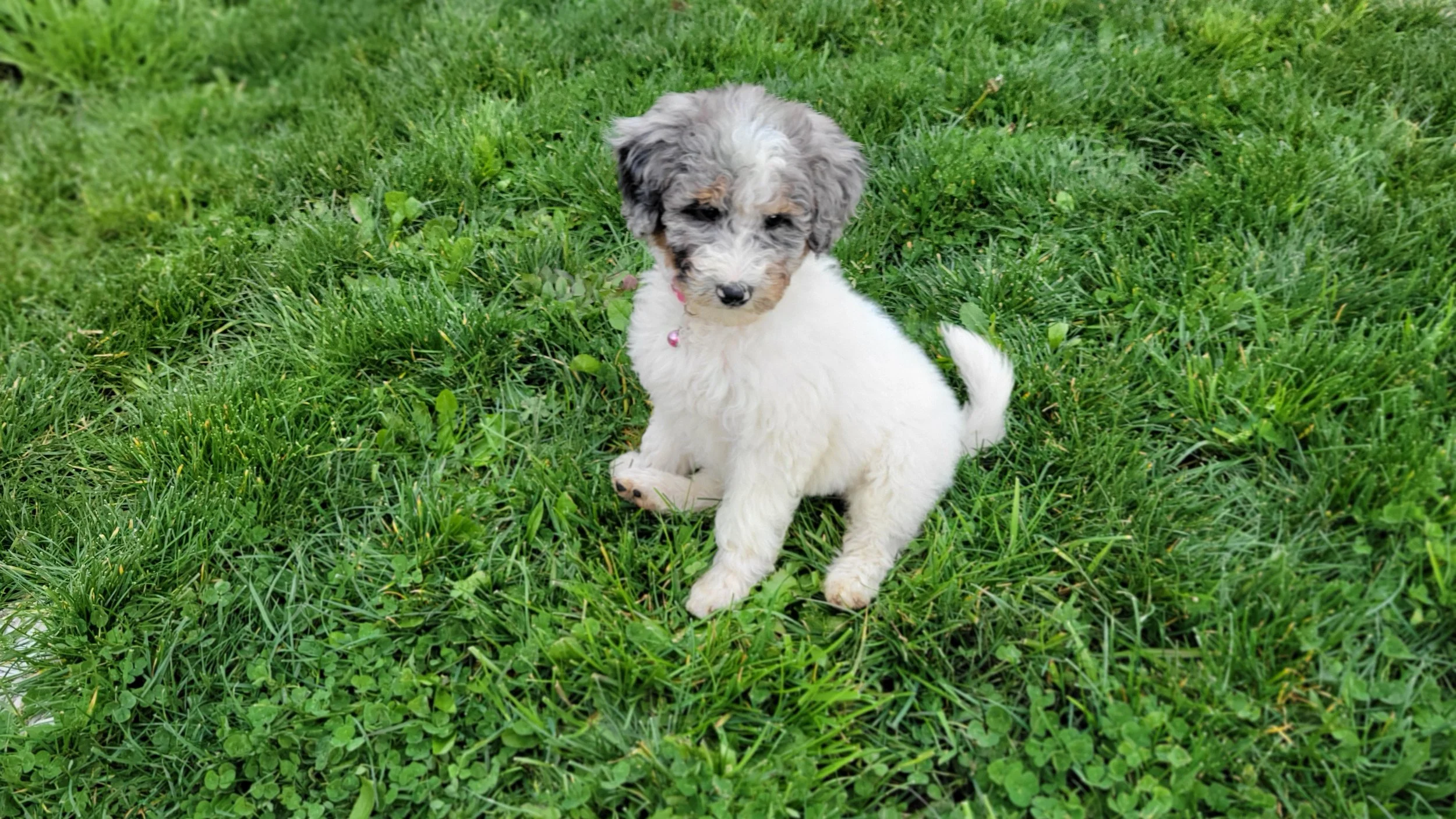
Abstract
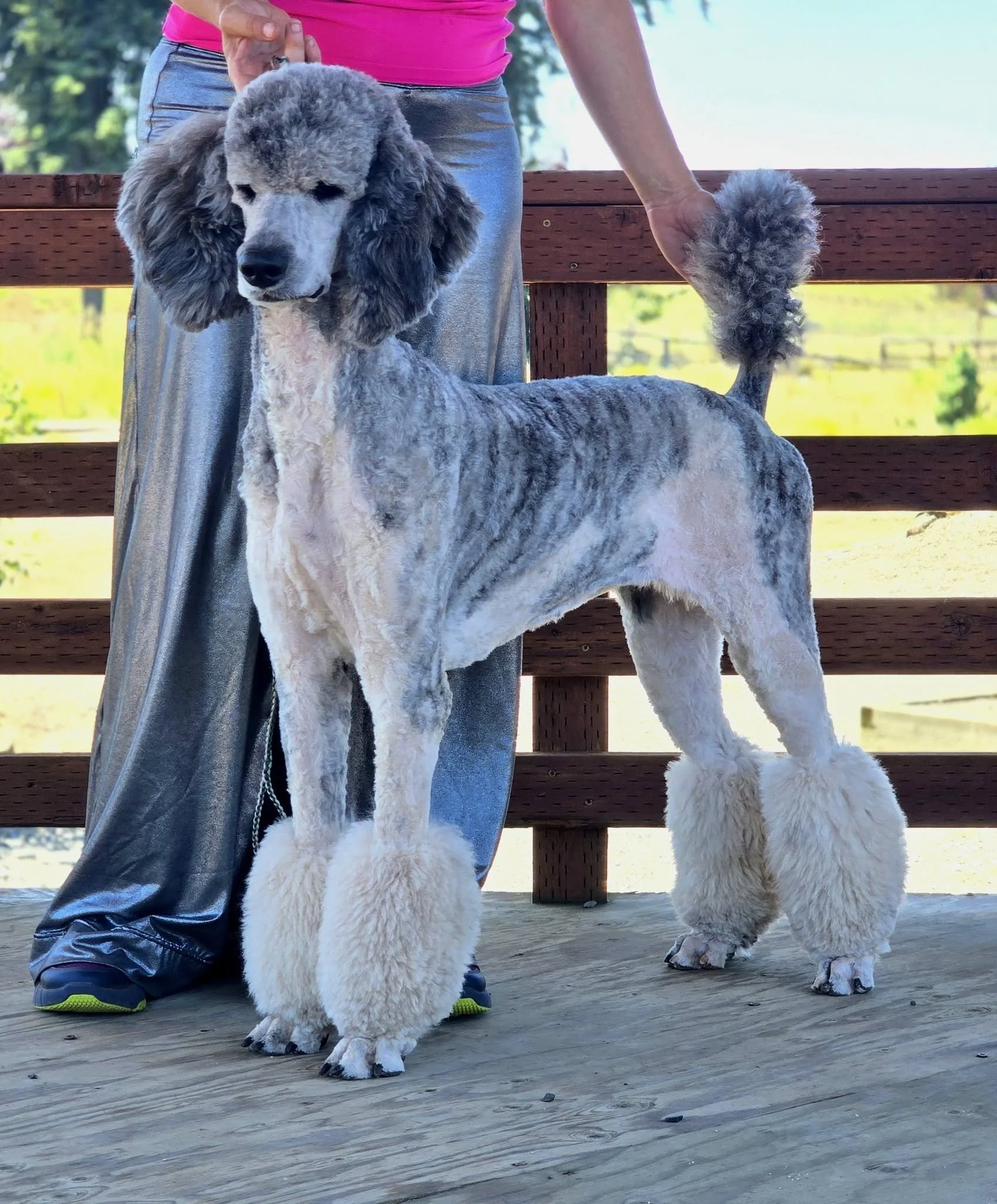
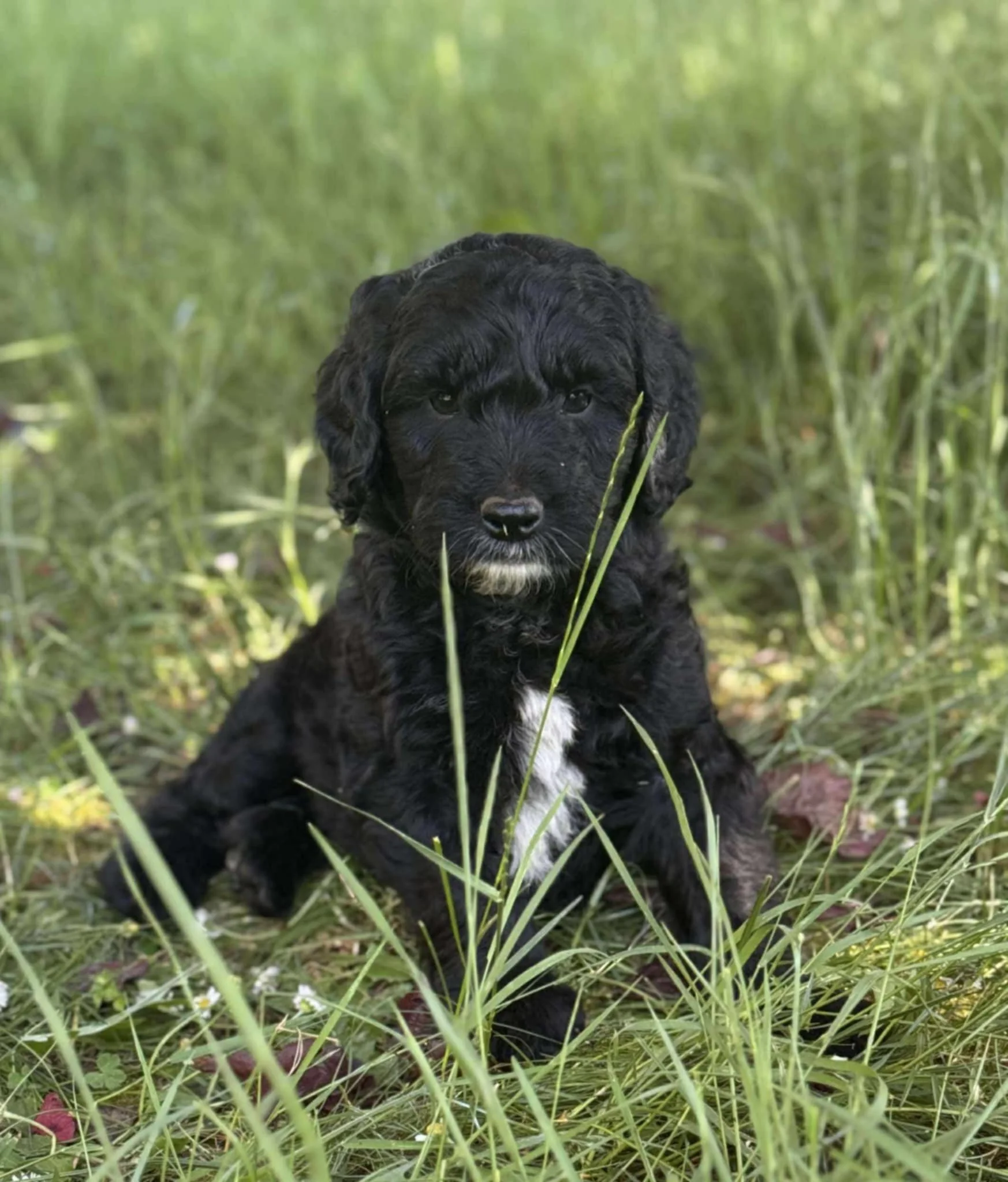
Abstract dogs have relatively small amounts of white, often limited to the chest, chin, toes, or tail tip.
This is one of the most common expressions of white spotting in both Poodles and Goldendoodles.
Many families simply describe these dogs as having "a little white," but genetically they're still expressing white spotting—just to a much smaller degree than a traditional parti dog.

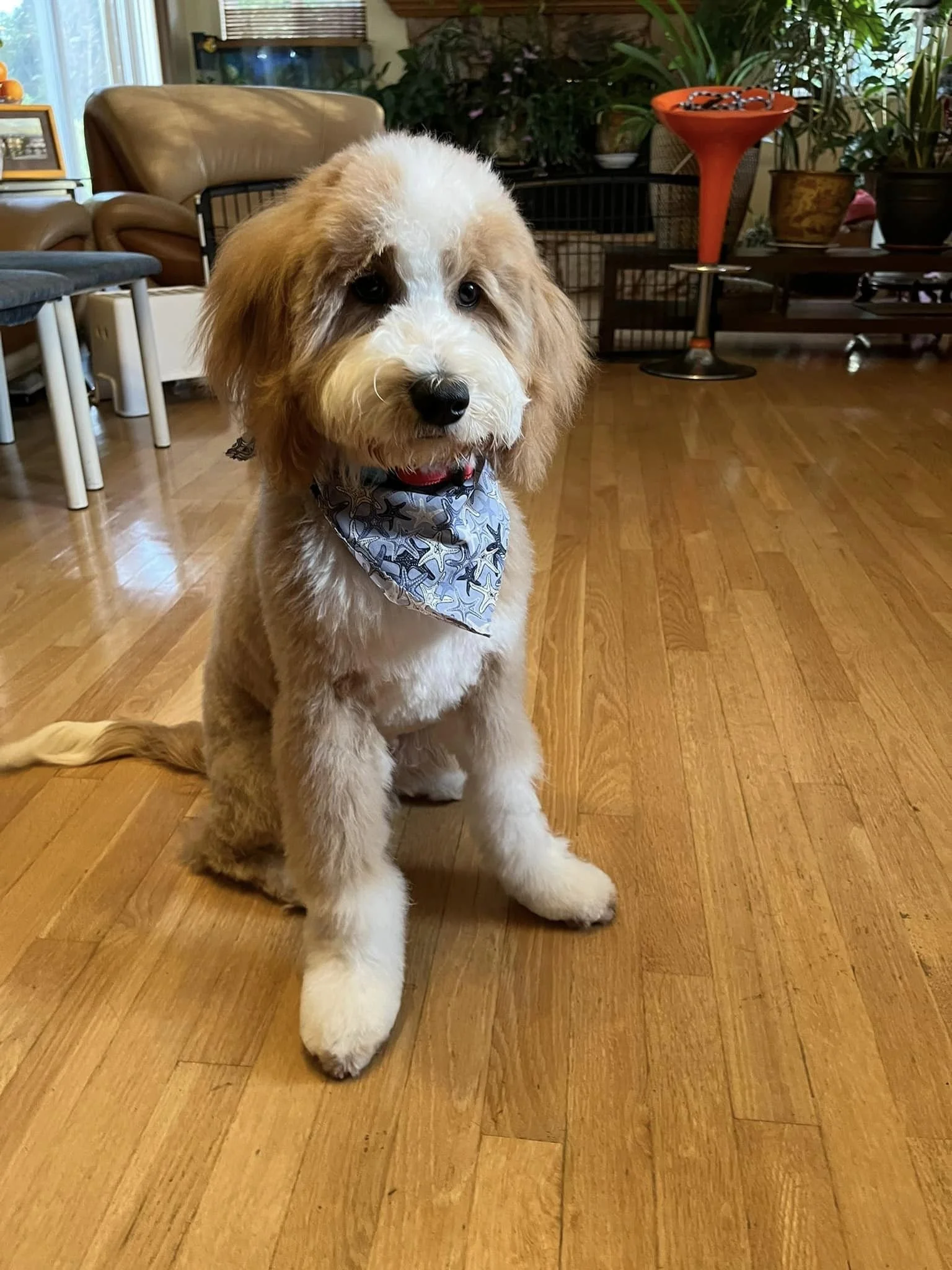
Irish Spotting (Often Called Tuxedo)
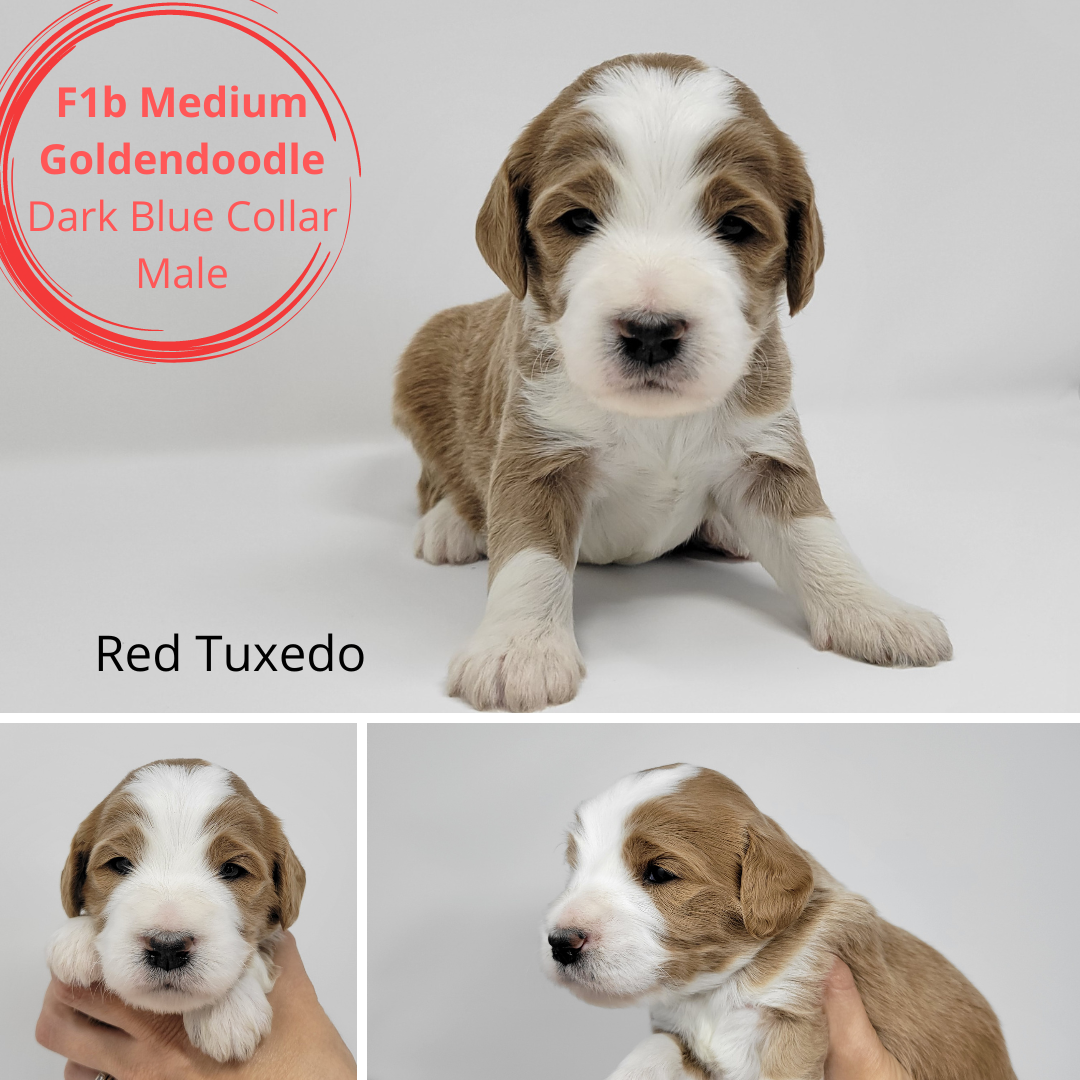
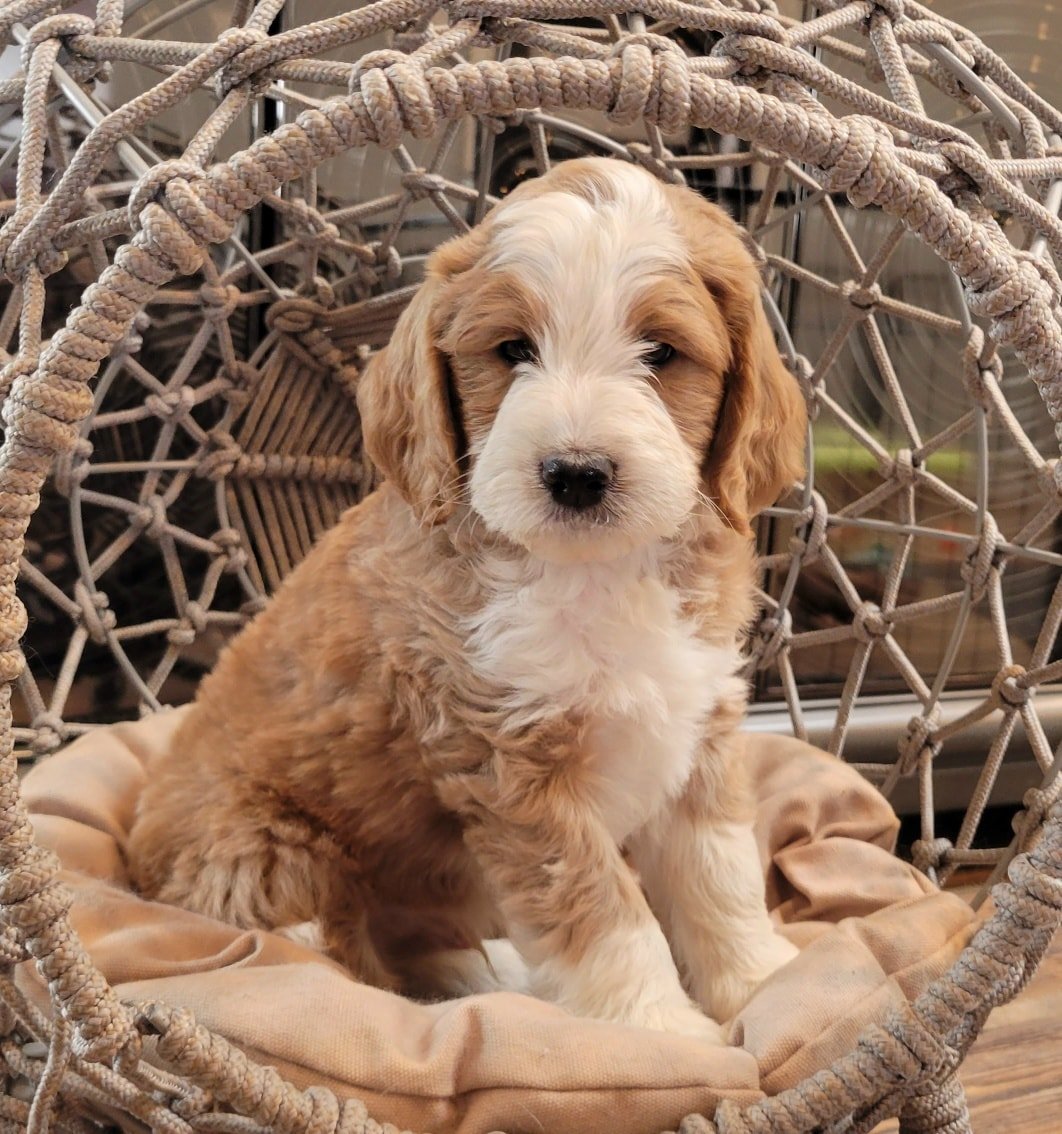
Irish spotting is characterized by balanced, symmetrical white markings that commonly appear on the chest, legs, muzzle, face, and sometimes as a partial collar.
Many families refer to this look as a tuxedo pattern, although that term is a nickname rather than a formal genetic classification.
These markings create a striking, elegant appearance while leaving most of the dog's body colored.
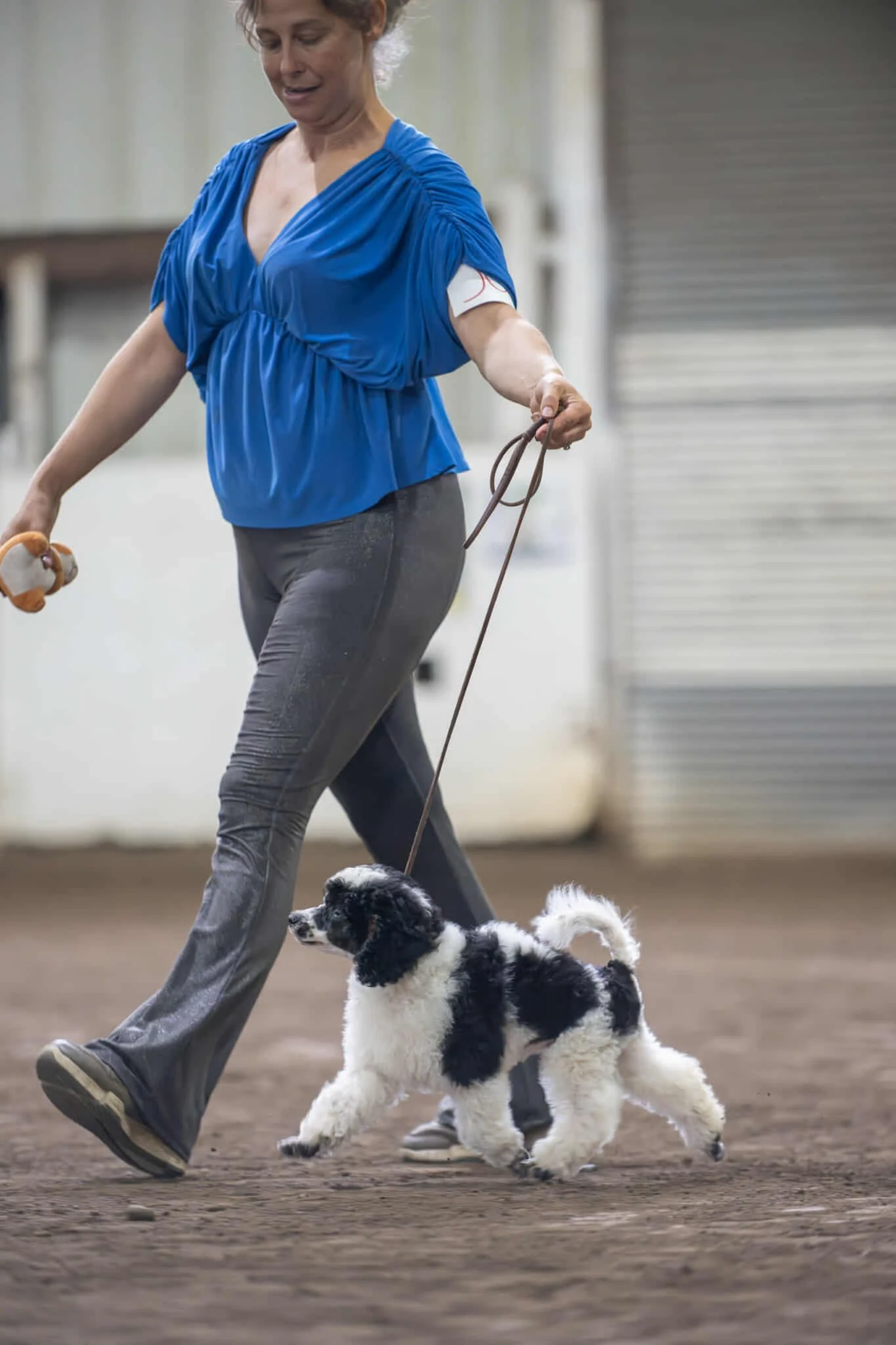
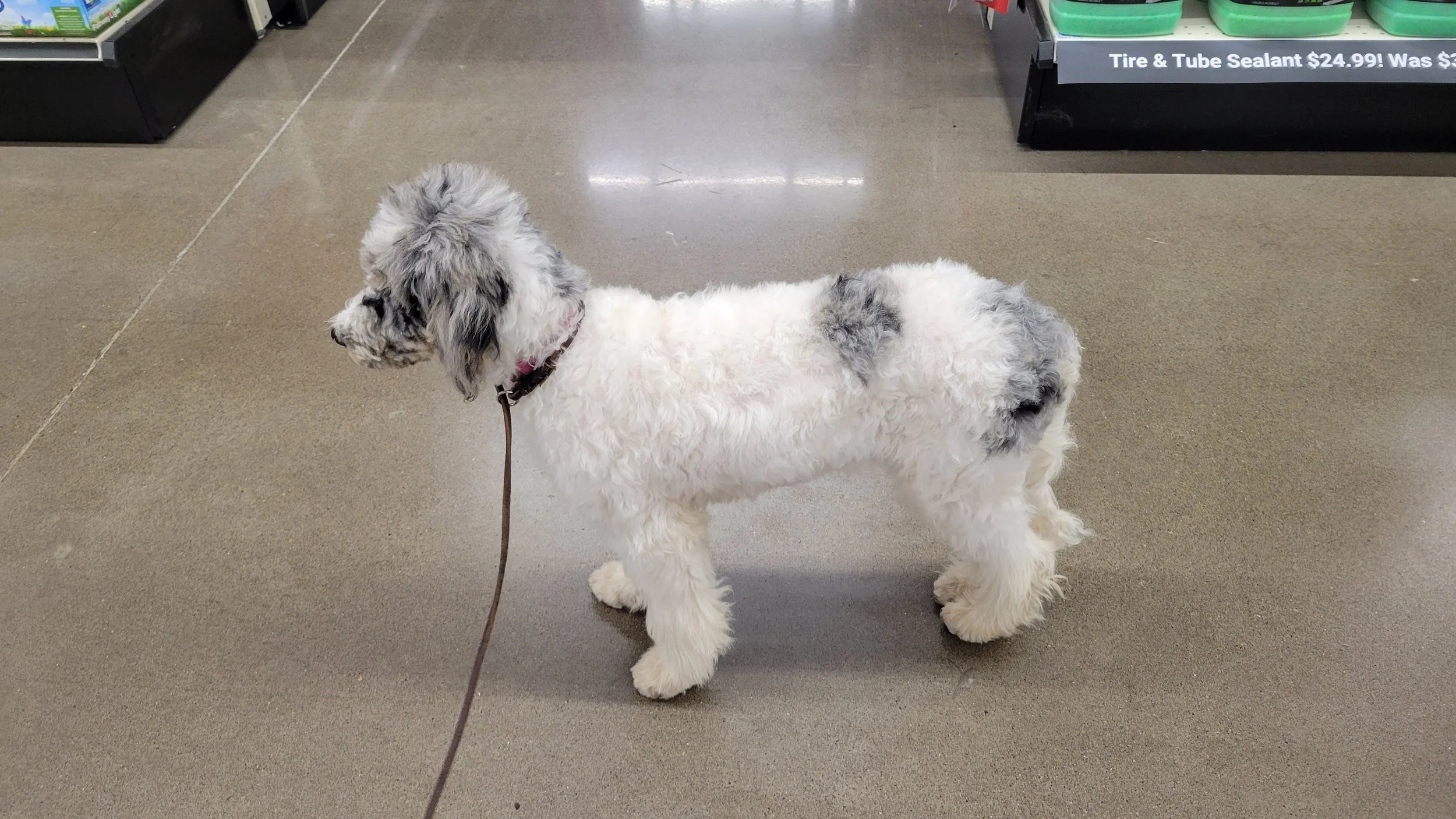
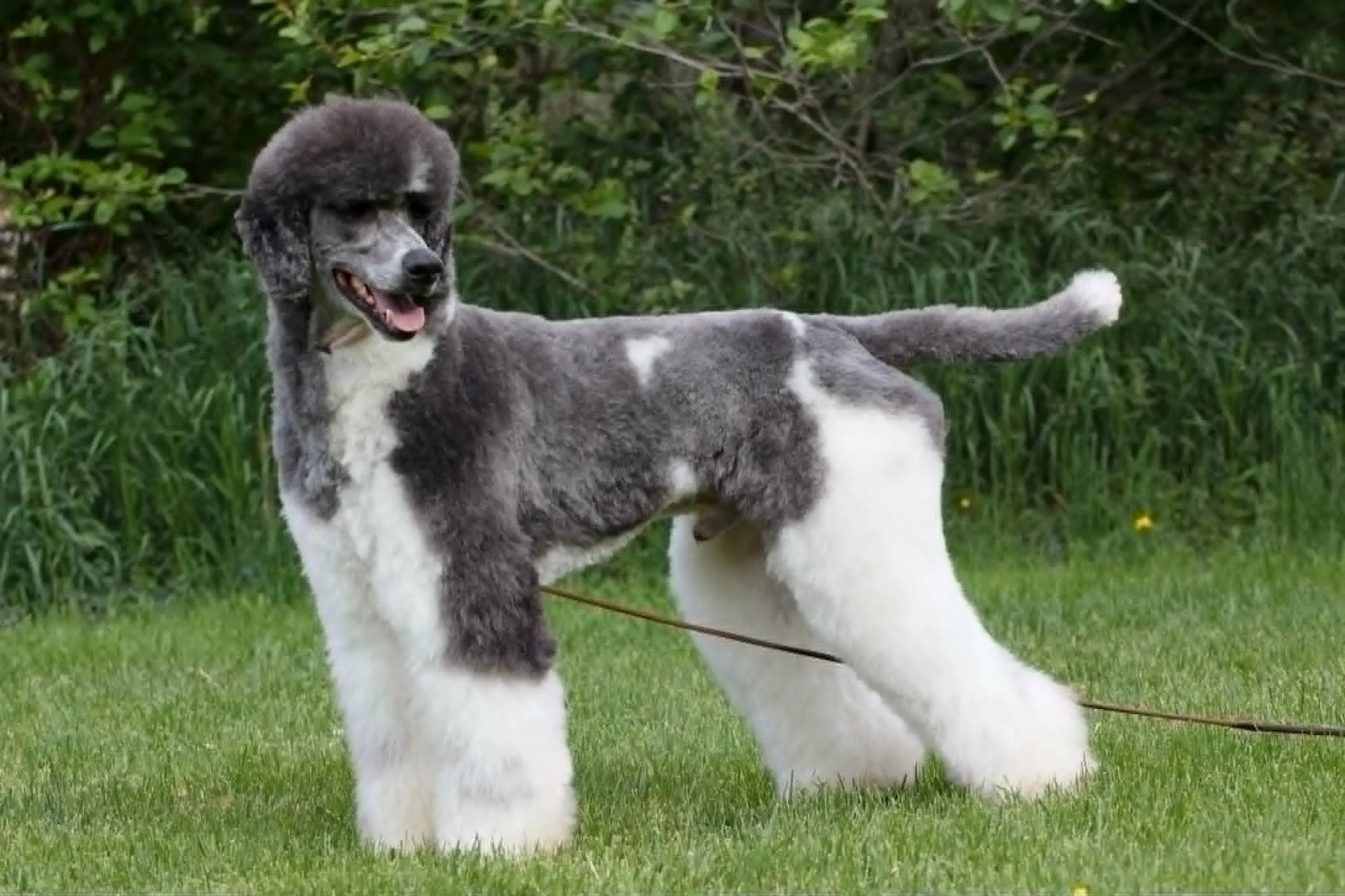
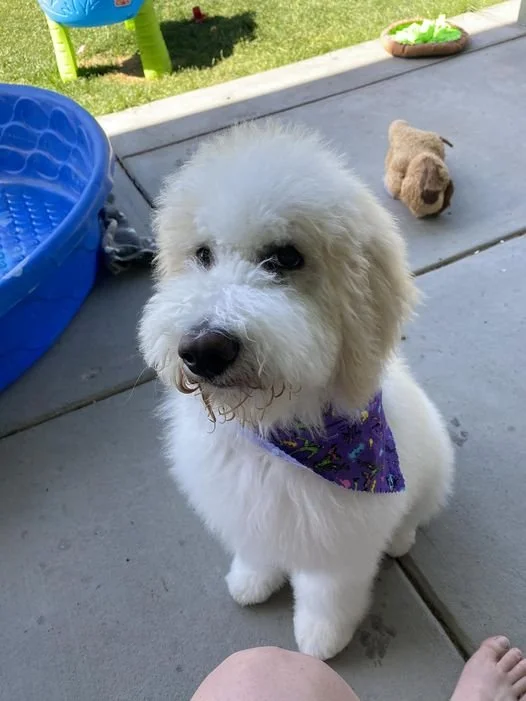




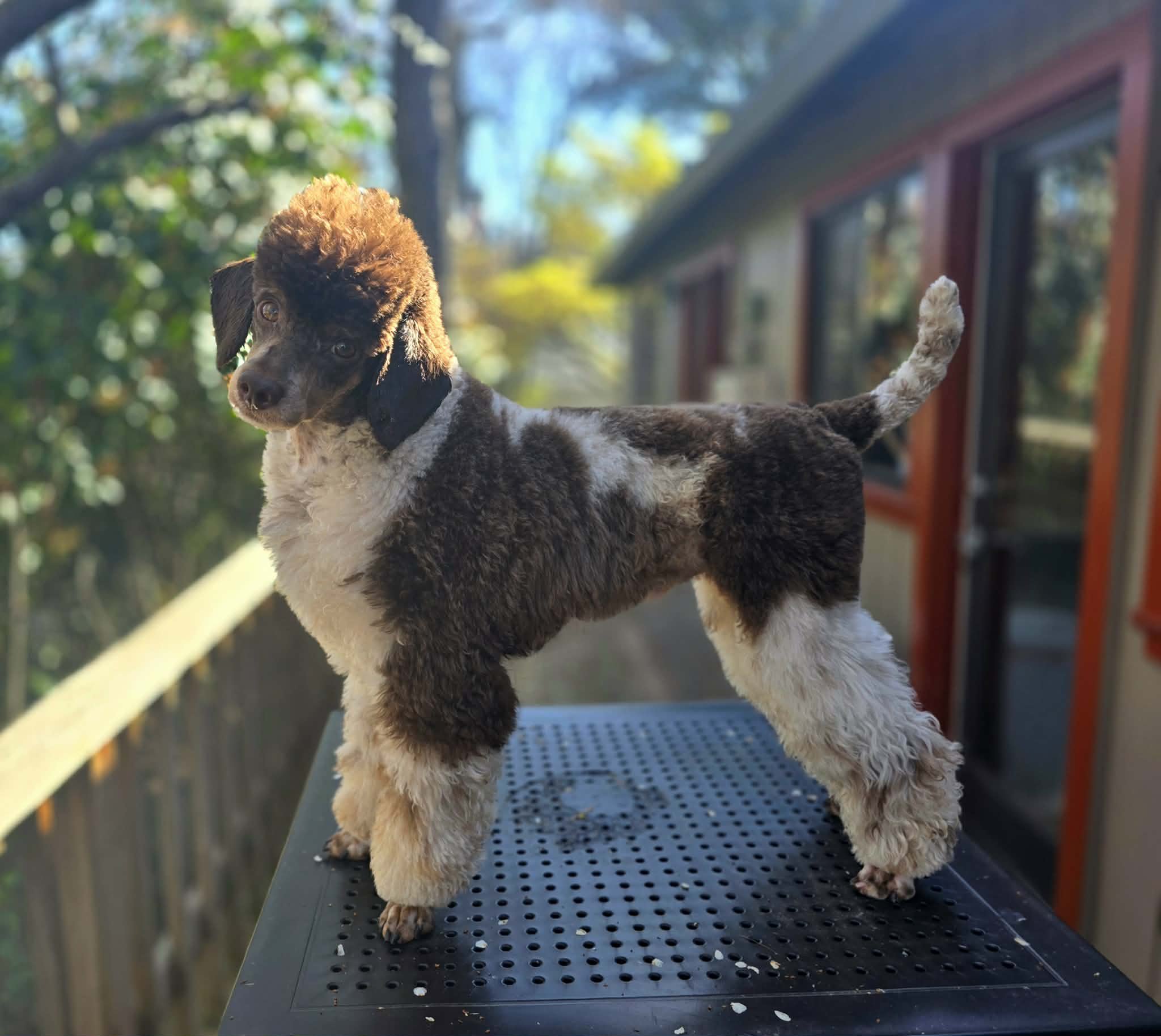
Parti
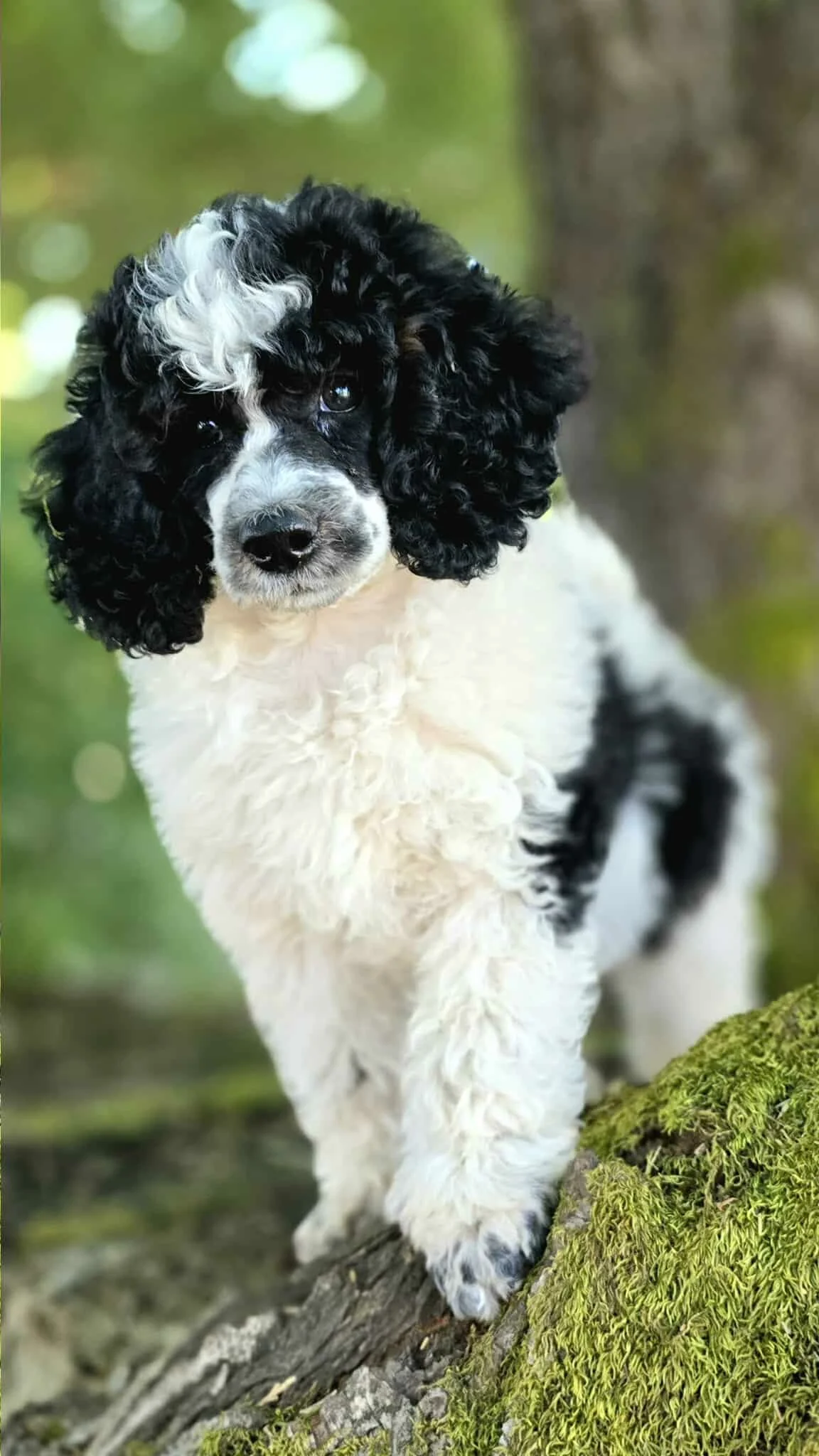
A parti dog has large white areas combined with clearly defined patches of color.
Although you'll often hear that a parti dog should be "50% white," there is no universally accepted percentage that officially defines the pattern.
Instead, parti is best recognized by its overall appearance rather than by an exact measurement.
Those colored patches may be black, brown, red, cream, blue, silver, sable, brindle, merle, or virtually any other color found within the breed.
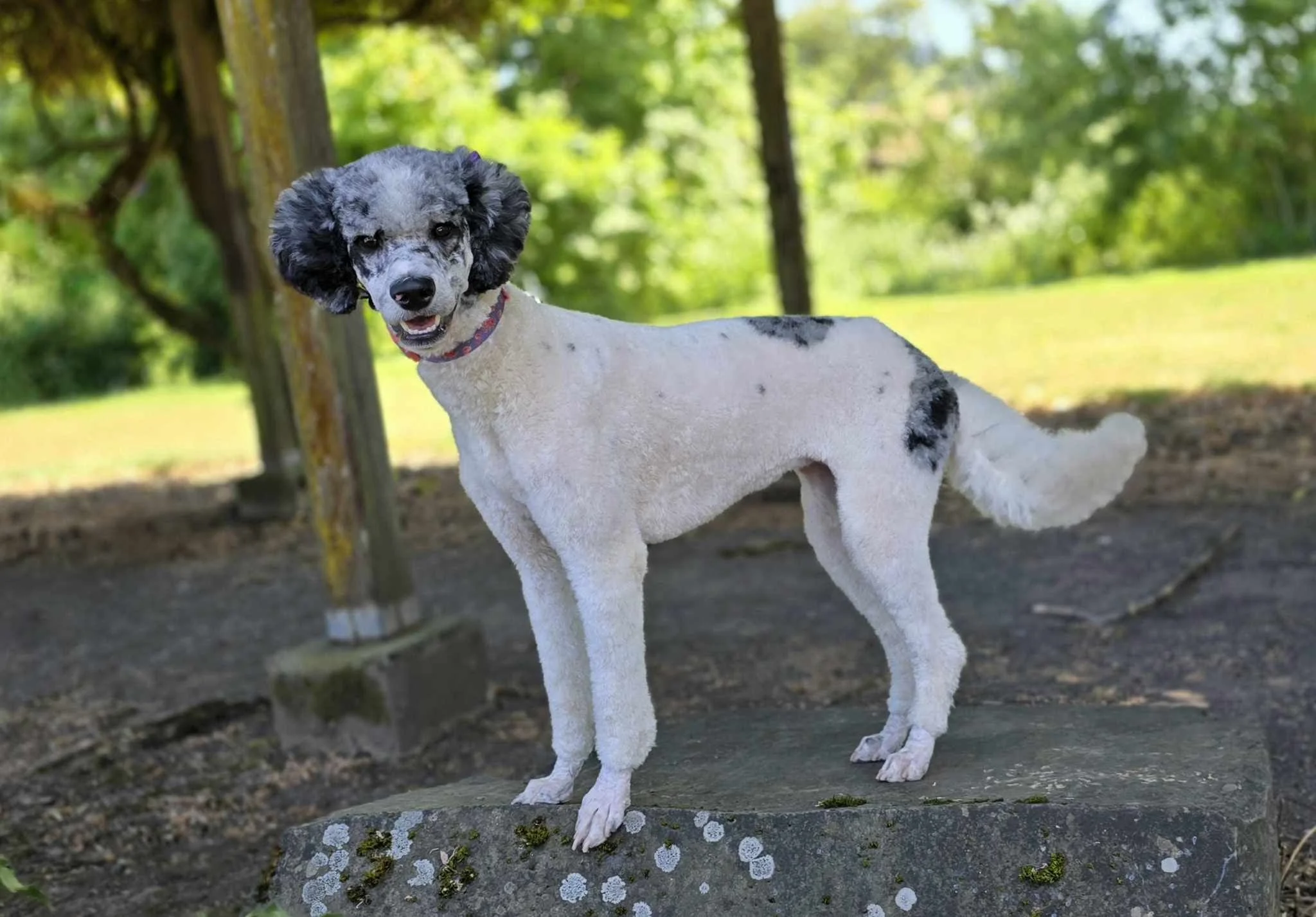
Extreme Parti
At the far end of the spectrum are extreme parti dogs.
These dogs are mostly white with only a few remaining patches of color.
Like traditional parti, there is no official percentage required. The term simply describes dogs where white has become the dominant feature of the coat.
Some extreme parti dogs may have color only on the ears or around one eye, making every dog truly unique.

One of the biggest misconceptions about white markings is that a dog is either "parti" or it isn't.
In reality, white spotting exists on a spectrum.
Some dogs inherit only a few white hairs on the chest or toes. Others develop balanced white markings across the chest, legs, and face. At the opposite end of the spectrum are dogs that are predominantly white with only a few remaining patches of color.
Rather than thinking of these as completely different patterns, it's more helpful to think of them as different expressions of the same white spotting genetics.
There is no universally accepted line where one category officially ends and another begins. Many beautiful dogs fall somewhere between the traditional definitions.
This is one reason puppies from the same litter can look dramatically different despite sharing many of the same parents and genetics.
White Spotting Doesn't Create Color—It Reveals It